
Best Hoses for Washing Machine: A 2026 Guide
A washing machine hose failure is one of the most preventable water disasters in a home, and it still drives nearly 12% of all residential water-damage claims according to a widely cited industry benchmark tied to supply-hose failures (industry buying guide). That single fact changes the conversation. The hose behind the washer isn't a throwaway accessory, it's a safety component that deserves the same attention you'd give a shutoff valve, a trap, or any other part of the water system.
Homeowners usually discover that too late, after a split hose, a soaked subfloor, or a frantic midnight cleanup. The safer approach is simple. Choose the right material, check the pressure rating, confirm the connection size and length, and install the hose with respect for bend radius and valve placement. Regular plumbing checks help catch small issues before they become property damage, and this guide on why regular plumbing checks protect your home fits that mindset well.
Table of Contents
- Why Washing Machine Hoses Deserve Your Attention
- Comparing Rubber PVC and Braided Stainless Steel Hoses
- Key Specifications Every Buyer Must Check
- How Installation Geometry Creates Hidden Failure Risks
- Step-by-Step Safe Installation and Replacement Process
- Inspection Timing Leak Detection and LA Code Considerations
- How EZ Plumbing Protects Los Angeles Homes From Hose Failures
Why Washing Machine Hoses Deserve Your Attention
A washing machine hose can turn a dry laundry room into a cleanup job in seconds. I have replaced enough burst lines in Los Angeles homes to say this plainly, the hose is one of those parts people ignore until it fails, and then it costs far more than the part ever did. A bad supply line can ruin a wash cycle, but it can also mean water extraction, flooring replacement, drywall repair, and an insurance claim nobody wants to file.
Practical rule: treat the hose as a wear item, not a permanent fixture.
The biggest mistake is judging a hose by looks alone. A reinforced hose may be the better pick for many homes, and a products tagged 316 stainless steel option is often worth comparing if you want a tougher outer layer and better day-to-day protection. The point is not that every braided hose is identical. The material, the fittings, and the way the hose sits behind the machine all affect how long it lasts.
A hose also has to fit the space behind the washer without strain. Tight closets, shallow laundry alcoves, and awkward valve placement can force a hose into a bend that looks harmless but keeps pressure on the connection. Too much length can be a problem too, because extra slack invites looping, pinching, and rubbing against the wall or the machine cabinet. For homeowners who want a broader maintenance check on the plumbing system, regular plumbing inspections that catch small failures early matter just as much as choosing the right hose.
What matters before you buy
- Material choice, because construction affects resistance to cracking, kinking, and burst damage.
- Pressure rating, because the hose needs enough margin above normal service conditions.
- Installation layout, because a hose under constant bend stress can fail sooner than one with room to sit naturally.
- Replacement timing, because wear builds gradually and is easy to miss until water is already on the floor.
That is the part most buyers miss. A high-quality braided hose still fails early if the valve is jammed behind the machine, the bend radius is too tight, or the supply line is forced to work against the room layout. After replacing hundreds of failed hoses in Los Angeles homes, I look at the hose, the wall valve, and the clearance behind the washer together. Homes that avoid water damage usually have owners who treat the hose like a component that needs attention, not a cheap accessory to forget about.
Comparing Rubber PVC and Braided Stainless Steel Hoses
A washer hose failure often starts with the material choice, but the real-world outcome depends just as much on how that hose sits behind the machine. Rubber, PVC, and braided stainless steel all have a place, yet they behave very differently once vibration, age, and cramped spacing start working on the line. Braided stainless steel is the option I usually recommend because it holds up better to daily movement and gives the installation more protection without making the hose impossible to work with.
| Washing Machine Hose Material Comparison | Rubber | PVC | Braided Stainless Steel |
|---|---|---|---|
| Durability | Traditional and familiar, but more prone to age-related cracking | Lightweight, but less rugged in demanding installations | Reinforced for long-term use and better mechanical protection |
| Burst Resistance | Lower than reinforced options | Generally weaker than braided construction | Stronger choice for resisting burst-related leaks |
| Kink Resistance | Can deform with age and stress | Flexible, but can still become vulnerable in tight routing | Better at resisting kinking in real laundry-room setups |
| Best Fit | Basic, low-demand situations | Temporary or budget-sensitive use | Most homes, especially where protection matters most |
If you are comparing construction details rather than shopping by brand name alone, the products tagged 316 stainless steel selection at XTREME EDEALS INC. is a useful place to look. It helps separate hose listings that are built around corrosion resistance and heavier service conditions from generic products that only look similar on paper.
Rubber and PVC have limits
Rubber hoses are the old standby, but time works against them. They can harden, crack, and lose flexibility, especially when they sit behind a machine for years without a close look. PVC hoses are lighter and easier to handle, yet they do not give the same confidence when the setup sees vibration, tight routing, or pressure swings.
Braided stainless steel does not fix a poor setup, and it does not excuse sloppy routing. It still gives you a better starting point, which is why many buying resources continue to place it near the top of the category. If you want a broader comparison of material choices and fit, a practical guide to plumbing pipe types helps frame why some materials suit a home laundry area better than others. For most homeowners, braided steel remains the safer baseline.
Why plumbers keep recommending braided models
I keep coming back to braided hoses because they hold up better in the kind of real-world use laundry hookups see every week. Washer vibration, moving the appliance for cleaning, and the small shifts that happen when a hose is not perfectly aligned all put stress on the connection. A braided line gives you more tolerance for that kind of abuse than rubber or PVC.
The catch is that hose material only solves part of the problem. A braided hose still fails early if the valve is tucked into a bad spot, the bend radius is too tight, or the line is forced to hang under strain. In Los Angeles homes, I look at the hose, the wall valve, and the space behind the washer as one system. Homes that avoid water damage usually have owners who treat the hose like a working plumbing part, not a cheap accessory to install once and forget.
Key Specifications Every Buyer Must Check
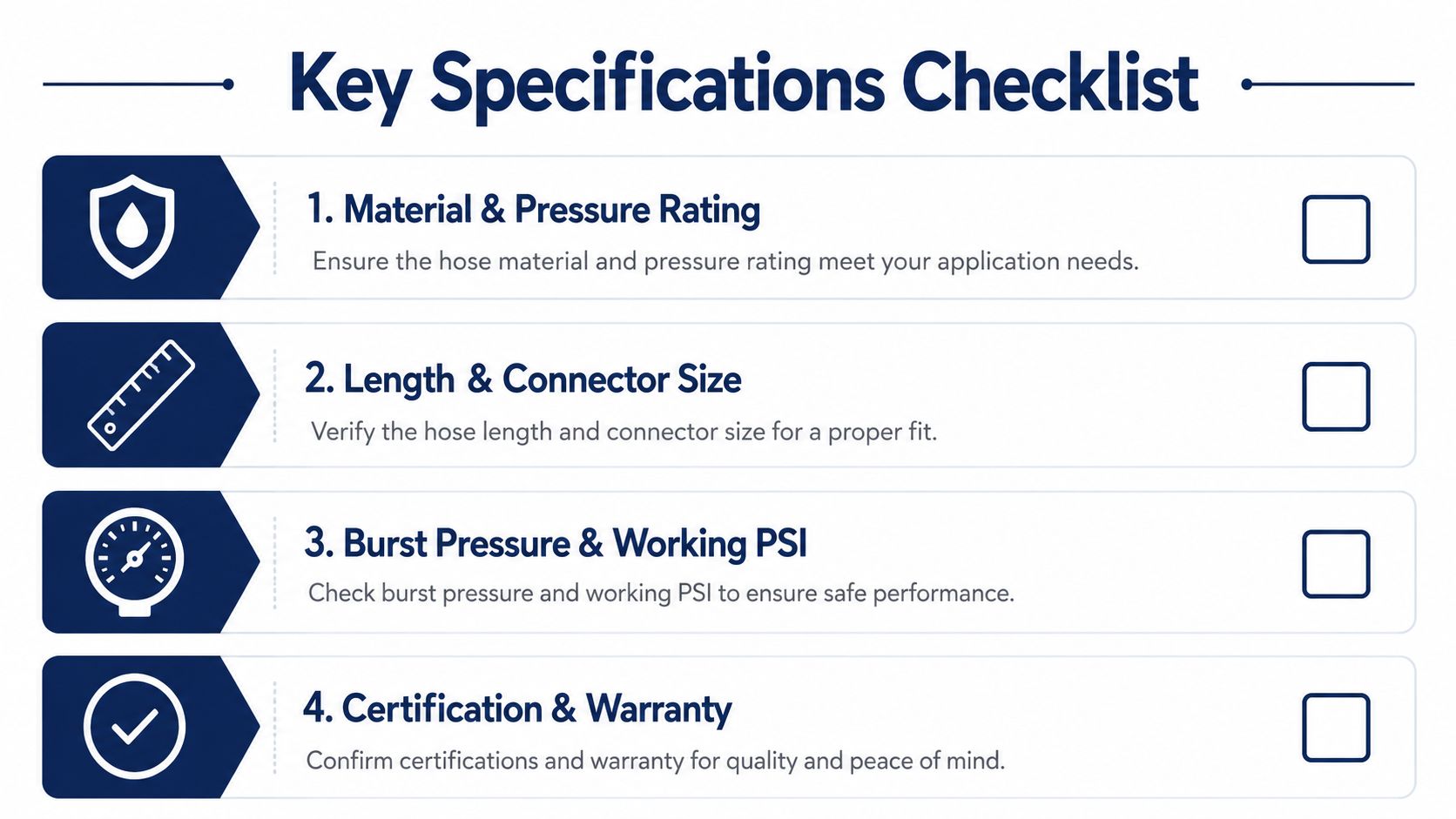
Material gets all the attention, but the specifications tell you whether the hose fits the plumbing job in front of you. Homeowners often assume a hose is universal just because it has a familiar connector. Pressure rating, length, fitting quality, and certification matter just as much as the hose body.
Pressure rating and fitting quality
For supply lines, the most important spec is burst-pressure margin. Consumer guidance commonly recommends a hose rated well above operating pressure, with examples of 20 bar being considered adequate for apartment installations, while Aquastop-equipped hoses are cited at up to 70 bar and some imported fill hoses are listed at 60 to 80 bar (pressure guidance). Water hammer can spike pressure briefly, so a reinforced hose gives you more protection than a basic line.
The fitting material matters too. Nickel-plated brass fittings hold up better than plastic or cheap aluminum, especially when the hose is removed and reinstalled over time. Certification matters as well. Look for UPC or CSA markings when you want a product that is easier to defend from a compliance standpoint and less likely to be treated as a questionable no-name part.
Length and connection size
Multiple references identify the standard inlet connection as 3/4 inch, which is why most residential washing machine hoses look similar at the valve end (dimensional guide). Length is where people get sloppy. Common runs fall around 1.5 to 5 meters, and the safest guidance is usually not to exceed about 5 meters or leave the hose under tension.
A practical fit check looks like this:
- 4-foot hoses for tight, compact laundry spaces.
- 6-foot hoses for most homes.
- 8 to 10-foot hoses only when the machine needs extended reach.
The wrong length causes more trouble than buyers expect. Too short, and the fitting gets pulled. Too long, and the hose becomes a snag point or starts to coil where it shouldn't.
What the numbers mean in practice
The best washer hose is the one that matches the machine, the valve location, and the actual route behind the cabinet. The specification sheet should help you rule products in or out fast. If the listing doesn't clearly state the connection size, burst rating, and certification, I'd skip it.
How Installation Geometry Creates Hidden Failure Risks
Assuming the hose itself is the whole story isn't accurate. The trouble often begins when the laundry area forces the hose into a shape it was never meant to hold, and that's common in apartments, condos, and older Los Angeles homes with retrofitted hookups.
Bend radius and valve placement matter
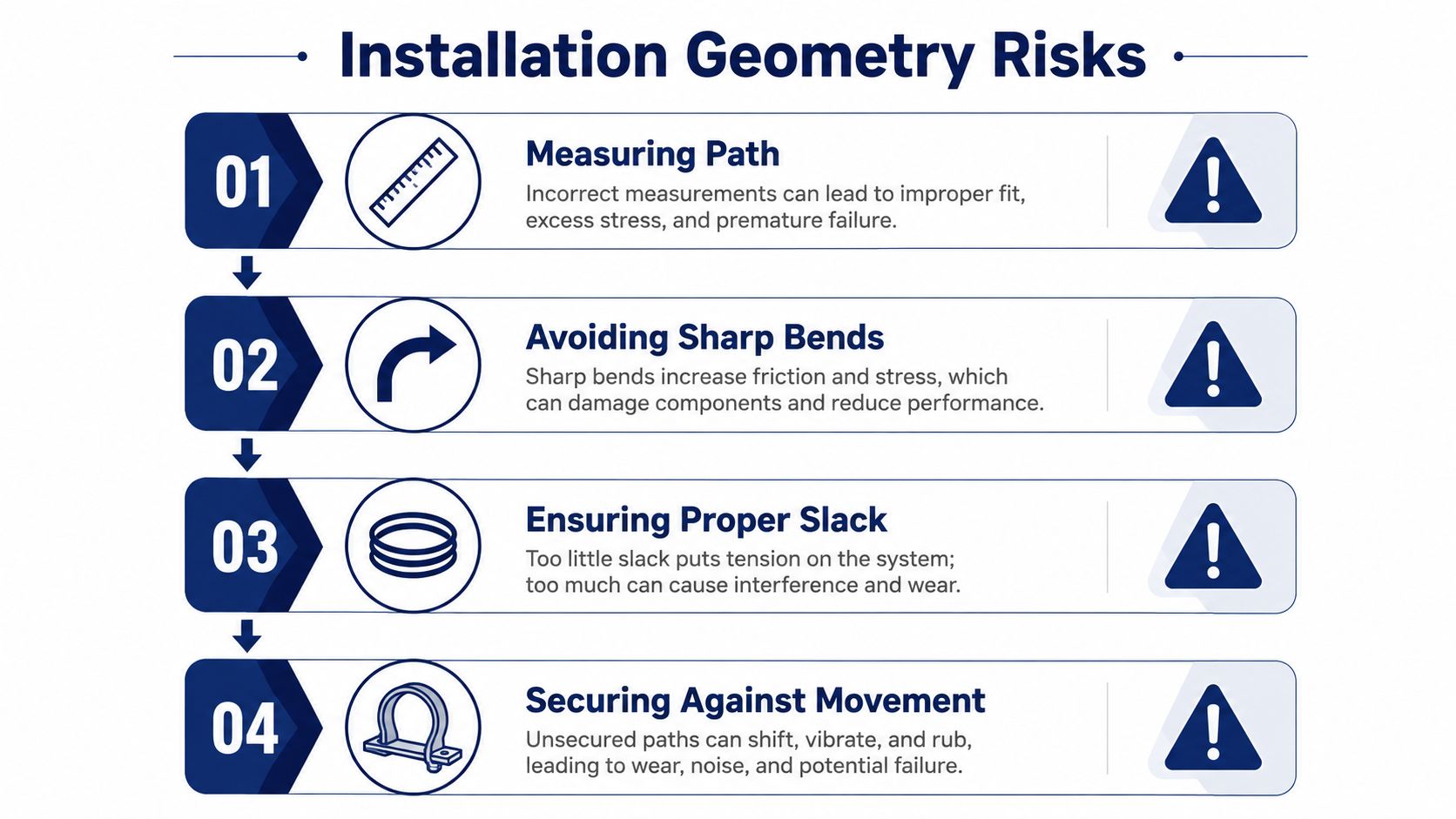
A tight bend doesn't just look awkward, it changes how the hose carries pressure and movement. When a hose is forced too close to the wall, crushed behind a machine, or bent sharply near the shutoff valve, the material takes on extra mechanical stress. That stress can shorten service life even if the hose is a high-quality braided model.
Valve placement matters because the connection point is where stress concentrates. If the valve sits too low, too far to the side, or directly behind a stacked appliance, installers often compensate with extra length. That fix can create another problem, because too much slack becomes a loop that rubs, twists, or gets pinched when the washer vibrates.
Measure the route, not just the gap
The smartest way to buy a hose is to measure the actual path it will follow. The useful length isn't the straight-line distance from valve to machine, it's the distance after you account for clearance, bend radius, and movement during vibration.
Practical rule: if the hose has to be stretched to reach, it's too short. If it has to be coiled to fit, it's too long.
That's the trade-off most buying guides ignore. A longer hose isn't automatically safer, and a braided exterior doesn't cancel out a bad path. In a tight alcove, the best setup is usually the one with just enough slack to avoid tension, but not so much that the line folds back on itself.
What usually goes wrong
Three mistakes show up over and over:
- Overlong hoses that get coiled, then kinked behind the machine.
- Short hoses that pull against the valve every time the appliance moves.
- Poor routing that puts the hose against sharp cabinet edges or rough utility surfaces.
If you only remember one point, make it this. Material choice helps, but geometry decides whether the hose gets to work in a stable shape or under constant stress.
Step-by-Step Safe Installation and Replacement Process
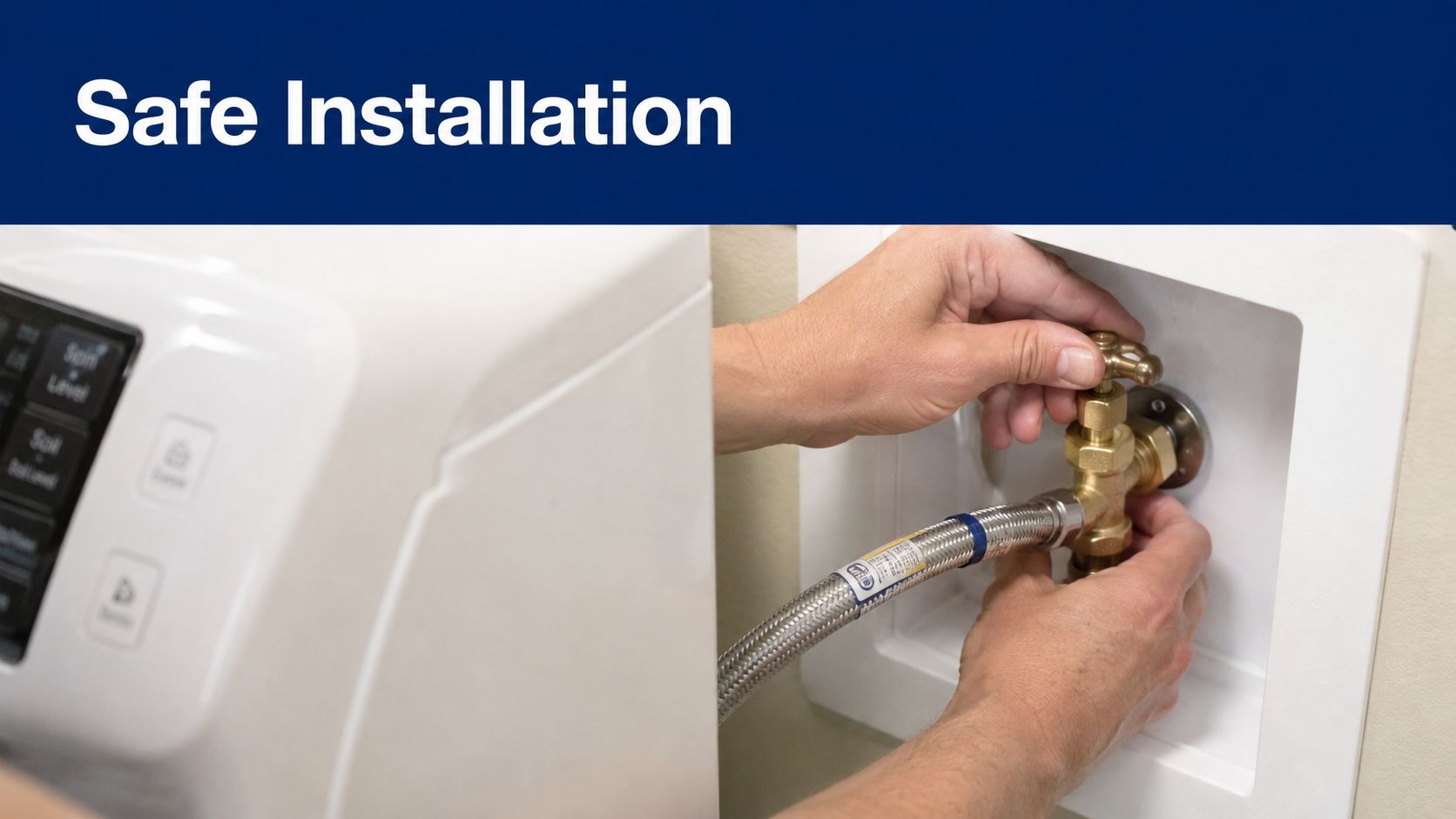
A clean installation starts with shutting things down properly, not rushing the old hose off the valve. I've seen more leaks from sloppy reconnects than from the hose body itself. The goal is a tight, aligned connection that doesn't cross-thread, crush, or strain the fittings.
Start with the valves and the old line
Turn off both supply valves fully, then let the washer run briefly if needed to relieve residual pressure. Once the line is quiet, disconnect the old hose carefully and inspect the threads on the valve and machine inlet. If the threads are damaged or packed with mineral buildup, don't force the new connection.
When plumber's tape is appropriate, use it cleanly and sparingly on the threaded male side. The goal is to improve sealing, not bury a bad fit under layers of tape. Overdoing it can make the connection harder to seat correctly.
Tighten for seal, not for force
The new hose should thread on smoothly by hand before any final snugging. If it resists immediately, back it off and realign it. Cross-threaded fittings are one of the fastest ways to create a slow leak that shows up days later.
A few practical habits help:
- Align first, then tighten.
- Avoid over-torque, because overtightening can distort washers and fittings.
- Check the drain hose too, since a supply-line upgrade won't help if the discharge side is loose.
- Test before sliding the machine back, so you can see drips at both ends.
Test, watch, and retighten if needed
Once the water is back on, watch both fittings for a few minutes with a dry hand or paper towel. A dry connection at first doesn't guarantee it'll stay dry after the machine starts vibrating, so run a short cycle and check again. If you see even a small bead of water, stop and correct it before pushing the washer into place.
That final inspection takes a few minutes and saves a lot of cleanup. It's the difference between a job that looks done and a job that is.
Inspection Timing Leak Detection and LA Code Considerations
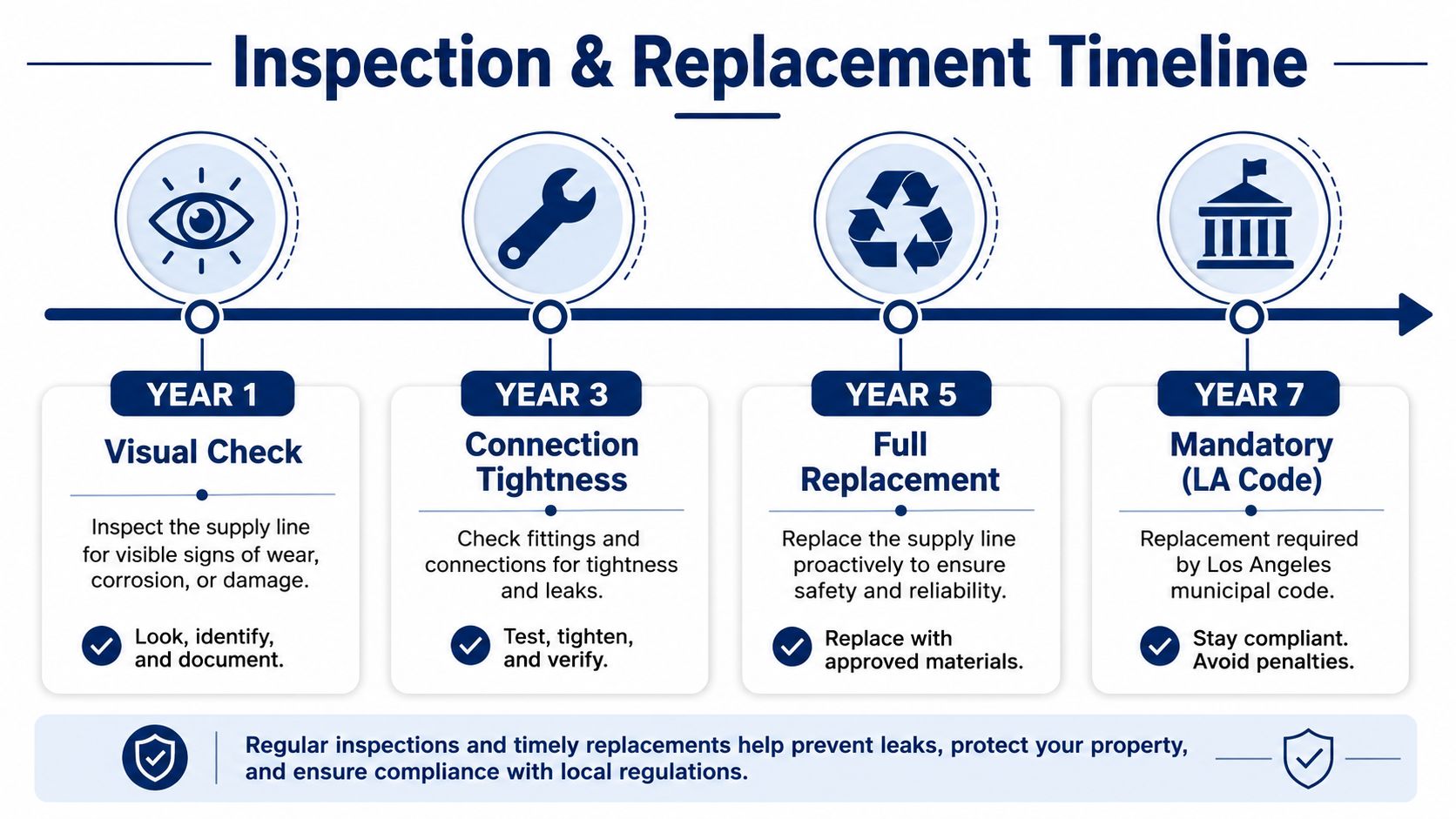
Replacement timing matters because hose wear is gradual, not dramatic. This Old House recommends replacing washing machine hoses every three to five years rather than waiting for visible failure (replacement guidance). That's sensible advice, because corrosion, twisting, bending, and aging all raise failure risk long before a hose splits open.
What to look for during inspections
A hose doesn't have to be visibly burst to be failing. Watch for bulging, stiffness, discoloration, and corrosion at the fittings. Those signs tell you the hose body or connector is losing its margin, even if it still holds water today.
Simple leak-detection devices add another layer of protection. Put them where they can catch the first sign of drips rather than after water has already spread across the room. For property managers, that early warning matters because one small leak in a laundry closet can affect the unit below it before anyone notices.
Local compliance and documentation
Los Angeles homeowners also need to think about compliance and documentation. If a hose is installed by a licensed professional and maintained on a regular schedule, that paper trail can help when an insurance adjuster asks basic questions after a loss. It doesn't guarantee an outcome, but it gives you a cleaner record than a vague receipt for a hardware-store part.
For homeowners comparing a replacement plan with a known leak, this washing machine leak guide is useful for understanding the usual warning signs and next steps. The broader point is that hose maintenance shouldn't be treated as a one-off purchase. It belongs in a home or building maintenance calendar.
A sane maintenance rhythm
- Yearly visual check, especially for hoses that sit behind heavy appliances.
- Closer attention after moving the washer, because routing often changes.
- Scheduled replacement before the hose ages out, not after a near miss.
For multi-unit buildings, that routine is even more important. One neglected connection can create a chain of water damage that costs far more than a planned hose swap.
How EZ Plumbing Protects Los Angeles Homes From Hose Failures
When a laundry hookup needs more than a quick hardware-store replacement, a licensed plumber can inspect the whole assembly, not just the visible hose. That matters in Los Angeles homes where tight laundry closets, stacked appliances, and older valve locations make the installation just as important as the product. A professional can match the hose length to the actual path, confirm the fittings, and make sure the setup is code-conscious from the start.
EZ Plumbing brings that kind of field-tested approach to homes, HOAs, property managers, and commercial properties across Los Angeles. The value is straightforward. You get a proper assessment, a clean installation, and a team that can respond fast if a hose has already started leaking.
For property owners who want the job done right the first time, the practical next move is to schedule a replacement before the old line fails under pressure. If the washer area is already wet or the connection looks suspect, emergency response is the safer route. Either way, the point is to protect the room before the damage spreads.
If you want a licensed Los Angeles plumber to inspect your washer hoses, replace worn lines, and make sure the installation is safe, contact EZ Plumbing for same-day service or emergency help. Their team can help you choose the right hose setup for your laundry room, then install it with the kind of care that keeps small failures from becoming expensive water damage.