
Why Prevent Pipe Leaks: What Every Homeowner Must Know
Preventing pipe leaks protects your home from structural damage, mold, and thousands of dollars in repair costs while conserving water your community depends on. Right now, before reading further, take three quick steps: locate your main water shutoff valve, check your water meter for the leak indicator triangle or dial, and photograph any visible wet spots or stains on walls, ceilings, or under sinks. According to EPA WaterSense guidance, 1.5% of homeowners filed water-damage insurance claims between 2019 and 2023, with average costs that can easily exceed a year’s worth of utility bills. A single hidden leak, left unaddressed, can turn a $200 pipe repair into a $10,000 mold remediation.
- Find your shutoff valve (usually near the water meter or where the main line enters the house) and confirm it turns freely.
- Run the meter test (detailed in Section 4) to check for hidden leaks in under two minutes.
- Isolate any visible wet area by moving valuables, placing towels, and turning off the nearest fixture shutoff.
Table of Contents
- Why pipe leaks cost you more than you think
- How to detect leaks before they cause serious damage
- Detection devices and technologies worth knowing about
- What to do the moment you find a leak
- When to hire a licensed plumber for leak detection and repair
- Key Takeaways
- The leak calls we get most often tell the same story
- Ez-plumbing provides licensed leak detection across Los Angeles
- Useful sources and further reading
Why pipe leaks cost you more than you think
The financial case for leak prevention is straightforward. Water damage is consistently one of the most common and costly homeowner insurance claims in the United States. The EPA’s consumer leak and flow guide notes that devices with automatic shutoff can pay for themselves by preventing a single major claim, which underscores just how expensive unchecked leaks become.
Beyond the insurance math, hidden leaks cause structural rot in wall framing, subfloor sheathing, and ceiling joists before you ever see a stain. Moisture trapped inside walls creates conditions for mold growth within 24–48 hours, and mold remediation costs far more than the pipe repair that would have stopped it. Indoor air quality suffers too, creating respiratory risks for anyone in the home.
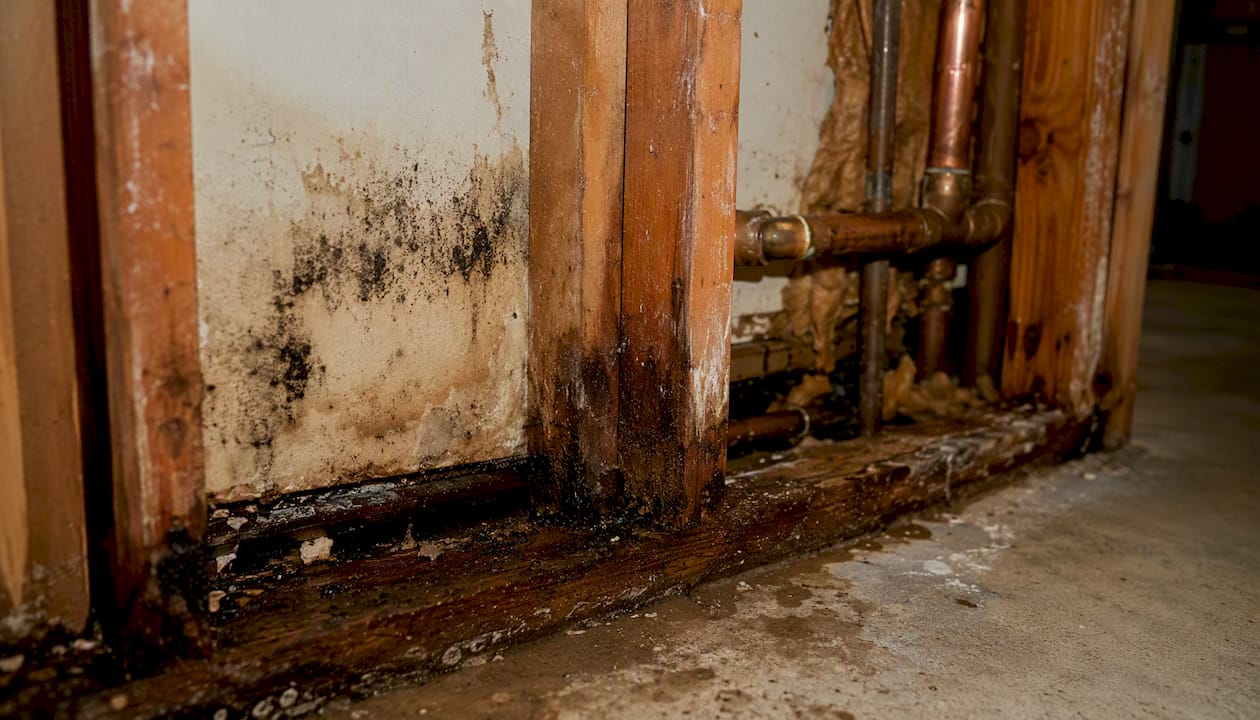
Water waste compounds the problem, particularly in drought-prone regions like Southern California. Research published in Environmental Research Letters confirms that small, background leaks collectively account for the majority of distribution system water losses, and that leak detection combined with pressure management is among the most cost-effective strategies available. For homeowners, that translates directly to inflated water bills every month a leak goes undetected. Timely repairs save money and protect your home in ways that compound over time.
How to detect leaks before they cause serious damage
The most reliable starting point is the off-peak meter test, which EPA WaterSense documents as the standard method for identifying hidden leaks in residential and commercial properties.
Meter test walkthrough:
- Turn off all water-using fixtures and appliances, including ice makers and irrigation controllers.
- Locate your water meter (typically at the curb or property line) and note the reading or photograph the dial.
- Wait 15–30 minutes without using any water.
- Return and check the meter. Any movement confirms a leak somewhere in the system. Many modern meters also have a small leak indicator triangle or dial that spins even with very low flow.
Beyond the meter, a thorough visual and auditory inspection covers the most common leak locations. Check under every sink cabinet for moisture or mineral staining. Inspect ceilings below bathrooms for soft spots or discoloration. Walk the perimeter of the house and look for unexplained green patches in the lawn, which often indicate a pressurized supply-line leak underground. Listen at quiet times, particularly late at night, for hissing or dripping sounds near walls.
Photograph and timestamp every wet spot or stain you find. That documentation matters when you file an insurance claim or need to show a plumber where the problem started.
Pro Tip: To check for a toilet flapper leak, add a few drops of food coloring to the tank and wait 10 minutes without flushing. Color in the bowl confirms the flapper is leaking. For appliance supply lines, dry the line with a paper towel and watch for moisture return.
Detection devices and technologies worth knowing about
Sensors and flow monitors can catch leaks earlier than periodic human checks, and models with automatic shutoff can stop a burst pipe from flooding a home while you are away. The EPA’s leak and flow device guide outlines the main device categories and their trade-offs.
| Device type | How it works | Best for | Installation |
|---|---|---|---|
| Point-of-use moisture sensors | Detect water contact at a specific location; trigger alarm | Under sinks, near water heaters, appliances | Homeowner DIY |
| In-line flow monitors | Track flow rate continuously; flag abnormal patterns | Whole-home leak detection | Licensed plumber recommended |
| Smart meters with leak indicators | Utility-grade metering with digital leak flags | Monitoring consumption trends | Utility-installed |
| Sensor-activated shutoff valves | Automatically close the main supply when a sensor triggers | Vacation homes, multifamily units | Licensed plumber required |
| Hybrid systems | Combine flow monitoring, moisture sensing, and shutoff | High-value properties, commercial | Licensed plumber required |
Point-of-use sensors are the easiest entry point: they cost $20–$60 per unit, require no plumbing work, and provide immediate alerts via a local alarm or a connected app. In-line flow monitors and automatic shutoff valves require cutting into the supply line, so a licensed plumber should handle installation. Many of these systems integrate with Z-Wave or Zigbee home automation platforms, making them compatible with systems like Amazon Alexa or Google Home for remote monitoring. For a deeper look at leak-detection technologies and how to choose between point-of-entry and point-of-use options, Ez-plumbing’s homeowner guide covers the decision framework in detail.
What to do the moment you find a leak
Shut off the water first. If you can isolate the leak to one fixture or appliance, close that fixture’s angle stop valve. If the leak is at a main line, a slab, or you cannot locate the source, close the main shutoff immediately. Speed matters because water migrates through framing and insulation faster than most homeowners expect.
Once the water is off, protect people before you protect property. If water is near an electrical panel, outlets, or ceiling fixtures, turn off the affected circuit at the breaker. Do not step into standing water if electrical contact is possible.
For containment, move valuables out of the affected area, place towels and buckets to control standing water, and open windows to begin drying. Document everything with photos before you clean up.
Homeowners can apply temporary fixes to buy time: a pipe repair clamp works on straight pipe sections, self-fusing silicone tape wraps around joints and small pinholes, and epoxy putty can seal a crack on a dry pipe surface. All three are available at hardware stores for under $20. Treat every one of these as temporary. Schedule a permanent repair within days, not weeks.
Pro Tip: Never attempt repairs on gas lines, sewer mains, or any pipe inside a concrete slab. These require licensed work and, in most jurisdictions, a permit.
When to hire a licensed plumber for leak detection and repair
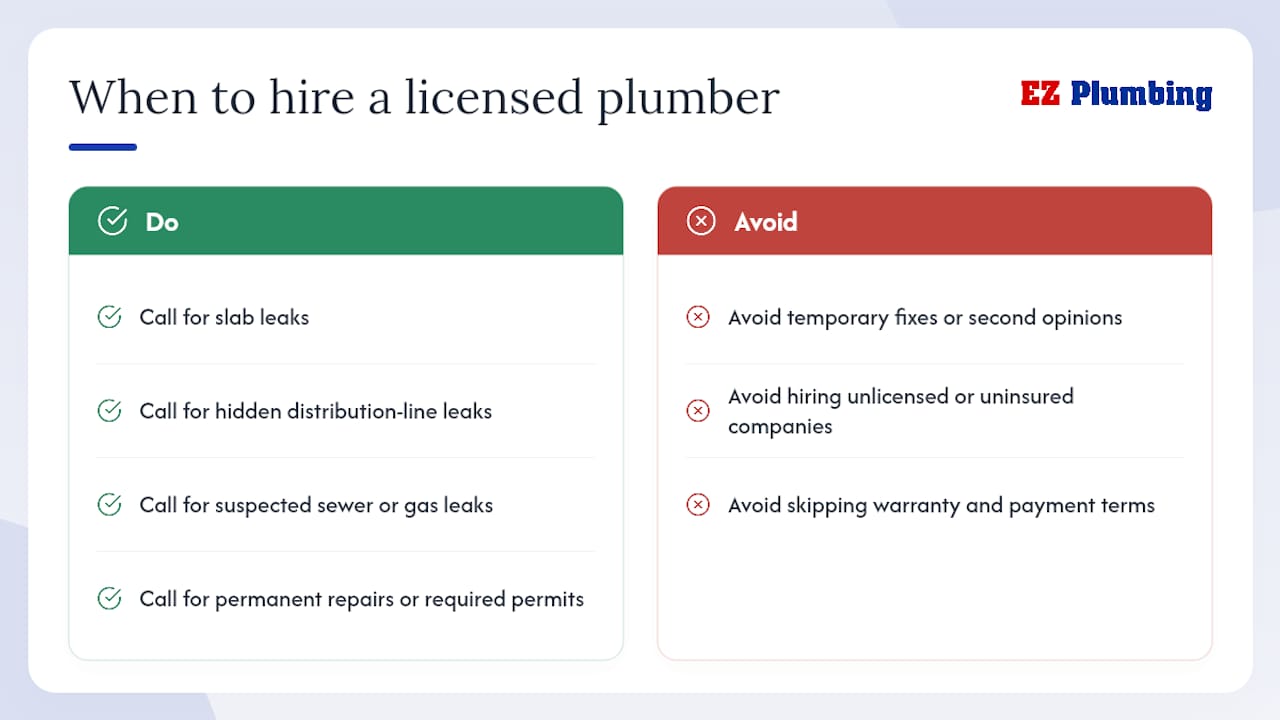
Call a licensed plumber for slab leaks, hidden distribution-line leaks, suspected sewer leaks, any gas-line issue, or whenever a permanent repair or permit is required. These are not situations where a temporary fix or a second opinion is adequate.
Professional leak detection goes well beyond what a homeowner can do with a meter test. A licensed plumber uses acoustic testing to listen for pressurized water escaping through pipe walls, thermal imaging to identify temperature differentials caused by moisture behind drywall, camera inspection to view the interior of drain and sewer lines, and pressure testing to isolate which branch of the system is losing pressure. In-line flow diagnostics and submetering can identify consumption anomalies in multifamily buildings that no visual check would catch.
When you call a plumber, ask these questions before booking: Is the company licensed and insured in California (verify the C-36 license number)? What detection methods will they use on-site? Will the repair require a permit, and will they pull it? What is the warranty on parts and labor? How long will the repair take, and what is the payment structure?
On the service visit, expect a diagnostic phase first. The plumber will confirm the leak location, assess the pipe material and condition, and present repair options before any work begins. Ask for written documentation of findings, especially if you plan to file an insurance claim.
Pro Tip: Ask your plumber to inspect all accessible shutoff valves and angle stops during the same visit. Replacing a corroded angle stop costs $50–$100 and prevents a future emergency.
Key Takeaways
Preventing pipe leaks is the most cost-effective property protection strategy available to homeowners, combining a monthly meter check with professional detection to catch problems before they become structural damage.
| Point | Details |
|---|---|
| Run the meter test now | Turn off all fixtures, wait 15–30 minutes, and check for meter movement to confirm hidden leaks. |
| Know your common causes | Corrosion, high pressure, aging rubber supply lines, and tree roots are the most preventable failure points. |
| Layer your detection | Combine monthly meter reads with point-of-use moisture sensors for continuous coverage between inspections. |
| Act immediately on any leak | Shut off water, document with photos, apply a temporary fix, and schedule permanent repair within days. |
| Ez-plumbing for professional detection | Ez-plumbing provides licensed acoustic, thermal, and camera-based leak detection across the greater Los Angeles area. |
The leak calls we get most often tell the same story
From Ez-plumbing’s experience serving Los Angeles homeowners, the pattern is consistent: the leak was there for weeks or months before anyone noticed, and by the time we arrive, the damage has spread well beyond the pipe itself. A slow drip behind a bathroom wall becomes a mold problem in the insulation. A pressurized supply-line leak under a slab becomes a foundation concern.
What homeowners underestimate is how much local conditions accelerate the timeline. Los Angeles has a wide range of housing stock, from 1920s bungalows with original galvanized steel to 1980s tract homes with polybutylene supply lines, and both material types are past their reliable service life in many properties. Irrigation systems running year-round add constant pressure cycling to outdoor supply lines. Temperature swings in hillside neighborhoods, while modest by national standards, are enough to stress joints in uninsulated crawl spaces over time.
The most common mistake we see is waiting for a visible sign before acting. By the time water stains appear on a ceiling or a floor feels soft underfoot, the structural damage is already done. A monthly meter check and an annual professional inspection cost a fraction of what remediation costs after the fact. That is the core argument for prevention: the investment is small, the risk of inaction is not.
Ez-plumbing provides licensed leak detection across Los Angeles
When a meter test flags a problem or a wet spot appears without an obvious source, the next step is professional diagnostics. Ez-plumbing (C-36 License #583868) provides on-site acoustic testing, thermal imaging, camera inspection, and in-line flow monitoring for residential and commercial properties throughout the greater Los Angeles area. The team handles everything from pinhole repairs and slab leak detection to automatic shutoff valve installation and full repipes, all fully permitted and code-compliant with LA municipal requirements.
If you are ready to confirm whether your property has a hidden leak or want to schedule a preventive inspection, book a leak detection appointment with Ez-plumbing today. For property managers overseeing multiple units, ask about recurring maintenance contracts that include regular meter monitoring and priority dispatch.
Useful sources and further reading
- WaterSense at Work Section 2.2: Leak Detection and Repair
- WS products leak flow guide
- Leak management and distributional loss analysis (IOPScience article)
- Leaks happen. Here’s the ‘why’ when they do | Plumbing & Mechanical
- The Crucial Role of Sealing Solutions in Preventing Chemical Leaks — TEADIT
- Repairing a Leaking Pipe: A Complete Professional Guide for Every Pipe Type — Plumbing Resource
- How to fix a leaky pipe | The Home Depot
- How to Fix a Leaky Pipe: Emergency Stops and Permanent Repairs (2026)