
What Causes Low Hot Water Pressure: Fixes for 2026
You turn on the shower, wait for the water to warm up, and then the stream collapses into a weak dribble. Cold water still comes out with decent force, but hot water barely makes the shower usable. That detail matters.
When only the hot side is weak, the problem usually isn't your city supply. It's somewhere in the hot water path. That might be the water heater, a clogged fitting on top of it, a mineral-packed showerhead, an old galvanized line, or a single faucet cartridge full of debris. The good news is that low hot water pressure is often diagnosable with a few simple checks before anyone starts replacing parts that don't need replacing.
A lot of advice online stops at “flush the tank.” Sometimes that helps. Sometimes it doesn't, because the primary restriction is in a much smaller choke point or in just one fixture. The right fix depends on whether the problem is isolated, system-wide, recent, or gradual.
Table of Contents
- The Frustration of a Failing Hot Shower
- Your First 5-Minute Homeowner Diagnostic
- The Usual Suspects Common Causes of Low Hot Pressure
- Deeper Problems When It Is More Than the Heater
- Solutions From DIY Fixes to Calling EZ Plumbing
- The Los Angeles Factor Hard Water and Aging Homes
The Frustration of a Failing Hot Shower
Low hot water pressure is one of those problems that feels bigger than it looks. You're not just dealing with inconvenience. You're trying to wash dishes, shower, fill a tub, or run a building without enough flow on the hot side. People often describe it as “the water heater going bad,” but that's only one possibility.
The first thing to separate is low water pressure everywhere from low pressure only on hot water. If cold and hot are both weak, the issue may be broader. If cold water is normal and only hot water is struggling, that points to a restriction somewhere after water enters the hot system.
That distinction saves time. It also saves money.
Practical rule: If the cold side still feels strong, don't assume the whole plumbing system is failing. Start by tracing the hot side only.
Homeowners usually notice the issue in the shower first because showers need steady flow to feel normal. Kitchen faucets show it too, especially when you swing from cold to hot and the stream suddenly drops. In multifamily properties, tenants may report that one bathroom is bad while another is fine. That detail is valuable. It tells you whether the problem is likely local to one fixture or tied to the heater and distribution piping.
A weak hot shower can come from several places:
- Inside the heater: Sediment, scale, or debris can restrict flow before water even leaves the unit.
- At the heater connections: Small fittings at the top can clog harder than the tank itself.
- In a single faucet or shower valve: Debris can lodge in cartridges, aerators, and supply tubes.
- In older piping: Corrosion and mineral buildup can gradually narrow hot lines.
- At pressure control components: A bad regulator can make restrictions feel much worse.
What causes low hot water pressure isn't always dramatic. A tiny blockage in the wrong place can cut flow enough to make a shower miserable. The trick is finding the exact restriction instead of guessing.
Your First 5-Minute Homeowner Diagnostic
Start with the easy checks before touching the water heater. In a lot of homes, the fastest answer comes from figuring out whether the issue affects one fixture or the whole hot system.
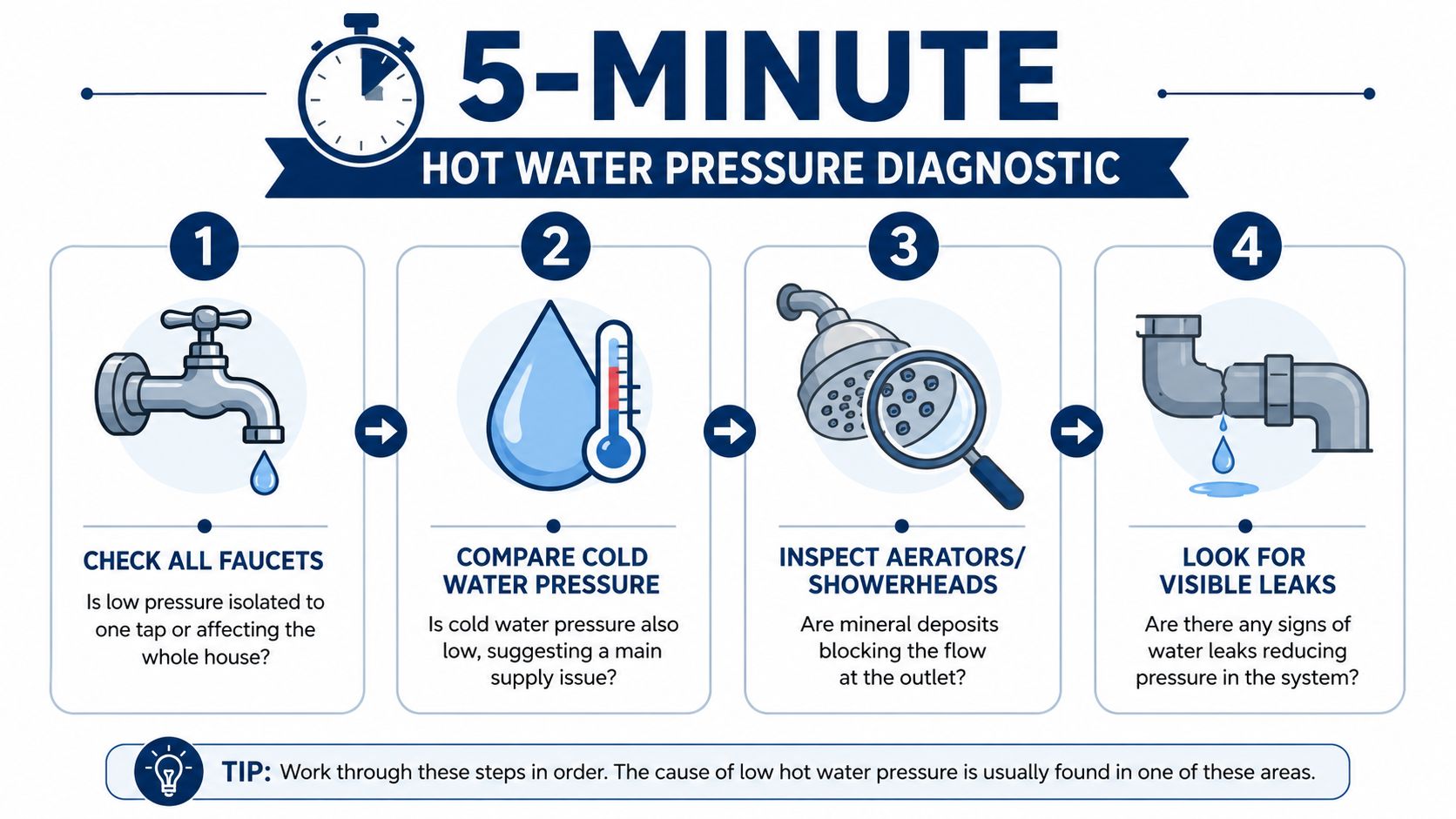
Start by narrowing the problem
Go to two or three fixtures and compare hot against cold at each one. Don't overthink it. You're looking for patterns.
- Test more than one location: Check a shower, a bathroom sink, and the kitchen faucet.
- Compare hot to cold: If cold is strong and hot is weak at every fixture, the restriction is likely upstream in the hot water system.
- Remove the easy blockage: Unscrew aerators or inspect the showerhead. Mineral deposits can cut fixture flow by up to 30 to 40% according to this explanation of mineral buildup and fixture restriction.
- Look for visible leaks: If exposed hot lines are dripping or staining nearby materials, pressure can fall before water reaches the fixture.
If you suspect a hidden leak, a water meter check can help rule that in or out. This guide on how to read a water meter for leaks gives a practical way to confirm whether water is moving when nothing inside should be running.
A quick troubleshooting reference can also help if you're sorting out broader heater behavior at the same time. This hot water system troubleshooting guide is useful for separating pressure complaints from heating complaints.
If one sink has weak hot water but the rest of the house is fine, don't start with a tank flush. Start at that sink.
Try the single-faucet backflush
This is one of the most overlooked tests for isolated hot-side pressure loss. Field reports indicate that 30 to 40% of isolated hot-pressure cases come from debris lodged in the specific supply line or in the faucet's hot cartridge, not the main heater, as described in this single-fixture hot pressure discussion and backflush method.
The idea is simple. You use cold pressure to push backward through the mixed faucet and clear debris from the hot side.
A typical sink version goes like this:
- Shut off the hot supply line under the sink and disconnect it carefully.
- Aim the loose line into a bucket so any discharge is contained.
- Open the faucet to a middle position so hot and cold are both available through the mixing body.
- Turn on the cold side and let pressure backfeed through the faucet toward the hot line briefly.
If debris is loose in that branch, this can clear it without touching the water heater. It won't fix a corroded pipe or a badly scaled cartridge, but it's a smart test before bigger work begins.
Use common sense here. If the shutoff valves are seized, the lines are brittle, or the cabinet plumbing looks fragile, stop and get help. A small pressure problem is better than a flooded vanity.
The Usual Suspects Common Causes of Low Hot Pressure
Most hot-side pressure problems start near the source. That doesn't always mean the whole tank is packed with sediment. Often, the most serious restriction is in a much smaller passage where scale and rust gather first.
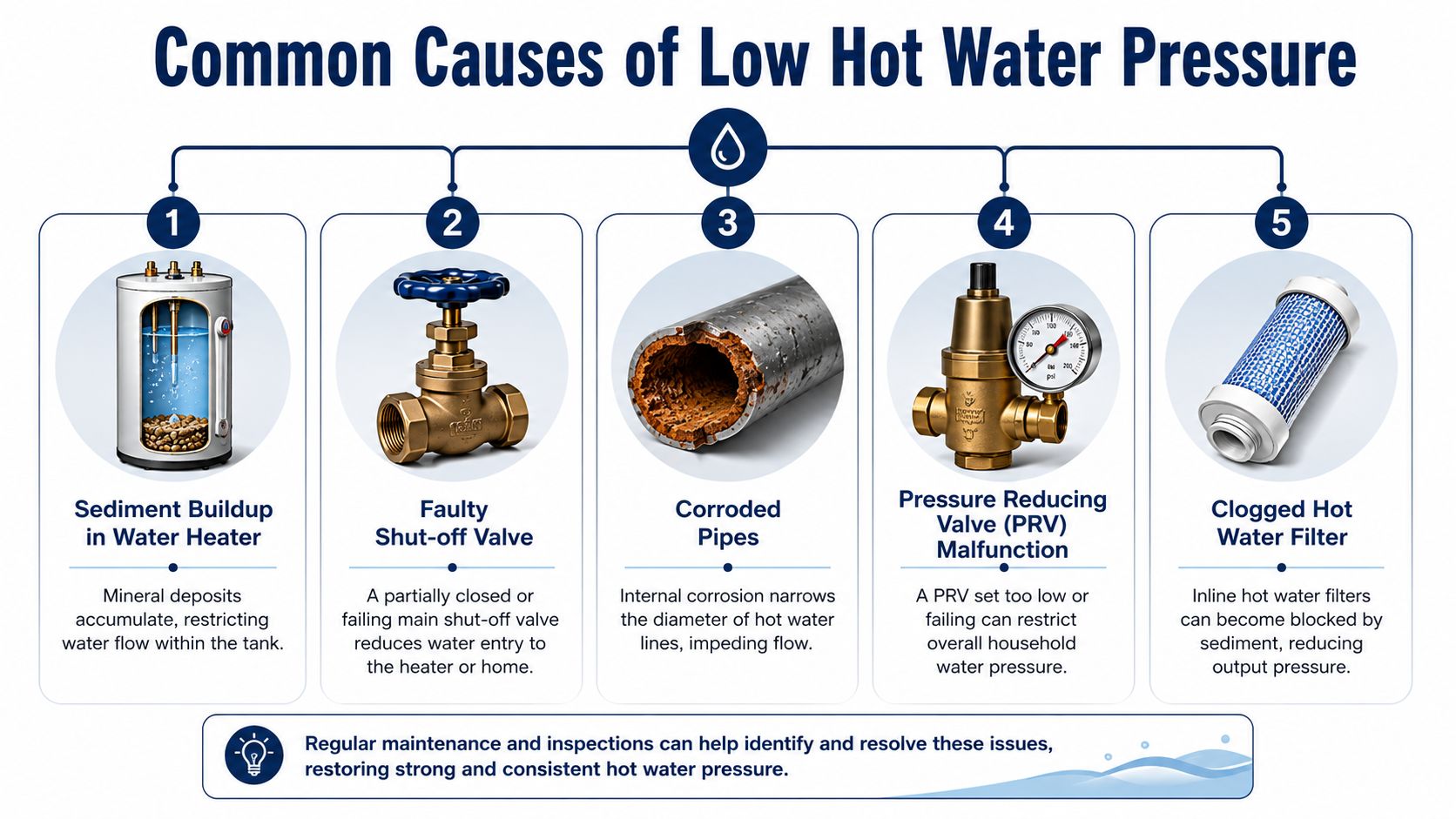
Sediment is common but the choke point matters
Sediment buildup inside the tank is the most common cause of low hot water pressure when cold pressure stays normal, accounting for 60% to 70% of cases according to this plumbing breakdown of hot-only pressure loss.
That happens because minerals in hard water, especially calcium and magnesium, drop out as water heats up. Over time, they settle and harden. That buildup can crowd the bottom of the heater, interfere with normal flow, and send debris toward outlet components.
The part many guides miss is the dielectric union nipple or connected nipple assembly at the top of the heater. In the field, that fitting often becomes the primary bottleneck. Rust and scale can calcify inside the nipple until the opening is tiny. A tank can have some sediment and still flow reasonably, but one clogged nipple can make the entire hot side feel starved.
A technician may confirm this by disconnecting supply lines and physically clearing the restricted nipple. A field demonstration of the process shows that sediment and rust can reduce the passage to a very small opening, and narrow braided supply lines can clog as well, as shown in this water heater nipple clog demonstration.
For homes dealing with hard water buildup in multiple plumbing components, this look at calcium buildup in water helps explain why restrictions keep showing up in heaters, fixtures, and supply connections.
Don't overlook simple source restrictions
Not every heater-side issue is hidden inside the tank. Some are mechanical and obvious once you know where to look.
| Check point | What happens | What it looks like |
|---|---|---|
| Hot shutoff valve | A partially open valve limits flow into or out of the heater | Weak hot pressure at many fixtures |
| Inline filter or screen | Sediment loads the screen and slows water | Pressure drops after maintenance or debris disturbance |
| Flexible connector | Scale or debris catches in narrow passages | Hot side weakens suddenly |
| Heater outlet fitting | Rust and mineral buildup create a chokepoint | Cold remains normal, hot falls off |
A water heater can still heat normally while delivering poor pressure. Temperature and flow are different problems.
A great deal of trial-and-error often proves misleading. People replace showerheads, then faucets, then the heater, when the actual restriction is sitting in a fitting on top of the unit. Good diagnosis follows the path of water and checks each narrowing point in order.
Deeper Problems When It Is More Than the Heater
When the hot side is weak throughout the property and heater-side checks don't explain it, the next suspects are the piping network and pressure control.
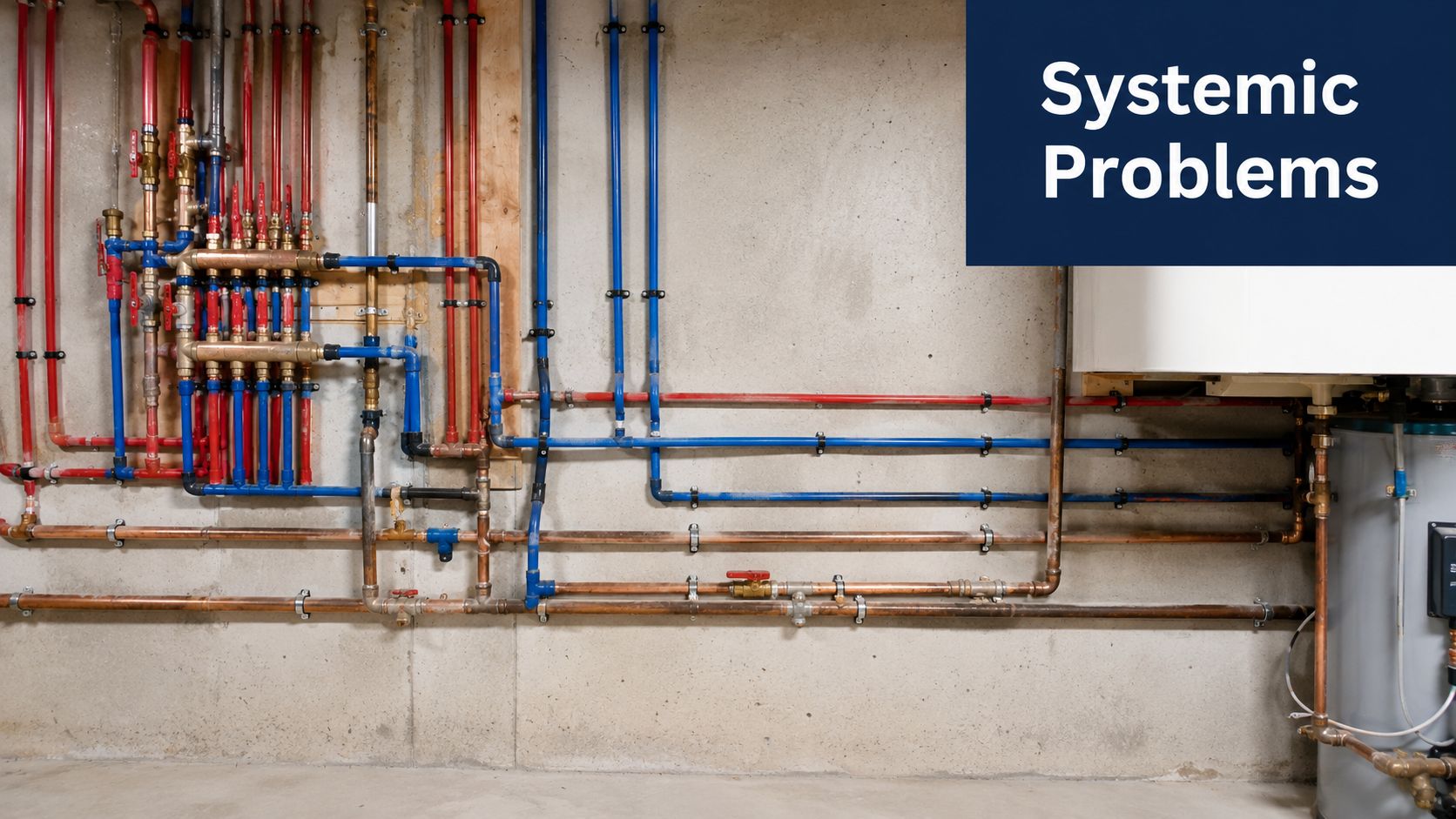
Old pipes can act like narrowed arteries
Hard water doesn't just affect the tank. It coats the inside of hot water piping too, and heat speeds that process up. In older galvanized systems, the combination of corrosion and minerals is especially rough.
According to this review of hard water, piping restrictions, and regulator issues, mineral deposits can reduce the effective diameter of pipes by 50% or more over a decade, creating severe flow restrictions. In practical terms, that means the water path keeps shrinking while the outside of the pipe looks unchanged.
A house with aging galvanized lines often shows a familiar pattern:
- Slow decline: The pressure gets worse over time instead of failing in one day.
- Hot side first: Heated water drops minerals faster, so hot lines can feel more restricted sooner.
- Multiple fixtures affected: The issue shows up in several bathrooms or units, not just one tap.
- Debris after repairs: Turning valves or restoring service can break loose rust and send it downstream.
When several fixtures lose hot pressure gradually, internal pipe buildup is often more important than the fixture hardware.
For landlords and property managers, this can turn into a maintenance planning issue rather than a one-time repair. If you're evaluating whether a water heater problem is really part of a larger property maintenance cycle, this essential information for rental property maintenance is a useful companion read.
Pressure regulators change the whole system
A pressure-reducing valve, often called a PRV or regulator, controls the pressure entering the home. Standard residential pressure should stay between 40 and 60 PSI, with 50 PSI as a median benchmark, according to this explanation of residential pressure range and regulator issues.
When the regulator fails or is set too low, it can make every restriction feel worse. Hot water often seems to suffer first because it's already pushing through tighter passages, mineral buildup, and older fittings.
A regulator problem usually shows up like this:
- Cold water may also feel weaker than usual.
- Pressure may drop at busy times or fluctuate.
- The shower can change character when another fixture opens.
- Heater flushing alone doesn't restore normal force.
Checking or replacing a PRV isn't a casual DIY project in most homes. You need accurate pressure testing, valve isolation, and the judgment to tell a regulator issue from a distribution issue.
Solutions From DIY Fixes to Calling EZ Plumbing
The right fix depends on where the restriction sits. Some remedies are quick and low-risk. Others involve hot water, pressure, old valves, and parts that don't forgive mistakes.

What you can safely do yourself
If the problem is minor or isolated, start with the tasks that don't expose you to scalding water or major leaks.
- Clean the outlet first: Remove and rinse faucet aerators and showerheads. If they're heavily scaled, soak the removable parts and clear the screens.
- Use the single-fixture approach: If only one sink or shower is weak on hot, try the backflush method described earlier before touching the heater.
- Check visible valves: Make sure fixture stops and accessible heater shutoffs are fully open if they appear safe to operate.
- Inspect for signs of leakage: Moisture around exposed hot lines, ceilings, or cabinets can explain poor performance fast.
If the pressure problem is most obvious in the shower, this guide on how to increase water pressure in a shower can help you separate a clogged showerhead from a deeper supply issue.
Water heater flushing is sometimes appropriate, but it's not a cure-all. It can help when sediment is loose enough to move out through the drain and when the tank and valves are in decent condition. It's a poor choice when valves are seized, the drain won't move, the unit is heavily scaled, or the primary blockage is in the outlet nipple or house piping.
Safety note: Hot water under pressure can burn you quickly. If you're not comfortable isolating the heater and controlling discharge, stop there.
A short visual overview can help you understand what a basic pressure-related service call often involves before deciding whether to proceed yourself.
When the job needs a plumber
Call for professional help when the problem points beyond a simple fixture cleaning.
That includes cases where hot pressure is poor at multiple fixtures, heater connections may be clogged, old galvanized piping is part of the system, the PRV may need testing, or you suspect a hidden leak. It also includes any situation where shutoff valves look corroded, supply lines are brittle, or you've already tried the obvious fixes without improvement.
A good service call should answer specific questions, not just swap parts:
| Situation | Usually reasonable for DIY | Usually needs a plumber |
|---|---|---|
| One clogged aerator | Yes | Rarely |
| Single sink hot-side blockage | Sometimes | If backflush fails |
| Suspected clogged heater nipple | No | Yes |
| Whole-house hot pressure loss | Unlikely | Yes |
| PRV diagnosis or adjustment | No | Yes |
| Hidden leak investigation | Limited | Yes |
The goal isn't to do everything yourself. It's to avoid doing the wrong thing first.
The Los Angeles Factor Hard Water and Aging Homes
Los Angeles adds two complications to this problem. The first is hard water. Mineral-heavy water accelerates the buildup that clogs heater fittings, coats aerators, and narrows hot lines. A homeowner may think they have repeated unrelated problems when it's really the same mineral issue showing up in different places.
The second is the age of the housing stock. Many neighborhoods still have older plumbing layouts, older valves, and, in some properties, aging galvanized piping. That changes the diagnostic approach. A brand-new fixture won't fix a branch line that's narrowed internally, and a tank flush won't solve a packed heater nipple or a failing regulator.
You can often see the same hard water story outside the plumbing system too. If your windows are carrying heavy mineral spotting, this guide on how to remove stubborn hard water stains is a useful reminder of how aggressive local mineral deposits can be on many surfaces.
In Los Angeles homes, what causes low hot water pressure is often a combination problem. Heat, minerals, older fittings, and older pipes all work together. That's why the best results usually come from a targeted diagnosis instead of a generic “flush it and hope” approach.
If your hot water pressure is weak, inconsistent, or limited to certain fixtures, EZ Plumbing can help you pinpoint the cause and fix it correctly. EZ Plumbing is licensed and insured, has served Los Angeles since 1989, and handles everything from heater performance issues and pipe restrictions to leak detection and emergency plumbing. Call (818) 908-2710 or schedule online for dependable service that protects your home, rental property, or commercial building.