
Water Leak from Ceiling? Act Fast to Prevent Damage
That sinking feeling you get when you spot a dark, spreading stain on your ceiling is something no Los Angeles homeowner wants to experience. When you see a water leak from ceiling, your immediate actions in the first few minutes can mean the difference between a simple patch job and a catastrophic failure that costs thousands.
Don't just stand there watching the drip. Here's exactly what to do to get the situation under control before you even start thinking about what caused it.
First, Protect Your Property and Contain the Mess
Your first move is damage control. Immediately get any electronics, furniture, rugs, or personal items out from under the leak. If something is too heavy or bulky to move, cover it completely with heavy-duty plastic sheeting or tarps.
Next, grab the biggest bucket you have and place it directly under the drip. This will save your floors from the primary water damage.
What if the ceiling is bulging or sagging? This is a much more urgent situation. It means a large amount of water has pooled up, putting immense strain on the drywall.
Pro-Tip: A sagging ceiling is a serious structural hazard and could collapse without warning. Never stand directly under it. If you can do it safely, take a screwdriver and carefully poke a small hole in the very center of the bulge. This allows the water to drain in a controlled stream into your bucket, relieving the pressure and preventing a much larger section of your ceiling from coming down.
Second, Make the Area Safe by Cutting the Power
This step is non-negotiable. Water and electricity are a lethal mix. Head straight to your home's breaker panel and shut off the circuit that powers the affected room.
If you’re not sure which breaker it is, or if you see water anywhere near the electrical panel itself, don't take any chances. Kill the power to the entire house using the main breaker. This single action prevents electrical shorts that could cause a fire and eliminates the risk of electrocution.
Putting this off can be a costly mistake. In the Los Angeles area alone, insurance claims for water damage from these types of leaks top $450 million annually. A slow response can easily turn a 3- to 5-day repair into a two-week nightmare, dramatically increasing costs.
Before you move on to stopping the water, a quick checklist can help you stay focused during a stressful moment.
Emergency Checklist for a Ceiling Water Leak
| Action | Why It's Critical | EZ Plumbing Pro-Tip |
|---|---|---|
| Move Valuables | Protects furniture, electronics, and irreplaceable items from immediate water damage. | Start with the most expensive or sentimental items first. Everything else can be replaced. |
| Place Buckets | Catches dripping water to prevent flooring damage and contain the spread. | If the drip is splashing, place an old towel in the bottom of the bucket to absorb the impact and stop the noise. |
| Puncture Bulges | Safely releases trapped water, preventing a ceiling collapse. | Use a small, sharp tool. A large gash can be harder to repair later. |
| Shut Off Power | Prevents deadly electrical shorts, fire, and risk of electrocution. | If your breaker panel isn't labeled, take a photo of it before the emergency so you can label it later. |
| Shut Off Water | Stops the source of the leak, preventing any further water from entering your home. | Every adult in the house should know where the main shut-off valve is and how to turn it. |
With these initial safety and containment steps handled, you can now focus on the most important task.
Finally, Stop the Water at Its Source
The last and most critical step is to cut off the water supply feeding the leak. For most interior leaks (not related to active rain), this means shutting off the water to your entire home. Knowing how to shut off your main water supply is an essential skill for any property owner.
If you're dealing with a leak that only appears when it rains, the problem is almost certainly your roof. While a Pacific Northwest leaky roof guide offers some great general advice, roofing issues in our dry Southern California climate often have their own unique quirks.
Table of Contents
- First, Protect Your Property and Contain the Mess
- Second, Make the Area Safe by Cutting the Power
- Finally, Stop the Water at Its Source
- Finding the Source of Your Ceiling Leak
- Deciding Between a DIY Fix and a Professional Repair
- Answering Your Questions About Ceiling Leaks
Finding the Source of Your Ceiling Leak
Alright, you've managed the immediate crisis and stopped the water from spreading. Now it's time to figure out exactly where that water is coming from. Identifying the source is everything—it determines who you need to call and what kind of repair you're looking at.
The water itself can tell you a lot. Is it a constant, clear drip? That often points to a fresh leak from a plumbing supply line. If you're seeing a discolored, brownish stain, you're likely dealing with a slow, long-term problem where water has been seeping through wood and insulation for a while.
Before you start your investigation, make sure you've handled the immediate emergency using the steps outlined below.
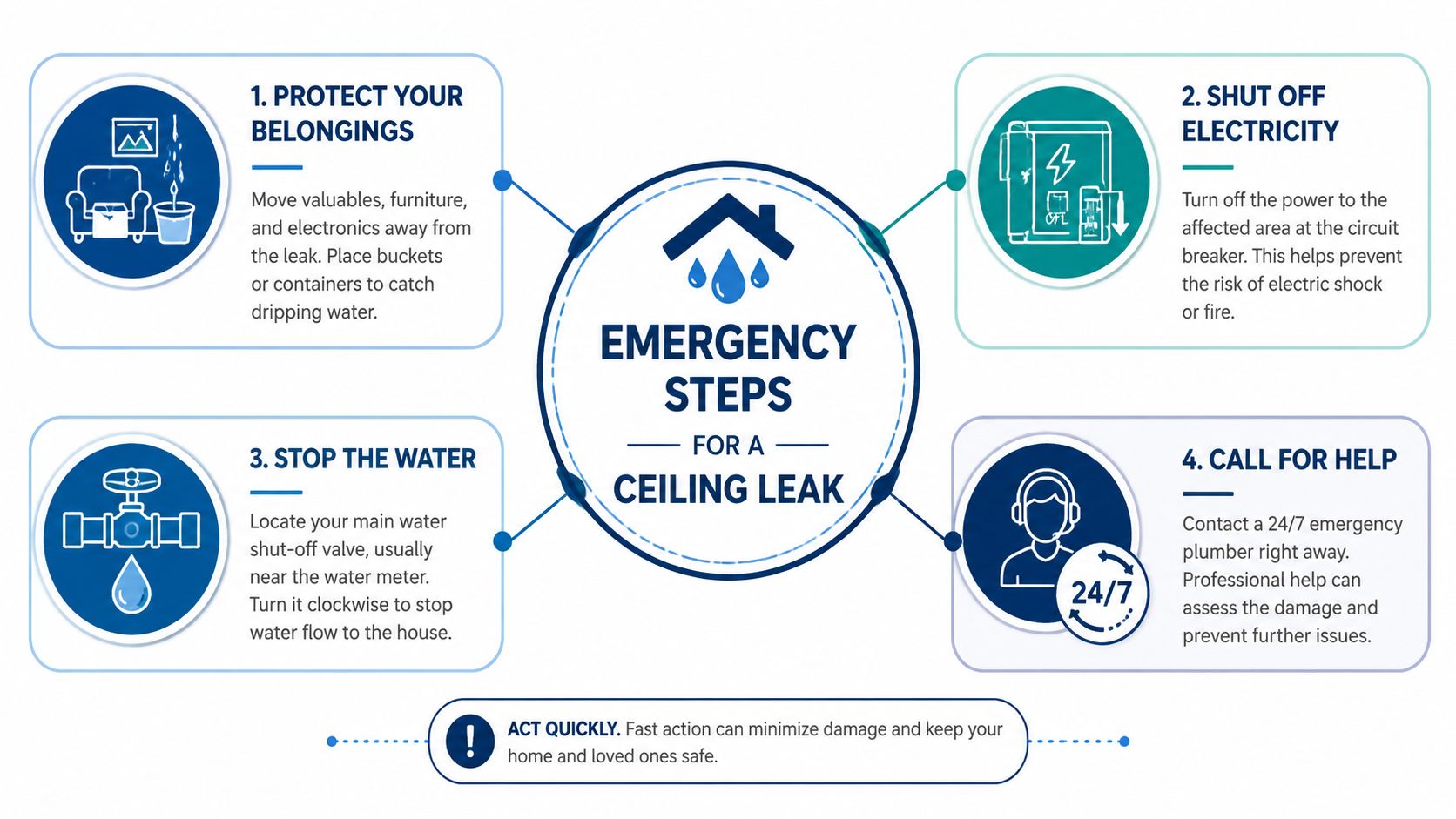
Getting the area secure and the water shut off is always the first priority. Only then can you safely and effectively diagnose the problem.
Common Culprits Behind the Drip
The location of the leak is your biggest clue. If you see a water stain directly below an upstairs bathroom, you can be almost certain it’s a plumbing issue. From my experience, it’s usually one of a few common offenders.
- Leaking Fixtures: A bad wax ring under a toilet is a classic. Cracked shower pans or a shoddy drain connection beneath a bathtub are also extremely common culprits.
- HVAC Condensation Lines: This is a big one for Los Angeles homes, especially with HVAC units in the attic. When a condensate drain line gets clogged, the overflow pan fills up and spills water right onto your ceiling.
- Appliance Failures: Don't forget about the washing machine or dishwasher on an upper floor. A burst hose or a failed connection can easily be the hidden source of the drip.
In fact, problems with plumbing fixtures in upstairs bathrooms are behind nearly 60% of all residential ceiling leaks. More often than not, it's a failed toilet seal or a shower drain issue that we find during an inspection.
If the leak is on the top floor and there's no plumbing above it, your roof is the prime suspect—even after a light LA rain. It's worth understanding roof water damage claims as you start thinking about repairs.
While you can often narrow down the general area, getting a precise diagnosis sometimes requires professional equipment. If you're not 100% sure, calling in an expert for leak detection services can pinpoint the exact origin without having to tear open walls and ceilings, ultimately saving you a lot of time and money.
Deciding Between a DIY Fix and a Professional Repair
When you spot a water leak from the ceiling, your first thought is probably about how to fix it fast and without breaking the bank. The temptation to grab a bucket and some tools is understandable. This is a critical judgment call, though, and making the wrong one can quickly turn a small problem into a full-blown disaster.
That said, some minor, temporary fixes are well within a handy homeowner's grasp. Let's say you can clearly see a single cracked shingle on your roof from a safe vantage point. Applying a bit of roofing cement can be a decent stopgap solution until a pro can come out for a permanent repair.
But the real danger starts when you try to venture into plumbing or electrical systems hidden behind drywall. Attempting to patch a leaky pipe you can't see is incredibly risky. You could easily make the leak worse, cause serious damage to your home's structure, or even create a life-threatening electrical hazard if water gets into your wiring.
When to Immediately Call a Professional
Some situations are simply not negotiable. These are the red flags that scream "danger" and mean you need to get a licensed plumber on the phone right away. Don't second-guess yourself if you see any of these signs:
- A Sagging or Bulging Ceiling: This is a clear sign that a large amount of water has pooled up, putting immense strain on the drywall. That ceiling is now at risk of total collapse.
- An Unidentifiable Source: If you’ve done a quick look around and still have no idea where the water is coming from, it's time to stop guessing. Professionals have specialized tools for a reason.
- Electrical Concerns: See flickering lights? Hear a buzzing sound from the ceiling? Is there water dripping near or through a light fixture? Shut off the power to that area at your breaker box and call for help immediately.
A true professional isn't just guessing, either. We show up with tools like thermal imaging cameras to spot temperature changes behind walls, moisture meters that find hidden dampness, and even tiny sewer cameras to inspect pipes from the inside. This technology lets us find the actual source of the problem and fix it right the first time, saving you the headache of repeat repairs down the road.
Once you've managed to stop the active leak from your ceiling, a new and often more frustrating job begins: dealing with the insurance company. Trust me, navigating a claim can feel overwhelming, but being organized from the very start is the single best way to make the process go smoothly.
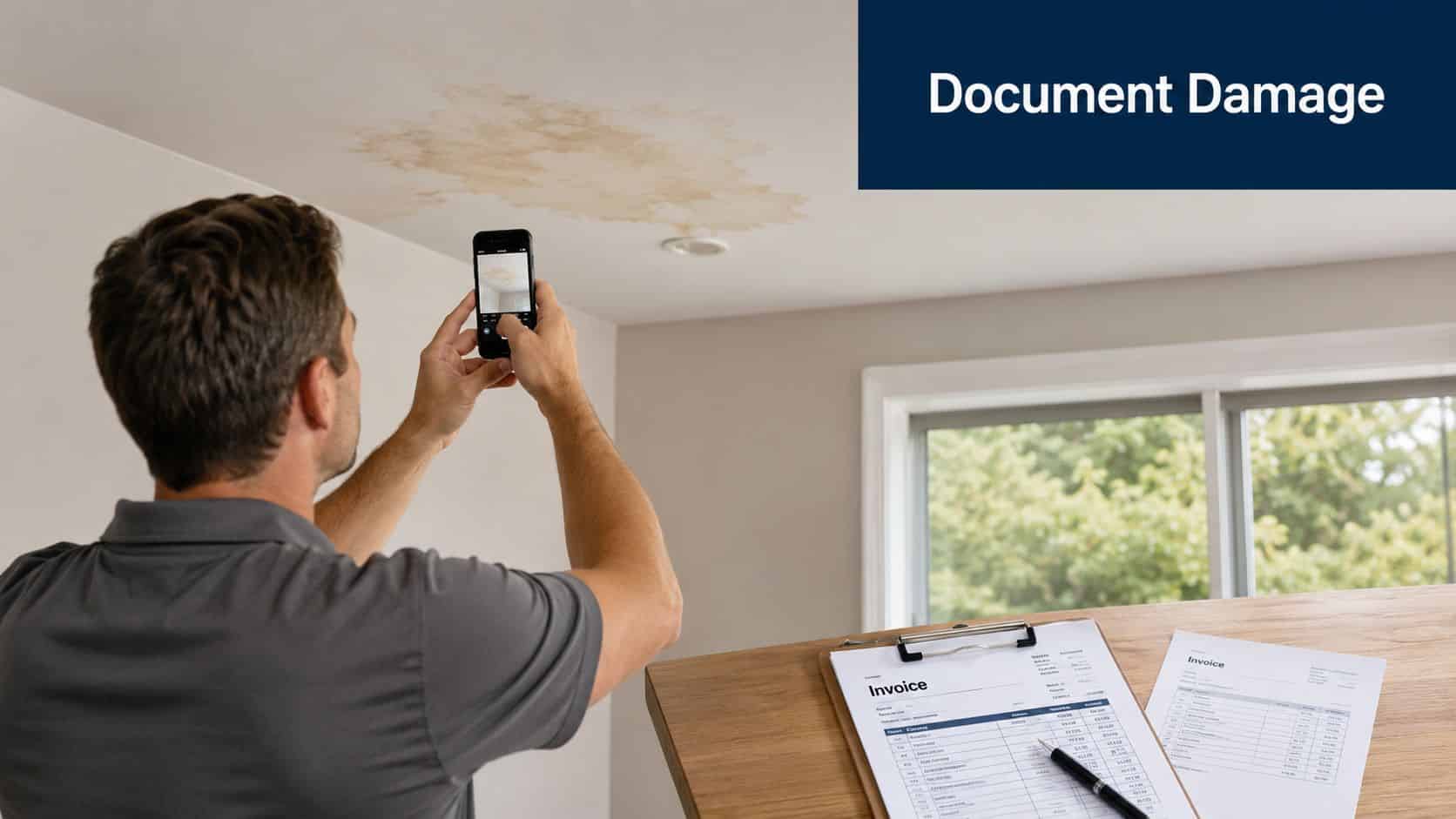
The moment you notice that first drip or water stain, switch into documentation mode. Grab your smartphone and start recording. Take videos of the water coming down and get plenty of photos showing how the damage is spreading. You'll want shots from different angles—some up close to show the details and others from further back to give a sense of the room. This isn't the time to be shy with the camera; this visual proof is everything.
Making the Call and Keeping Meticulous Records
When you make that first call to your insurance agent, keep it simple and stick to the facts. Tell them you have a water leak and describe the immediate steps you've taken to stop it. It’s best to avoid guessing about what caused the leak or who might be at fault. That kind of speculation can muddy the waters later on.
Pro Tip: Start a dedicated folder or notebook for everything related to this claim. Log every single phone call—who you spoke to, the date, the time, and what was discussed. Save every email, and most importantly, hold onto all your receipts, especially the invoice from the emergency plumber who came out.
This level of organization is non-negotiable. Ceiling leaks are a common headache for homeowners, and with the average water damage claim hitting $10,767 in 2023, you want to be prepared. For more context, you can see some interesting data on the impact of ceiling water damage from Servpro.
Your detailed records will back up your claim and justify the costs for all the necessary repairs. Remember, fixing the immediate plumbing issue is just one part of the solution. To see what comes next, check out our guide on water and mold remediation. A solid paper trail makes all the difference.
After you’ve dealt with the mess, stress, and expense of a water leak from your ceiling, the last thing you want is a repeat performance. Believe me, the best way to handle a water emergency is to stop it from happening in the first place. A simple, proactive maintenance routine is your strongest defense against future headaches.
Think of it as an annual check-up for your home. Set aside a bit of time once a year to get familiar with the water sources in your house. Start with the easy-to-spot culprits: the hoses for your washing machine, refrigerator ice maker, and dishwasher. Over the years, those standard rubber lines get brittle and can develop slow, sneaky leaks that cause major damage before you ever notice a drip.
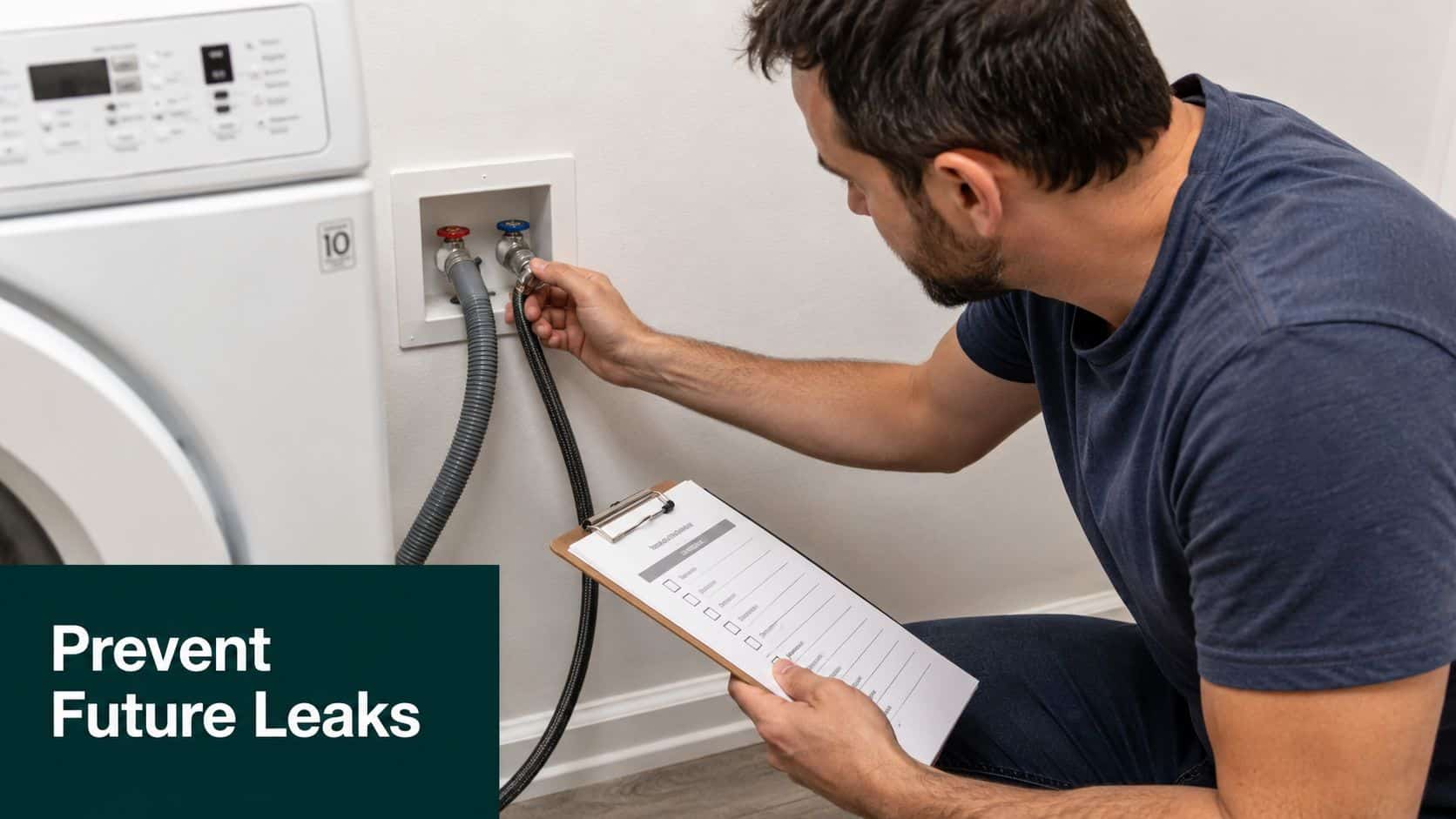
Your Annual Prevention Walk-Through
Once you've checked the appliance lines, take a quick walk around your property. Knowing what to look for can help you spot a small issue before it turns into a ceiling-destroying disaster.
- Hunt for Hidden Moisture: Keep an eye out for bubbling or peeling paint on walls and baseboards, especially in bathrooms, laundry rooms, and under kitchen sinks. These are the classic warning signs that moisture is hiding where it shouldn't be.
- Give Your Water Heater a Look: Glance at the base of your water heater. Do you see any rust stains or small puddles forming? Even a minor sign of corrosion could mean the tank's integrity is compromised, and a sudden, massive failure could be next.
- Consider Preventative Drain Cleaning: It's easy to forget about your drains until they're clogged. But having a professional clear your main lines periodically removes the gunk and buildup that leads to sewer backups—a particularly nasty cause of water damage in condos and multi-story properties.
Partnering with a trusted service like EZ Plumbing for regular maintenance isn't just about fixing things—it's an investment in prevention. A trained professional often spots subtle issues an untrained eye might miss, potentially saving you from another disruptive and costly emergency down the road.
Answering Your Questions About Ceiling Leaks
Once the initial panic of a water leak from the ceiling subsides, the questions start flooding in. After years of working with homeowners all over Los Angeles, I've heard just about every concern you can imagine. Getting clear, straightforward answers is the first step toward making the right call when your home is on the line.
One question I hear constantly is, "It's just a tiny drip. How long can I really wait to fix it?" My advice is always the same: don't wait. Not even for a day. That slow drip you see is quietly soaking everything you don't see—saturating drywall, weakening the wood beams holding up your floor, and creating a perfect breeding ground for mold. What looks like a small stain this week can easily become a collapsed ceiling next month.
It's also worth noting that not every wet spot is a true leak. Sometimes, the problem is actually condensation buildup. Taking a moment to understand the difference, for instance by addressing ceiling condensation with Superior, can help you figure out what's really going on before you pick up the phone.
Another thing on every homeowner's mind is, of course, the cost.
Common Questions and Expert Answers
"What should I expect to pay to fix a ceiling water leak in Los Angeles?" This is the million-dollar question, and the answer really depends. The final bill is shaped by the leak's source, how much damage it caused, and how hard it is to get to. A simple fix on an exposed pipe might only set you back a few hundred dollars. But if the leak is hidden behind a wall? You could be looking at a bill in the thousands to cover demolition, plumbing work, and full restoration.
That brings us to the most urgent question I get: "Is this dark spot on my ceiling mold?" A water stain is definitely a warning sign, but it isn't always mold—at first. The trouble is, mold can start growing within 24-48 hours of everything getting wet. If that spot looks fuzzy, has a black or greenish tint, or you notice a musty smell in the room, it's time to act. Assume you have a mold problem and call a professional right away for an assessment to protect your property and your family's health.