
Why Regular Plumbing Checks Protect Your Home
Regular plumbing checks, known in the industry as plumbing inspections or plumbing audits, are the single most effective way to prevent costly water damage and protect your home’s long-term value. Most homeowners only call a plumber when something breaks. That reactive approach costs far more than a scheduled inspection ever would. A professional audit catches hidden leaks, corroding pipes, and failing valves before they become structural problems. For Los Angeles homeowners dealing with aging clay sewer laterals, hard water mineral buildup, and older galvanized steel pipes, why regular plumbing checks matter is not a theoretical question. It is a financial one.
What hidden problems do regular plumbing inspections reveal?
Plumbing problems rarely announce themselves. By the time you see water stains on a ceiling or smell mildew behind a wall, the damage has been building for months. Professional plumbing inspections use camera inspection technology to look inside drain lines and sewer laterals, identifying cracks, root intrusion, and blockages that no visual surface check can find.
The most common hidden problems a licensed plumber uncovers include:
- Hidden leaks behind walls and under floors. Household leaks waste nearly 10,000 gallons of water annually. A single drip per second adds up to roughly 3,000 gallons per year, and a faster drip of 10 drips per second can waste 15,000 to 20,000 gallons or more.
- Galvanized corrosion in older pipes. Galvanized steel pipes common in pre-1970s Los Angeles homes corrode from the inside out. The narrowing reduces water pressure and eventually causes pinhole leaks that saturate wall cavities.
- Valve seat erosion from drip damage. Minor faucet drips erode the valve seat over 3–5 years. Ignoring a $30 cartridge repair can lead to a $150 to $250 faucet replacement later.
- Hard water mineral buildup. In Los Angeles, hard water accelerates internal pipe narrowing and faucet failures. Mineral deposits on aerators are a visible early warning sign that buildup is progressing deeper in the system.
- Sewer line damage from tree root intrusion. Older clay sewer laterals in neighborhoods like Silver Lake and Pasadena are especially vulnerable to root infiltration. Camera inspection is the only reliable way to confirm the extent of damage before it causes a full backup.
Preventative plumbing audits detect up to 90% of code violations or failure points before catastrophic failures occur. That number reflects how much is happening inside your walls that you simply cannot see without professional tools.
Pro Tip: Ask your plumber to run a camera inspection of your main sewer line every time you schedule a full plumbing audit. In Los Angeles, tree root intrusion into clay laterals is one of the leading causes of sewer backups, and catching it early costs a fraction of emergency sewer line repair.
How often should you schedule a plumbing inspection?
Inspection frequency depends on your home’s age, pipe materials, and any warning signs you have already noticed. Industry guidance recommends annual plumbing inspections for most homes, with older properties needing checks every 6–12 months due to higher risk of corrosion and deterioration.
The table below breaks down recommended inspection schedules by home type and risk level.
| Home type | Pipe materials | Recommended frequency |
|---|---|---|
| New construction (under 15 years) | PEX or copper | Every 2 years |
| Mid-age home (15–30 years) | Copper or ABS plastic | Annually |
| Older home (30+ years) | Galvanized steel or cast iron | Every 6–12 months |
| Home with known leak history | Any | Every 6 months |
| Home in hard water area | Any | Annually, with aerator checks monthly |
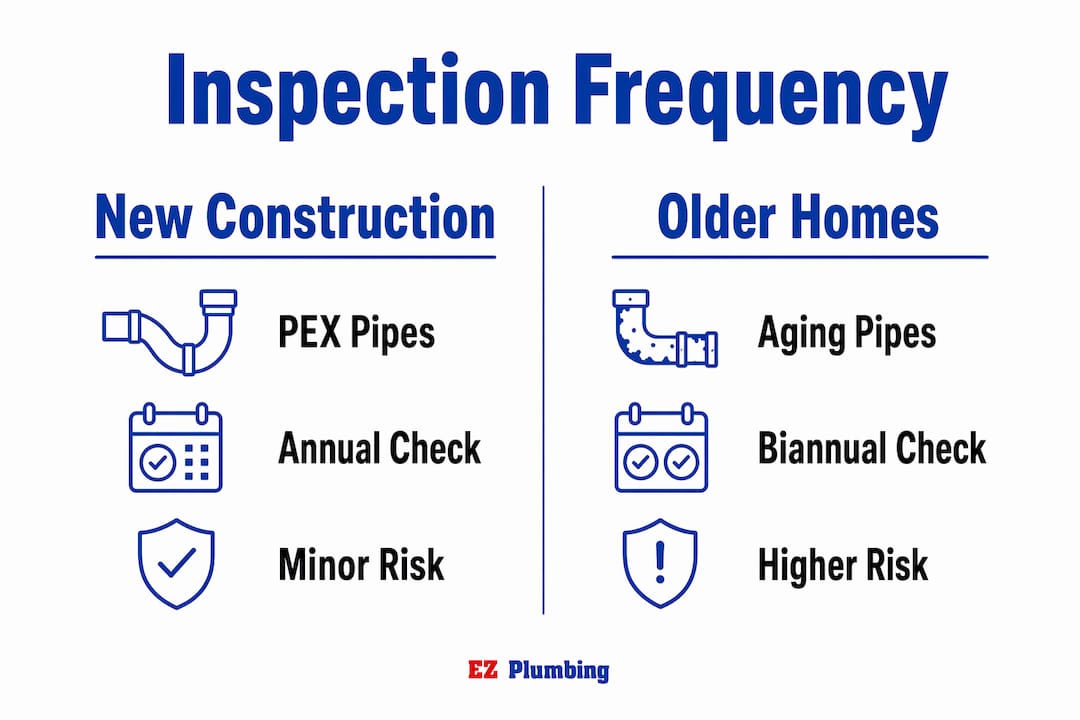
Older homes with aging shutoff valves and original pipe materials carry a significantly higher risk of water damage, mold, and sewer backups. A 6 to 12 month inspection schedule reduces that risk in a measurable way.
Beyond scheduled intervals, certain signs warrant an immediate inspection rather than waiting for your next annual appointment. Unexplained increases in your water bill, low water pressure at multiple fixtures, discolored water from taps, or any visible moisture on walls or ceilings all indicate a problem that needs professional evaluation right away. You can review a full list of warning signs of plumbing problems to know exactly what to watch for between inspections.
What are the practical benefits of regular plumbing checks?
The advantages of regular plumbing inspections fall into four clear categories: cost savings, water conservation, home safety, and property value protection.
Cost savings from early detection
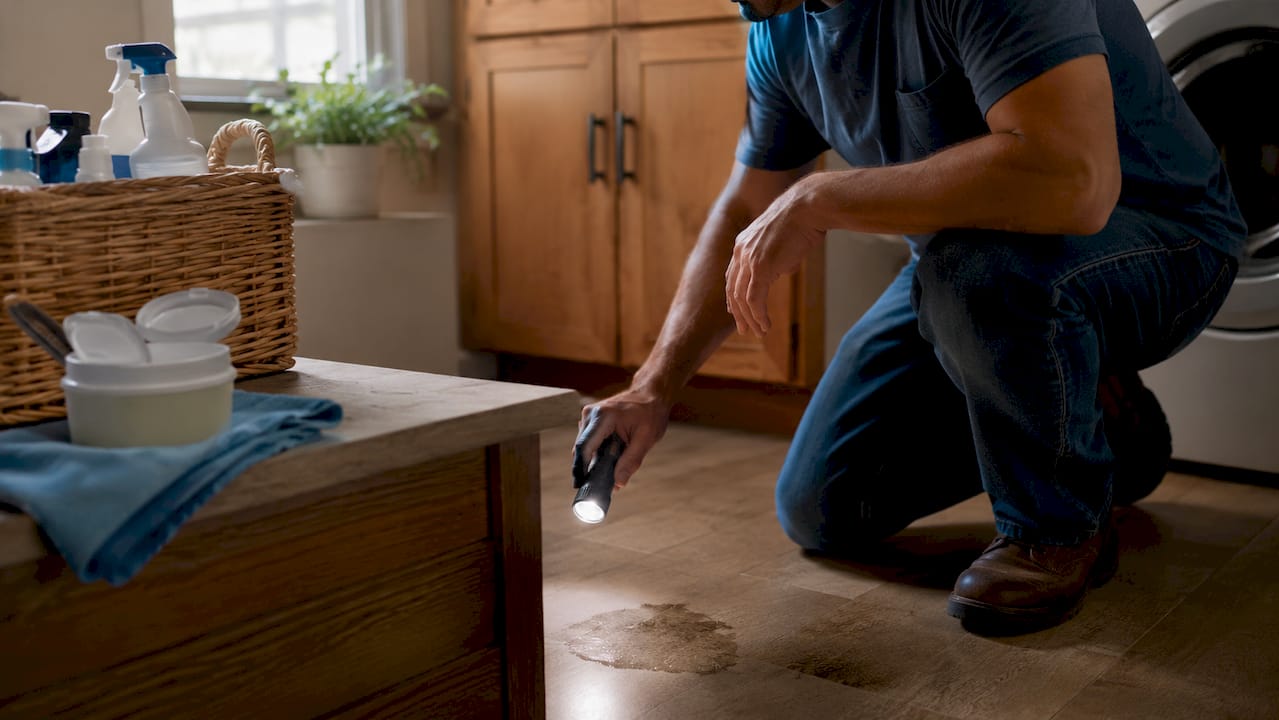
Plumbing inspections act as insurance for structural integrity by catching minor leaks before they cause mold, flooring collapse, or other expensive damage. A pinhole leak behind drywall costs a few hundred dollars to fix. The same leak discovered after mold has spread through a wall cavity can cost tens of thousands of dollars in remediation and structural repair. The math is straightforward.
Water conservation and lower utility bills
A dripping faucet or running toilet is not just an annoyance. It is money leaving your home every day. Fixing household leaks identified during an inspection can eliminate thousands of gallons of waste per year, which shows up directly on your water bill. In Los Angeles, where water rates are among the highest in California, that savings is real and recurring.
Property value and marketability
A documented history of plumbing audits can increase home market value by reducing risk discounting from buyers. When you list your home, buyers and their inspectors will scrutinize the plumbing. A written condition report from a licensed plumber, documenting the remaining useful life of your water heater, sewer lateral, and main supply lines, gives buyers confidence and gives you negotiating leverage. The role of plumbing in home value is often underestimated until a sale falls through over a failed inspection.
“Plumbing professionals emphasize inspections as preventive insurance protecting structural and financial security in homes.” — Midpoint Business
Pro Tip: Request a written condition report after every professional inspection. This document records the estimated remaining lifespan of your water heater, sewer line, and shutoff valves. It is one of the most useful tools you have for budgeting home maintenance costs and supporting your asking price when you sell.
A professional plumbing audit includes a written condition report documenting the remaining useful life of major components such as water heaters and sewer laterals. That report transforms an inspection from a one-time service call into a long-term planning tool.
What can homeowners do between professional inspections?
Professional inspections catch what you cannot see. Monthly homeowner checks catch what you can. Both are part of a complete plumbing maintenance routine, and they work best together.
Here is a practical monthly checklist you can complete in under 10 minutes.
- Check every faucet for drips. Turn each faucet fully off and watch for any continued dripping. Even a slow drip indicates a worn cartridge or O-ring that needs attention before valve seat erosion sets in.
- Test handle tightness. Loose handles on faucets or shutoff valves indicate internal wear. Tighten or flag for repair before the handle fails entirely.
- Clean aerators on kitchen and bathroom faucets. Unscrew the aerator tip, rinse out mineral deposits, and reinstall. Clogged aerators are the most visible sign of hard water buildup progressing through your pipes.
- Inspect visible pipes under sinks. Look for moisture, rust staining, or white mineral deposits on supply lines and drain connections. Any of these signals a slow leak or corrosion in progress.
- Test shutoff valves. Turn each shutoff valve under sinks and behind toilets a quarter turn and back. Valves that have not moved in years can seize, which means you cannot shut off water in an emergency.
Five minutes monthly checking all faucets can prevent water waste and major repairs. That is a low bar for protecting a significant investment. These DIY checks complement professional audits but do not replace them. A homeowner cannot assess pipe wall thickness, sewer line integrity, or water heater anode rod condition without professional equipment. Knowing the limits of what you can check yourself is part of responsible home maintenance. For a broader view of preventing plumbing emergencies in Los Angeles homes, a professional audit remains the foundation.
Key takeaways
Regular plumbing inspections are the most cost-effective way to prevent water damage, reduce utility bills, and protect your home’s resale value.
| Point | Details |
|---|---|
| Annual inspections are the baseline | Most homes need a professional plumbing audit at least once per year. |
| Older homes need more frequent checks | Homes 30 years or older with galvanized or cast-iron pipes should be inspected every 6–12 months. |
| Hidden damage is the real risk | Camera inspection and professional tools find leaks, root intrusion, and corrosion that no visual check can detect. |
| Written reports protect your investment | A condition report documents component lifespan and supports both budgeting and home resale value. |
| Monthly DIY checks add a layer of protection | Checking faucets, aerators, and shutoff valves monthly catches early warning signs between professional visits. |
What I have learned from years of Los Angeles plumbing inspections
Most homeowners treat plumbing the same way they treat their car. They wait for a warning light before they act. The problem is that plumbing does not have a warning light. By the time you notice the symptom, the damage has already been done for weeks or months.
What I have seen repeatedly in Los Angeles homes is that the cost of an inspection is almost never the issue. The cost of not having one is. A homeowner in Van Nuys once called us about low water pressure. We found galvanized corrosion so advanced that two sections of supply line had to be replaced. The inspection cost less than $200. The repair cost over $3,000. Had they scheduled annual checks, we would have flagged the corrosion two years earlier when a targeted repipe of one section would have cost a fraction of that.
The other thing I want homeowners to understand is that a plumbing audit is not just about fixing problems. It is about knowing the condition of your home. A written condition report from a licensed plumber tells you when your water heater is approaching the end of its useful life, whether your sewer lateral needs attention before the next rainy season, and which fixtures are showing early wear. That information lets you plan and budget instead of react and scramble.
Treat your plumbing as an asset that requires scheduled maintenance, not a system you ignore until it fails. The homeowners who do that consistently spend less money on plumbing over the life of their home. That is not an opinion. It is what the numbers show every time.
— EZ
Schedule your plumbing inspection with Ez-plumbing
Ez-plumbing serves the greater Los Angeles area with licensed residential plumbing inspections, professional leak detection, drain cleaning, sewer line repair, and water heater services. Our team holds a C-36 License (#583868) and is fully insured and code-compliant with LA municipal requirements. Whether you are overdue for an annual audit, seeing early warning signs, or preparing your home for sale, we provide thorough written condition reports and honest recommendations. Call Ez-plumbing to schedule your inspection, or explore our complete leak detection guide to understand what a professional evaluation covers before you book.
FAQ
How often should a homeowner get a plumbing inspection?
Most homes benefit from an annual plumbing inspection. Homes 30 years or older, or those with galvanized steel or cast-iron pipes, should be inspected every 6–12 months due to higher corrosion and failure risk.
What does a professional plumbing inspection include?
A professional inspection covers visible pipes, fixtures, shutoff valves, water heater condition, drain flow, and often a camera inspection of the main sewer line. The plumber typically provides a written condition report documenting findings and component lifespan estimates.
Can a dripping faucet really cause serious damage?
Yes. A dripping faucet erodes the valve seat over 3–5 years, turning a $30 cartridge repair into a $150 to $250 faucet replacement. Left longer, the moisture can damage the cabinet below and contribute to mold growth.
What are the signs that I need a plumbing check right away?
Unexplained increases in your water bill, low pressure at multiple fixtures, discolored or foul-smelling water, and visible moisture or staining on walls or ceilings all indicate a problem that needs immediate professional evaluation rather than waiting for a scheduled inspection.
Does a plumbing inspection help when selling a home?
A documented history of plumbing audits reduces risk discounting from buyers and supports your asking price. A written condition report from a licensed plumber gives buyers confidence in the home’s infrastructure and reduces the chance of a failed buyer’s inspection derailing the sale.