
Why Avoid DIY Plumbing: Risks LA Homeowners Face
DIY plumbing is defined as any unlicensed repair, installation, or modification to a home’s water, drain, or gas systems performed without a permit or professional oversight. In Los Angeles, the risks of DIY plumbing go far beyond a leaky joint. A single misstep can escalate a $200 repair into a $20,000 remediation, expose your family to bacteria like Legionella or E. coli, and trigger fines from the Los Angeles Department of Building and Safety. This article explains exactly why avoid DIY plumbing is the right call for most homeowners and tenants, and where the line between safe self-help and licensed work actually falls.
What are the financial risks of DIY plumbing mistakes?
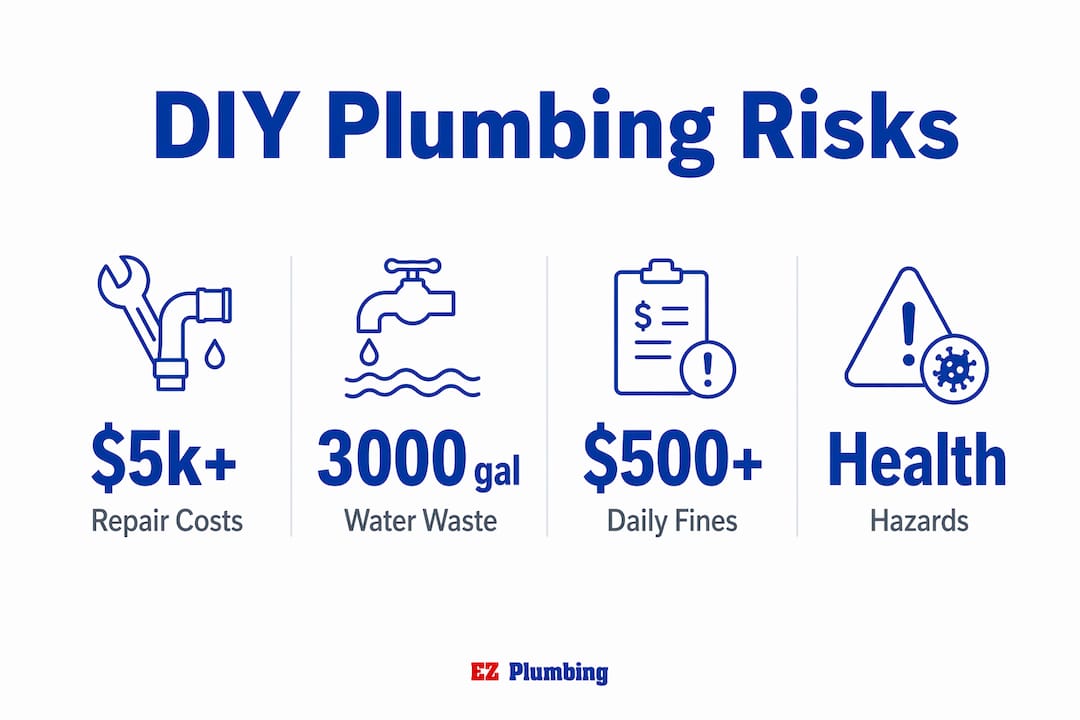
DIY plumbing errors can escalate initial repair costs from $200 to between $5,000 and $20,000 or more due to water damage and emergency remediation. That gap exists because most homeowners fix what they can see and miss what they cannot.
Hidden leaks are the costliest outcome
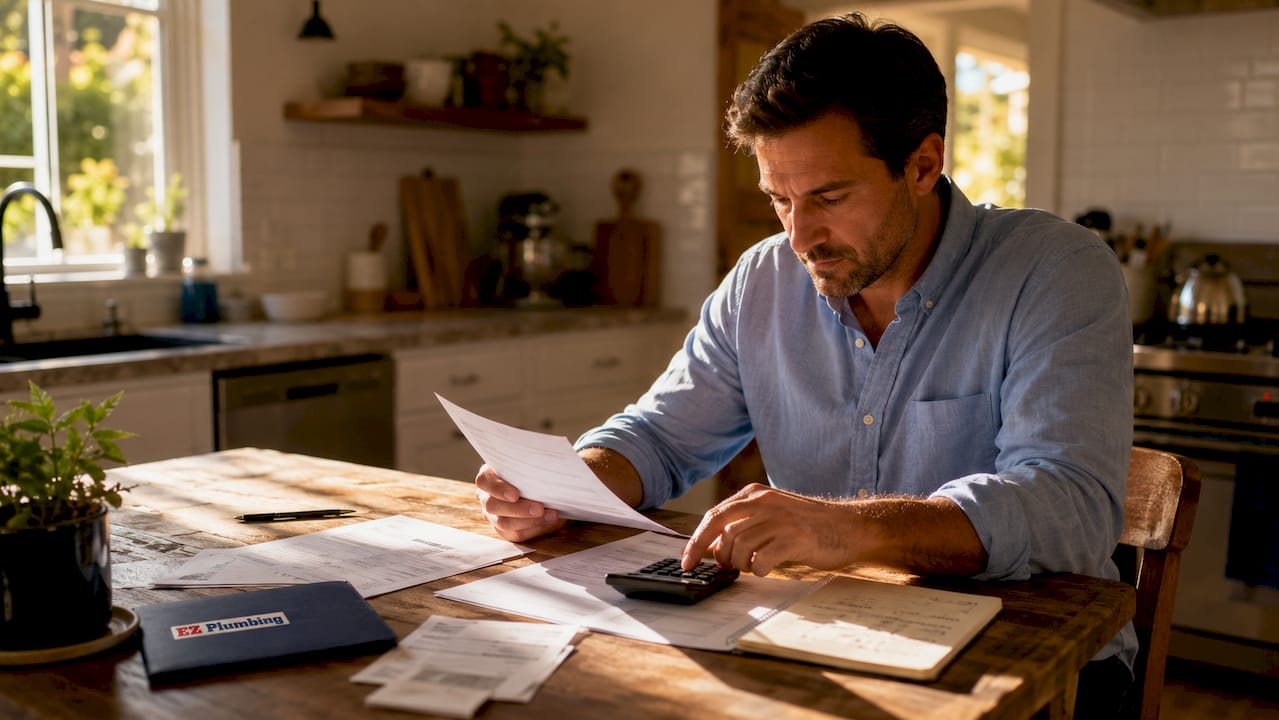
Over-tightening a fitting or using the wrong pipe sealant creates hairline fractures behind walls. These fractures cause delayed leaks that go undetected for weeks or months. By the time water stains appear on drywall, the structural framing and insulation behind it may already be saturated. Mold remediation alone in Los Angeles typically runs several thousand dollars before any plumbing repair is even addressed.
A dripping faucet wastes over 3,000 gallons of water per year. That volume translates directly into elevated water bills from the Los Angeles Department of Water and Power, and it signals a pressure or washer issue that a surface fix will not resolve. Failed washer hoses can release up to 500 gallons quickly, which is enough to damage flooring, cabinetry, and the unit below yours in a multi-family building.
Insurance denial is a real threat
Insurance providers require licensed professionals and documented inspections to cover water damage claims. If you repaired a supply line yourself and it later fails, your homeowner’s or renter’s insurance policy may deny the claim entirely. That denial leaves you paying out of pocket for damage that a licensed repair would have covered.
Pro Tip: Before touching any plumbing fixture, photograph the existing condition and check your insurance policy’s language on unlicensed repairs. Many standard policies in California include exclusion clauses for work performed without a permit.
Chemical drain cleaners compound the financial risk. Drain cleaners corrode pipes, turning a minor blockage into a major repiping job. Galvanized steel pipes common in older Los Angeles homes are especially vulnerable. What starts as a $12 bottle of cleaner can end with a $4,000 repiping estimate.
How do health hazards from DIY plumbing show up at home?
Improper plumbing repairs introduce biological and chemical hazards that are invisible until someone gets sick. Sewage backups introduce bacteria like E. coli and Salmonella into the home environment, and 12% of homes with DIY sewage backups contained multidrug-resistant bacteria. That statistic means roughly one in eight homes where a DIY drain repair went wrong became a genuine biohazard.
Water heaters and legionella risk
Water heaters improperly installed or maintained can harbor Legionella bacteria, which cause Legionnaires’ disease. Legionella thrives in water temperatures between 77°F and 108°F. A DIY water heater installation that sets the thermostat too low, or leaves stagnant water in a poorly flushed tank, creates exactly those conditions. Legionnaires’ disease is a severe form of pneumonia that disproportionately affects older adults and immunocompromised individuals, both of whom are common residents in Los Angeles multi-family housing.
“Plumbing systems are integral to home health. Neglected elements like water heaters and cross-connections in DIY setups can introduce pathogens unseen without professional assessment.” — Scientific Asia
Mold, biofilms, and lead exposure
Slow drains and minor leaks foster microbial biofilms that promote pathogen growth inside pipes and on surrounding surfaces. These biofilms are not visible to the naked eye and are not removed by standard household cleaners. Homes built before 1978 in neighborhoods like Silver Lake, Echo Park, and Highland Park may also contain lead solder or galvanized pipes. Disturbing those connections without proper technique can introduce lead particulates into the water supply, creating a plumbing and health risk that persists long after the repair is complete.
Drain clogs and sewer line issues are biohazards that can introduce dangerous bacteria into the home environment, making professional plumbing a health necessity rather than a convenience. The warning signs of plumbing problems are often subtle until the contamination is already established.
What legal consequences do LA homeowners face with DIY plumbing?
Los Angeles enforces fines of $500 or more per day for unpermitted plumbing work. That penalty accrues daily until the violation is corrected and inspected. For a homeowner who completes a DIY water heater swap on a Friday and does not discover the violation until a city inspection two weeks later, the fine exposure is substantial.
The permit process protects you
Permits create inspection records that legally protect homeowners from insurance denials and fines and preserve home resale value. The permit process is not governmental friction. It is a key homeowner protection that maintains insurance coverage and property value. When you sell your Los Angeles home, California law requires disclosure of all unpermitted work. Buyers’ inspectors routinely flag unpermitted plumbing, and lenders may refuse to finance a property with open violations.
Unpermitted plumbing must be disclosed at sale and can require costly remediation before escrow closes. In practice, this means you may need to open walls, bring the work up to current Los Angeles Plumbing Code standards, and pay for a licensed contractor to certify the repair. The cost of that retroactive compliance almost always exceeds what a licensed repair would have cost originally.
Pro Tip: The Los Angeles Department of Building and Safety allows homeowners to pull permits for certain minor repairs. Call their office at (213) 482-7077 before starting any work to confirm whether your project requires a permit and inspection.
Permits and inspections create a defensible paper trail that prevents insurance denial and legal penalties in the event of future plumbing failures or property transfers. That paper trail is worth more than the permit fee in almost every scenario.
Which plumbing tasks are safe DIY projects vs. professional jobs?
The risk-to-savings ratio flips once complexity or safety hazards exceed homeowner skill. Some tasks are genuinely low-risk for a careful homeowner. Others require a licensed plumber regardless of your confidence level.
Tasks a careful homeowner can handle
Replacing a faucet aerator, swapping a toilet flapper, basic drain plunging with a cup plunger, and recaulking around a tub or sink are all within reach for most homeowners. These tasks involve no pipe connections, no gas lines, and no wall penetrations. The consequences of a mistake are limited and immediately visible.
Consulting a resource like the homeowner’s cleanout guide from USA Plumbing & Septic can help you understand your home’s drain access points before attempting any basic drain clearing.
Tasks that require a licensed plumber
Natural gas plumbing work should never be attempted by homeowners due to the high risk of fire or carbon monoxide poisoning. Beyond gas lines, the following tasks require a licensed professional in Los Angeles:
Water heater installation or replacement, sewer line repair or replacement, any repair requiring opening walls or floors, repiping with copper or PEX, and hydro-jetting for drain clearing. Professionals use diagnostic tools like drain cameras to identify root causes of plumbing failures that are completely unavailable to DIYers. A camera inspection of a clay sewer lateral, common in pre-1960s Los Angeles homes, can reveal root intrusion or pipe collapse that a plunger will never resolve. For a thorough overview of what these jobs involve, the Ez-plumbing guide on common plumbing problems for LA homes covers the most frequent failure points by property type.
DIYers often attempt surface-level fixes without proper diagnostics, leading to worsened conditions and expensive repiping. The pattern is consistent: a homeowner snakes a drain, clears the immediate clog, and considers the job done. Three months later, the same drain backs up because the root cause was a collapsed pipe 20 feet down the line.
Key takeaways
Skipping professional plumbing services in Los Angeles creates financial, health, and legal exposure that consistently costs more than the licensed repair would have.
| Point | Details |
|---|---|
| Financial risk is severe | DIY errors can turn a $200 fix into a $5,000–$20,000 remediation bill. |
| Health hazards are real | Sewage backups and improper water heater installs introduce E. coli, Salmonella, and Legionella into your home. |
| LA fines are steep | Unpermitted plumbing work in Los Angeles carries fines of $500 or more per day until corrected. |
| Insurance may not cover you | Insurers can deny water damage claims when unlicensed or unpermitted work caused the failure. |
| Know your DIY limits | Aerator swaps and toilet flappers are safe; gas lines, water heaters, and sewer repairs are not. |
What i’ve learned after years of fixing DIY plumbing mistakes
The calls we get most often at Ez-plumbing are not from homeowners who ignored a problem. They are from homeowners who tried to fix it themselves and made it worse. The pattern is almost always the same: a confident repair, a quiet leak behind the wall, and a discovery six months later that costs five times what the original job would have.
What surprises most people is how often the damage is invisible until it is catastrophic. Galvanized corrosion in a 1950s Burbank bungalow does not announce itself. A hairline fracture from an over-tightened compression fitting in a Van Nuys condo does not drip visibly. These failures build silently, and by the time you see evidence, the drywall, subfloor, or framing has already absorbed weeks of moisture.
The permit question is where I see the most resistance. Homeowners view permits as bureaucratic overhead. In reality, a permit is the single document that stands between you and an insurance denial, a failed home sale, or a personal liability claim from a neighbor whose unit flooded. I have seen unpermitted water heater swaps in Pasadena cost sellers $8,000 in retroactive compliance work during escrow. The permit would have cost $150.
My honest recommendation is this: if the repair requires turning off the main water supply, opening a wall, touching a gas line, or replacing a water heater, call a licensed plumber. The savings from doing it yourself are almost always smaller than you expect, and the downside is almost always larger.
— EZ
Get professional plumbing help from Ez-plumbing
If this article has clarified where your DIY limits are, Ez-plumbing is ready to handle what falls outside them. Ez-plumbing holds C-36 License #583868 and serves the greater Los Angeles area with fully insured, code-compliant residential plumbing services.
Water heater installation is one of the most common DIY failures we correct. Our water heater installation guide walks you through what a professional installation involves and why it matters for both safety and warranty coverage. For drain issues, our drain cleaning services use camera inspection and hydro-jetting to resolve the root cause, not just the symptom. Call Ez-plumbing for an inspection before a small problem becomes a large one.
FAQ
Why avoid DIY plumbing for water heater replacement?
Water heater installation requires gas line connections, pressure relief valve calibration, and a permit in Los Angeles. An improper install can create Legionella risk and void your manufacturer warranty.
Can DIY plumbing mistakes void my homeowner’s insurance?
Yes. Insurance providers require licensed professionals and documented inspections to cover water damage claims. Unpermitted or unlicensed work is a common basis for claim denial in California.
What plumbing work requires a permit in los angeles?
Water heater replacement, sewer line repair, repiping, and any work involving gas lines all require permits from the Los Angeles Department of Building and Safety. Unpermitted work carries fines of $500 or more per day.
How do i know if a previous owner did unpermitted plumbing work?
Request the property’s permit history from the Los Angeles Department of Building and Safety before purchasing. A licensed plumber can also perform a camera inspection to identify non-standard or code-violating installations.
Is drain snaking safe to do yourself?
Basic cup plunging is safe for most homeowners. Mechanical drain snaking carries a risk of pipe damage, especially in older homes with clay or galvanized pipes, and should be handled by a professional when clogs are recurring.