
Troubleshooting Gas Water Heater: Easy Fixes for 2026
You wake up, turn the shower on, wait for the usual warm-up, and get hit with cold water instead. Then comes the stare at the water heater in the garage, closet, or utility room, hoping the problem is obvious.
That situation is frustrating, but it usually responds better to a calm check than a rushed guess. A gas water heater often gives clues before it fully quits. No hot water, a pilot that won't stay lit, rumbling sounds, or a puddle under the tank all point in different directions. The trick is knowing which checks are safe for a homeowner and which ones cross into licensed-plumber territory.
This guide uses a safety-first diagnostic framework for troubleshooting a gas water heater. Start with what you can observe without taking anything apart. Match the symptom to the likely cause. Then stop at the right moment, before a simple repair turns into a gas, combustion, or water-damage problem.
Table of Contents
- That Morning Shock No Hot Water
- First Steps A Safe Diagnostic Checklist
- Decoding Your Water Heater Symptoms
- When to Stop and Call a Licensed Plumber
- Preventive Maintenance to Avoid Future Headaches
- Your Los Angeles Water Heater Experts
That Morning Shock No Hot Water
Most homeowners don't think about their water heater until it stops doing its job. The usual call starts with the same story. Everything was fine last night, then the morning shower went cold, the sink only ran lukewarm, and now someone is standing in front of the tank wondering whether to relight something or call for help.
In practice, a failed gas water heater usually falls into one of a few buckets. The pilot is out. The gas supply isn't reaching the burner. Sediment has built up and cut performance. A control part is failing. Less commonly, the heater itself is fine but the room around it has a combustion-air or venting problem.
That last one catches people off guard.
Practical rule: Don't start by turning knobs at random. Start by identifying the symptom and checking for anything unsafe first.
A homeowner can safely do a lot with eyes, ears, and patience. You can look for a leak, verify whether the gas shutoff valve is open, inspect the pilot through the sight glass, and note whether the heater is making popping or rumbling sounds. You can also tell the difference between a one-time outage and a repeat shutdown pattern, and that difference matters.
Good troubleshooting gas water heater work is less about being handy and more about being disciplined. If the issue is simple, the safe checks will usually expose it. If the issue keeps returning, the repetition itself is the clue. That's when you stop treating it like a nuisance and start treating it like a fault that needs proper diagnosis.
First Steps A Safe Diagnostic Checklist
Start with a safety decision, not a repair attempt. A gas water heater can wait. A gas leak, active venting problem, or carbon monoxide concern cannot.
If you smell gas, hear a strong hissing sound near the unit, or feel dizzy or sick in the heater area, leave the home and call your gas utility and a licensed plumber from outside. Do not relight the pilot. Do not touch switches or plugs. Those are stop-now conditions.
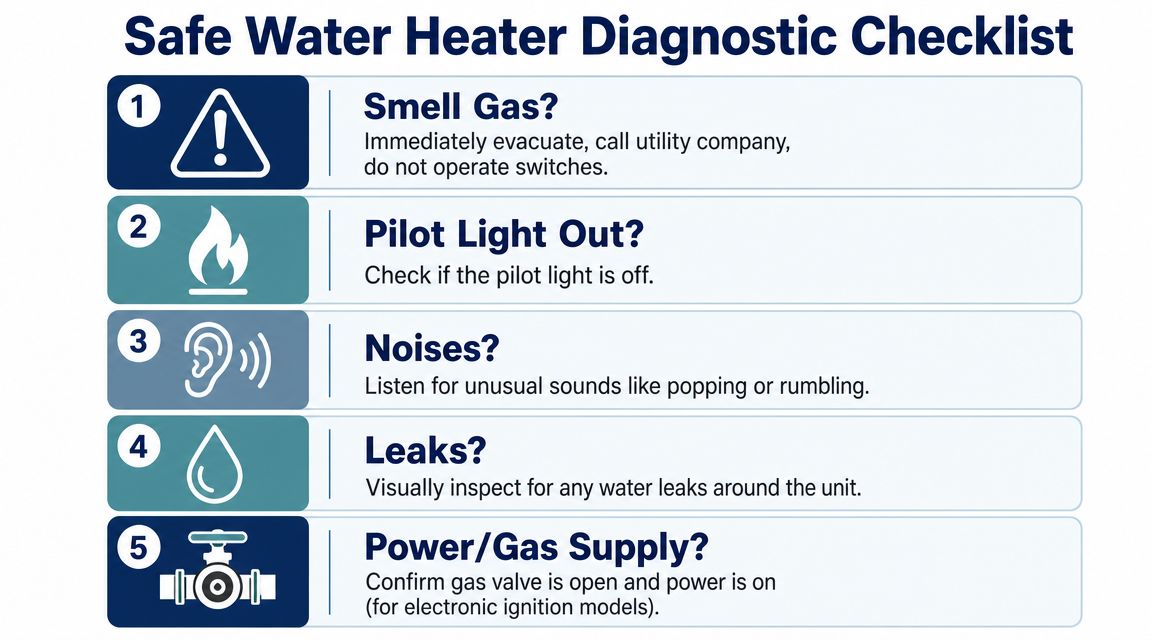
What to check before doing anything else
Use eyes, ears, and your nose first. That gives you a clean read on the problem before any reset wipes out the clues.
- Look for active leaking. Check the floor, drain pan, supply lines, vent connections, and the area around the temperature and pressure relief valve discharge pipe. A small drip may point to a valve issue. A steady leak or water from the tank body itself means stop and call.
- Confirm the control setting. Make sure the gas control is on and the temperature setting has not been turned down too far or left on vacation mode. If your unit has been acting erratically, the problem may involve the gas water heater control valve and thermostat assembly, not just the pilot.
- Verify the gas shutoff position. The handle should be parallel with the gas pipe if it is open. If the valve position looks right but the burner still will not fire, do not start disconnecting gas parts.
- Check the sight glass. Look for the pilot flame and note its color and behavior. A steady blue flame is normal. A weak, fluttering, or yellow flame points to combustion or air-supply trouble and needs professional diagnosis.
- Read any status light before resetting. Modern gas heaters often flash a code for ignition failure, sensor fault, overheating, or flammable vapor lockout. Write the pattern down first. That code can save a lot of guesswork.
- Confirm power on electronic-ignition units. Some gas heaters still rely on household power for ignition, draft components, or controls. A tripped GFCI, switched outlet, or loose plug can shut the heater down.
- Look at the room, not just the tank. Crowded utility closets, blocked louvers, stored paint cans, and new laundry equipment can change combustion air. I see this more often than homeowners expect, especially after remodeling or appliance replacement.
If you plan to relight the pilot
Only relight the pilot if the manufacturer instructions on the unit say a homeowner can do it safely. Follow those directions exactly, including the waiting period after turning the control to OFF. That pause allows unburned gas to clear.
If the pilot lights once and then drops out again, treat that as a fault pattern. This often indicates a different underlying problem, such as a weak thermocouple, failing flame sensor, bad gas control, poor combustion air, or a venting issue.
For households that want to be more alert to combustion hazards around fuel-burning appliances, Can Do Duct Cleaning's CO safety tips are a useful companion read. Carbon monoxide concerns often show up with draft and combustion-air problems, even when the heater itself has not completely failed.
Decoding Your Water Heater Symptoms
A gas water heater usually points you toward the problem by symptom. The key is matching the symptom to a safe next step, then knowing where homeowner checks should stop.
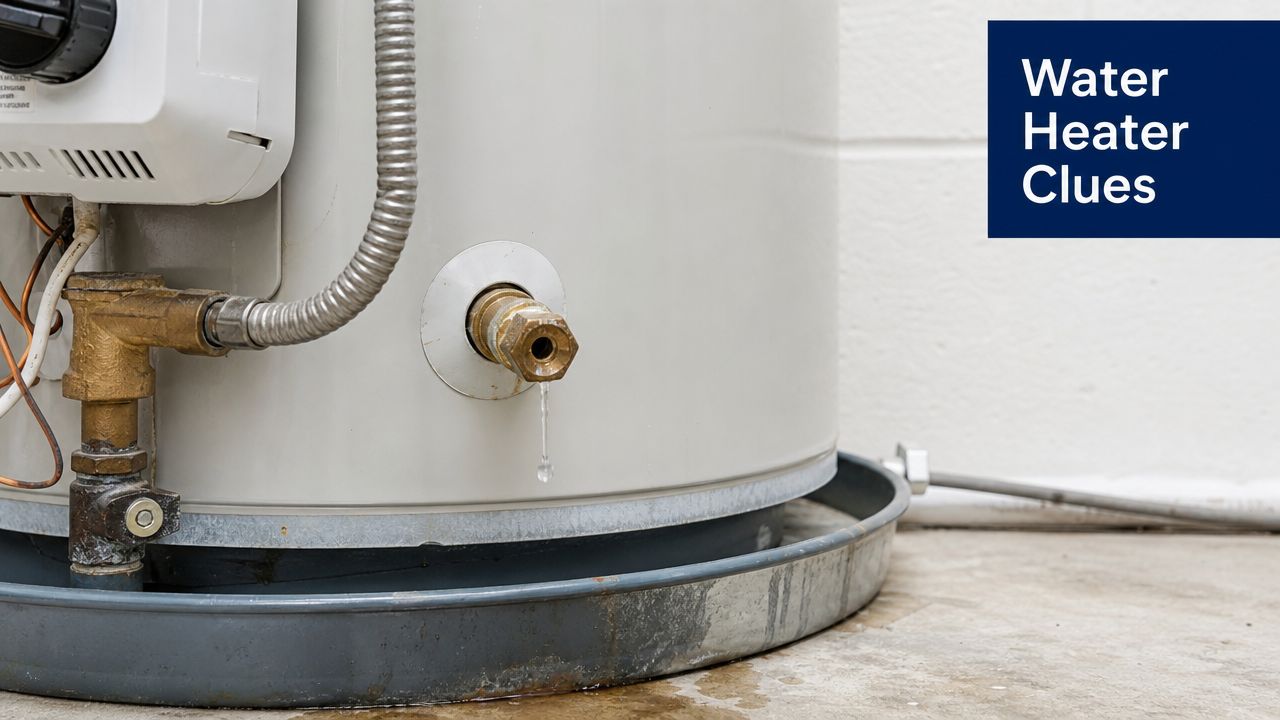
No Hot Water or Not Enough Hot Water
Start with what changed. No hot water at all usually points to ignition, gas supply, or controls. Hot water that turns lukewarm fast points more often to recovery problems, sediment, or a burner that is firing poorly.
Homeowners can safely check a few basics without opening gas components:
| Symptom | Likely direction | Safe homeowner check | Stop and call |
|---|---|---|---|
| No hot water | Pilot, ignition, or gas supply issue | Check pilot status through the sight glass and confirm the shutoff valve position | If gas odor is present, the unit shows repeated shutdowns, or relighting does not hold |
| Lukewarm water | Thermostat setting, sediment, or weak burner performance | Confirm the setting and listen for rumbling during a heating cycle | If the flame is abnormal, recovery stays poor, or the heater keeps cutting out |
| Hot water runs out too fast | Recovery problem or tank age | Check for leaks and note whether the burner seems to cycle normally | If the tank is older, leaking, or performance has dropped suddenly |
A common misread is blaming the thermostat right away. I see plenty of heaters where the setting is fine, but the burner only runs briefly because of sediment, a pilot issue, an airflow problem, or a control fault.
Pilot Light Problems
Pilot complaints sit right at the center of gas water heater diagnosis because several systems meet there. Gas supply, flame sensing, combustion air, and safety controls can all produce the same homeowner complaint: "It won't stay lit."
If the pilot goes out once, a proper relight may restore operation. If it lights and drops out again, the pattern matters more than the relight itself.
When a pilot flame is present but the unit still will not stay lit, technicians often test the thermocouple output. This thermocouple troubleshooting guide explains the millivolt ranges commonly used to judge whether the thermocouple is producing enough signal to keep the gas valve open. That is not a typical homeowner test, but the repeated dropout is still useful information because it points beyond a one-time outage.
Pay attention to these clues:
- The pilot drops out on windy days or after laundry room doors are closed. Air movement, poor draft, or restricted combustion air moves higher on the suspect list.
- The heater relights, runs for a short time, then shuts down again. A control, sensor, or safety issue becomes more likely.
- The flame is weak, yellow, or unstable. That suggests combustion trouble and calls for professional diagnosis.
Some homeowners hear a hissing or sizzling sound and assume gas is escaping near the burner. In many cases, the noise is related to heat and water conditions instead. This overview of common water heater hissing problems helps sort normal expansion and sediment noise from symptoms that deserve closer attention.
If the symptoms start pointing toward the control assembly, it helps to understand what a gas water heater control valve does and how it affects ignition and temperature regulation. Once diagnosis reaches the valve, internal sensors, or flame proving components, the safe homeowner portion is over.
A pilot that will not stay lit can also point to a control or air supply issue.
Strange Noises
Noise matters because it changes the diagnosis. A quiet heater that suddenly starts rumbling, popping, or crackling is often dealing with sediment at the bottom of the tank.
That buildup forces the burner to heat through mineral scale instead of heating the tank efficiently. The result can be longer run times, slower recovery, and more noise during burner operation. Homeowners often notice the sound first and the performance drop later.
Here is the practical way to sort it:
- Light ticking or brief expansion sounds: Often normal metal movement as the tank heats and cools.
- Popping or rumbling while the burner is running: More suspicious for sediment buildup.
- Noise plus weaker hot water performance: Stronger sign that the tank is losing efficiency and needs service.
I would not ignore a heater that has gotten noisier over time. Sediment can mimic other failures, especially when the complaint is "it still works, just not like it used to."
Water Leaks
A leak has to be traced to its source before anyone can call it minor or serious. Water on the floor means very different things depending on where it starts.
Moisture at a top fitting or supply line may come from a connection that can be repaired. Water from the temperature and pressure relief valve discharge can point to a valve problem, overheating, or pressure issues elsewhere in the plumbing system. Water appearing from the tank body or bottom seam is the most concerning pattern because the tank itself may be failing.
Use this quick distinction:
- Top connections are wet: Look closely at nearby fittings and piping.
- Relief valve is dripping: Document whether it is occasional or steady, but do not cap or plug the discharge.
- Water is collecting under the tank body: Treat it as urgent, especially if the amount is increasing.
Condensation, a loose fitting, and a failed tank do not get the same response.
A homeowner can inspect, dry the area, and monitor where the moisture returns. A homeowner should not disassemble gas-side parts, alter the relief valve, or keep running a heater that appears to be leaking from the tank itself.
When to Stop and Call a Licensed Plumber
A gas water heater can go from nuisance to safety problem fast. The key is knowing when homeowner checks should stop and licensed diagnosis should begin.
Problems That Are No Longer DIY
Call a licensed plumber right away if any of these show up:
- You smell gas near the heater. Leave the area. Do not flip switches, use a lighter, or try to relight anything. Call from outside.
- The burner flame is yellow or orange, or you see soot or scorch marks. Those are warning signs of combustion trouble, not a simple tune-up item.
- The heater keeps shutting down after you relight or reset it. Repeated trips usually mean an underlying fault is still there.
- You suspect a venting problem. Exhaust smell, excessive condensation around the draft hood, or signs of backdrafting need professional attention.
- The repair would involve the gas valve, burner assembly, internal safety controls, or vent connector. Those parts need trained hands and proper testing.
- The tank is leaking from the body itself. At that point, the question is usually replacement timing, not a DIY fix.
Poor combustion air gets missed all the time. I see it in tight garages, small utility closets, and heater locations that have slowly filled with storage. The heater may look like the problem, but the room is starving it for air. That changes flame quality, draft, and shutdown behavior, and it is exactly why repeated pilot or burner issues should not be brushed off.
Why Repeated Resets Matter
If a heater runs for a short time after a reset and then fails again, the reset only cleared the symptom for the moment. It did not identify the cause.
A licensed plumber needs to sort out whether the problem is a weak thermopile, a failing gas control valve, a tripping thermal switch, a sensor issue, or unsafe venting conditions. Consumer guidance from AHS on diagnosing a water heater that won't stay running points to the same basic reality. Repeated shutdowns usually mean the heater needs testing, not more trial and error.
That line matters for safety. Homeowners can observe patterns, check for obvious hazards, and stop using the heater when something looks wrong. Homeowners should not keep cycling controls, bypassing safety devices, or opening gas-side components to chase a temporary restart.
If you are at that point, schedule a proper gas water heater repair service. A licensed plumber can test the controls, verify the vent is drafting correctly, check combustion conditions, and tell you whether the safer call is repair or replacement.
Preventive Maintenance to Avoid Future Headaches
Getting the hot water back is only half the job. The other half is catching the wear signs early, before a minor service call turns into a leak, a shutdown, or a full replacement.
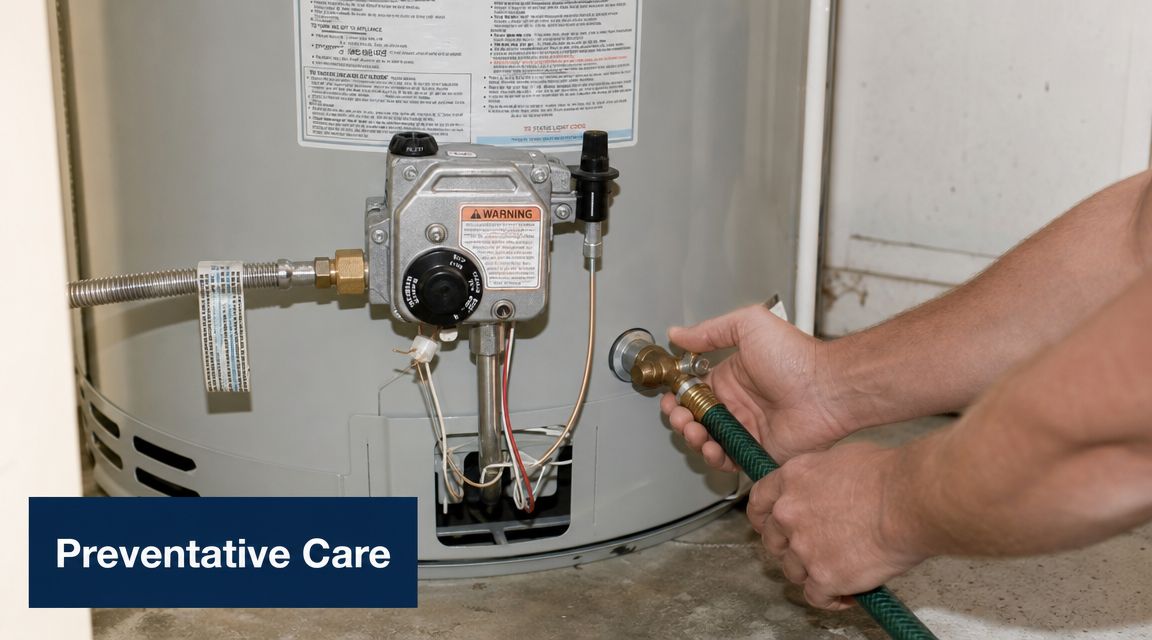
What Homeowners Should Do Regularly
Most gas tank heaters give warnings before they quit. You may hear rumbling during burner operation, notice slower recovery after showers, or find a little moisture around a fitting that used to stay dry. Those are maintenance signals, not details to ignore.
For homeowners, the safest routine is simple:
- Look for leaks: Check the base of the tank, the shutoff area, supply connections, and any visible valve bodies.
- Listen when the burner runs: Rumbling, popping, or a harsher burner sound often points to scale or sediment inside the tank.
- Keep the area clear: Boxes, paint, cleaners, and stored items should not crowd the heater or block airflow around it.
- Pay attention to the relief valve: The water heater pressure relief valve should not be ignored if it drips, discharges, or shows signs of corrosion.
- Flush the tank when appropriate: Annual flushing is a reasonable starting point for many homes, and homes with hard water may need closer attention.
One caution here. A homeowner can inspect, listen, and do basic tank flushing if the setup is straightforward and the manufacturer instructions are followed. Stop and call a plumber if the drain valve is stuck, the relief valve will not reseat, corrosion is heavy, or any step involves the gas controls, burner compartment, or vent.
Closed plumbing systems also deserve a quick look during maintenance. If the home has a pressure-reducing valve, backflow device, or other setup that prevents expansion from pushing back into the main, the water heater may need a properly sized and charged expansion tank. If that part fails, the symptoms can look unrelated at first. Relief valve dripping, pressure swings, and repeated stress on fittings are common examples.
What Maintenance Prevents
Routine maintenance helps separate ordinary wear from actual failure. Sediment can make a healthy burner sound rough and leave the water lukewarm. A relief valve problem can send water to the floor and look like a tank leak. Pressure issues elsewhere in the plumbing system can put extra strain on the heater and confuse the diagnosis.
That is the value of preventive care. It gives you a cleaner read on what the heater is doing and makes service calls faster and more accurate when something does go wrong.
This visual walkthrough is a good companion if you want to see tank maintenance in action before deciding whether to do the basic checks yourself or have a plumber handle them:
Maintenance helps ensure that minor performance issues are addressed before they are misdiagnosed as expensive failures.
Your Los Angeles Water Heater Experts
Some gas water heater problems are straightforward. Others only look straightforward until the pilot fails again, the burner shuts down after reset, or the venting issue turns out to be a house-air issue instead of a heater issue.
That matters in Los Angeles homes, especially where utility closets, garage installations, remodels, or tighter building envelopes affect how an atmospheric-vent heater breathes. A frequently overlooked cause of recurring pilot outages and thermal switch trips is inadequate combustion air or venting, especially in tightly sealed homes. In those cases, the failure isn't always the heater itself. It can be the environment around it, which can starve the unit of air or create dangerous backdrafting, as noted in this discussion of combustion-air and venting failure.

EZ Plumbing has served Los Angeles since 1989 and handles gas water heater repair, diagnostics, installation support, and emergency plumbing service for homeowners, property managers, HOAs, and commercial properties across the area. That includes the kinds of problems that don't show up on a simple checklist. Intermittent shutdowns, control faults, combustion concerns, venting problems, and leak conditions that need licensed repair.
If your water heater has crossed from “annoying” into “uncertain,” that's the right time to bring in trained help.
If your gas water heater isn't heating reliably, keeps shutting down, or shows signs that go beyond a safe homeowner check, contact EZ Plumbing for licensed diagnosis and repair in Los Angeles. They provide emergency response, planned service, and clear recommendations so you can get the problem fixed safely and correctly.