
How to Detect a Gas Leak at Home
You walk into the kitchen, catch a smell that isn't normal, and your brain jumps straight to worst-case scenarios. That's a common moment in our line of work. Most homeowners don't need a chemistry lesson when that happens. They need a calm way to decide whether they're smelling a minor appliance issue, a gas leak, or something else entirely.
The safest way to handle that moment is to connect each warning sign to the next action right away. If you smell it, leave. If you hear it, leave. If you see the outside-ground signs, treat it as an emergency even if there isn't a strong odor inside. That's the practical side of learning gas leak detection from EZ Plumbing. The goal isn't to turn you into a technician. It's to help you make the right call fast and avoid the mistakes that put people at risk.
Table of Contents
- Is That Smell a Gas Leak? First Steps and What to Know
- Recognizing the Warning Signs Your Senses Can Detect
- How to Safely Perform a Soap Bubble Test
- Using Combustible Gas Detectors for Early Warning
- Immediate Safety Actions for a Suspected Gas Leak
- Gas Safety FAQ What Los Angeles Homeowners Ask Most
Is That Smell a Gas Leak? First Steps and What to Know
A lot of gas-leak calls start the same way. Someone notices a strange sulfur-like odor near a stove, water heater, or side yard and isn't sure whether to investigate or get everyone out. In that moment, hesitation is the core problem. You don't need certainty before you act safely.
Natural gas at home is commonly recognized by a rotten egg or sulfur smell, along with clues like hissing or roaring sounds, blowing dirt, bubbling water, dead or dying plants, or a white cloud or mist near a line or appliance, according to home natural gas safety guidance from Constellation. Their guidance also makes the key point homeowners need to remember: evacuate first, because even a small leak can ignite if a spark is introduced.
If something feels off and gas is on your list of possibilities, don't stay inside trying to confirm it beyond reason.
The first step is simple. Trust the sign enough to move people to safety. Detection at home isn't about proving a leak beyond doubt. It's about recognizing warning signals early enough to avoid turning a repair issue into an emergency.
Recognizing the Warning Signs Your Senses Can Detect
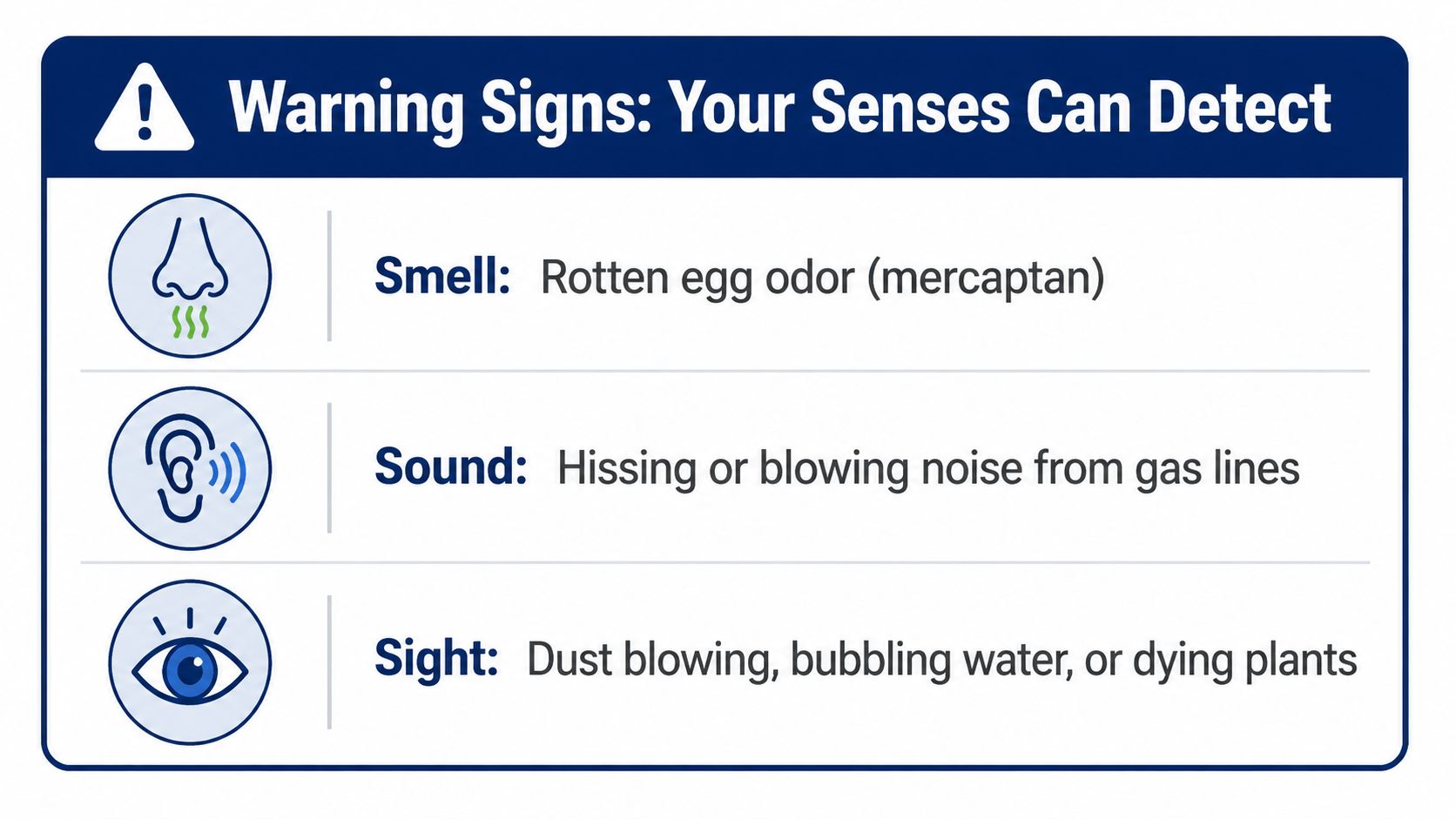
Your senses are still the fastest first alert in most homes. That matters because you usually notice a leak before you have a tool in your hand.
What smell means and what to do next
The smell commonly associated with a gas leak is rotten egg or sulfur. If you notice that odor inside the house, near an appliance, or at the gas meter, treat it as a warning. Don't start testing switches. Don't try the stove to see whether it's “just the pilot.” Don't stay inside while deciding.
Your action is to get everyone out and keep the exit routine simple. Move people and pets away from the house. Once you're at a safe distance, make the emergency call.
Some homeowners lose time because the odor seems faint. That's a mistake. A faint smell can still point to a real leak, especially if it repeats in the same area.
What to listen and look for
Sound and sight often matter when smell doesn't give you a clear answer. A hissing or roaring noise near a line, meter, or appliance deserves the same reaction as a strong odor. Leave the area. If the sound is outside, don't approach the source for a better look.
Visual signs are just as important. These can include:
- Bubbling in water: If you see bubbling in standing water near a buried line, treat it as a leak path.
- Blowing dirt or dust: Gas escaping underground can push soil or dust upward.
- Dead or dying plants: If vegetation over one section of line looks unusually damaged, pay attention.
- White cloud, mist, or fog: Visible vapor near a line or appliance can signal escaping gas.
Here's a quick reference you can scan fast.
| Sense | What to Look, Listen, or Smell For | What It Could Mean |
|---|---|---|
| Smell | Rotten egg or sulfur odor | Gas may be present in the home or near a line |
| Sound | Hissing or roaring near pipes, meter, or appliances | Gas may be escaping under pressure |
| Sight | Bubbling water, blowing dirt, dead plants, white mist | Leak may be present above or below ground |
What works well is reacting to the first credible sign. What doesn't work is waiting for all three. You do not need smell, sound, and sight together before taking the situation seriously.
Practical rule: One credible warning sign is enough to move into emergency mode.
How to Safely Perform a Soap Bubble Test
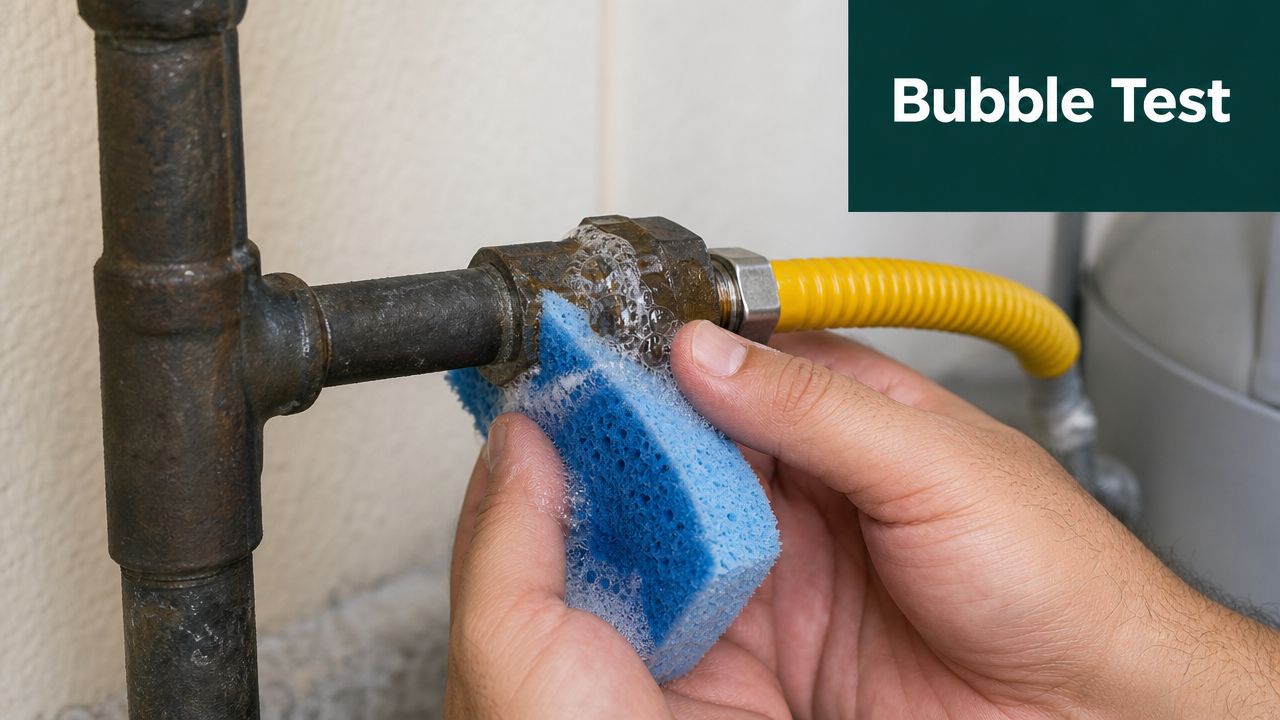
The soap bubble test is useful, but only in a narrow situation. It's for a localized suspicion at a fitting or connection when you can approach the area safely. It is not for a house that already smells strongly of gas or for a situation where you're hearing active hissing.
When this test is appropriate
Use this method only when the suspicion is limited and the area is safe to access. A practical workflow for home detection starts with leaving the area if gas odor or hissing is present, avoiding switches and flame sources, and, only if it's safe, shutting off the main gas valve and then contacting the utility or emergency line before doing more, based on this step-by-step home gas leak workflow.
If you're in that limited, safer situation, the test is straightforward:
- Mix soap and water: Use enough soap to create a film that will show steady bubbling.
- Apply it directly to the joint: Focus on fittings, unions, or threaded connections.
- Watch the same spot: You're looking for ongoing bubble formation at one point, not random foam.
A quick visual helps if you've never seen the process done carefully.
How to read the bubbles correctly
When dealing with a gas leak, people can get themselves in trouble. Continuous bubbling at a connection indicates gas escaping. Even minor bubbling should be treated as a leak. The wrong response is grabbing a wrench and tightening blindly.
Why? Because threaded fittings can be damaged by too much force or by using the wrong sealant. We've seen homeowners turn a manageable seep into a bigger repair because they assumed “just snug it up” was harmless. It isn't.
Use this test to confirm suspicion, not to justify a DIY repair. If bubbles form, stop there. Isolate the area only if it's safe, then hand the repair to a qualified pro.
Using Combustible Gas Detectors for Early Warning
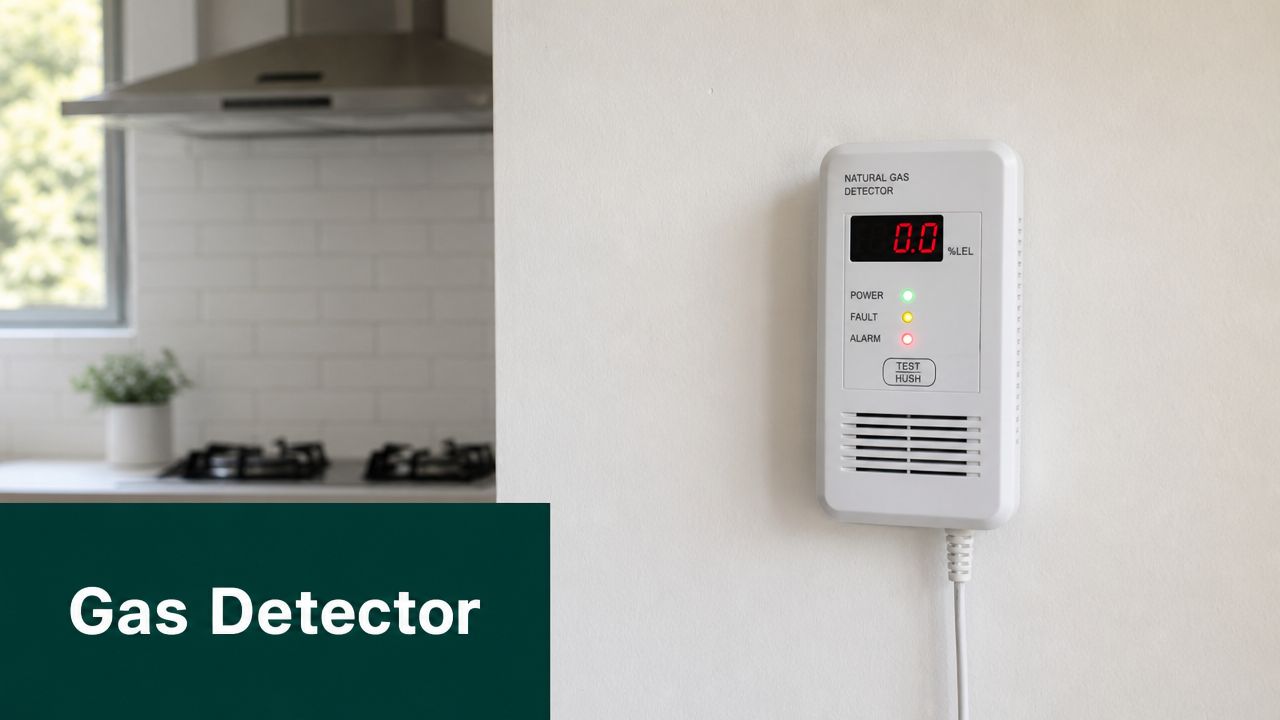
Electronic detectors add a layer your nose can't always provide. They are most useful in homes where odor may be missed, airflow moves gas away from where people are standing, or someone in the home has reduced smell sensitivity.
When a detector helps
Consumer-grade combustible-gas detectors can provide green, yellow, and red status signaling for no leak, low alarm, and high alarm states, and some models detect natural gas, propane, and butane, according to this guide to checking for gas leaks with detectors. That kind of tool gives a homeowner a clearer warning than odor alone, but it still has limits.
What works:
- Using it as a supplement: A detector adds coverage. It does not replace smell, sound, and visual awareness.
- Checking appliance areas: Kitchens, utility rooms, and other gas-appliance spaces are common places to use or install them.
- Following setup instructions: These devices need proper calibration conditions to be meaningful.
What misleads people:
- Rushing a handheld unit past fittings: The sensor needs time to register a plume.
- Skipping fresh-air startup: If it isn't powered on correctly, the reading can mislead you.
- Treating an alarm as a maintenance reminder instead of an emergency cue: A positive reading means act, not debate.
For homeowners thinking more broadly about house safety systems, good maintenance habits matter across the board. Practical resources like Fire system maintenance advice can help you think about testing, placement, and maintenance routines the same way you would for alarms and detection devices.
What readings mean in real life
A detector is useful when it changes your next move. If it alarms near a gas line or appliance, leave the area and call for professional help. Don't use the reading as permission to open panels, tighten fittings, or start disassembling connectors.
A detector is only doing its job if the alarm leads to evacuation and controlled isolation, not amateur repair.
In our field, this is also where professional leak-location tools have an edge. EZ Plumbing uses licensed gas leak detection methods for finding hidden leak paths without guessing at the wrong connection first. For a homeowner, though, the decision is simpler: detector alert equals get out and get help.
Immediate Safety Actions for a Suspected Gas Leak
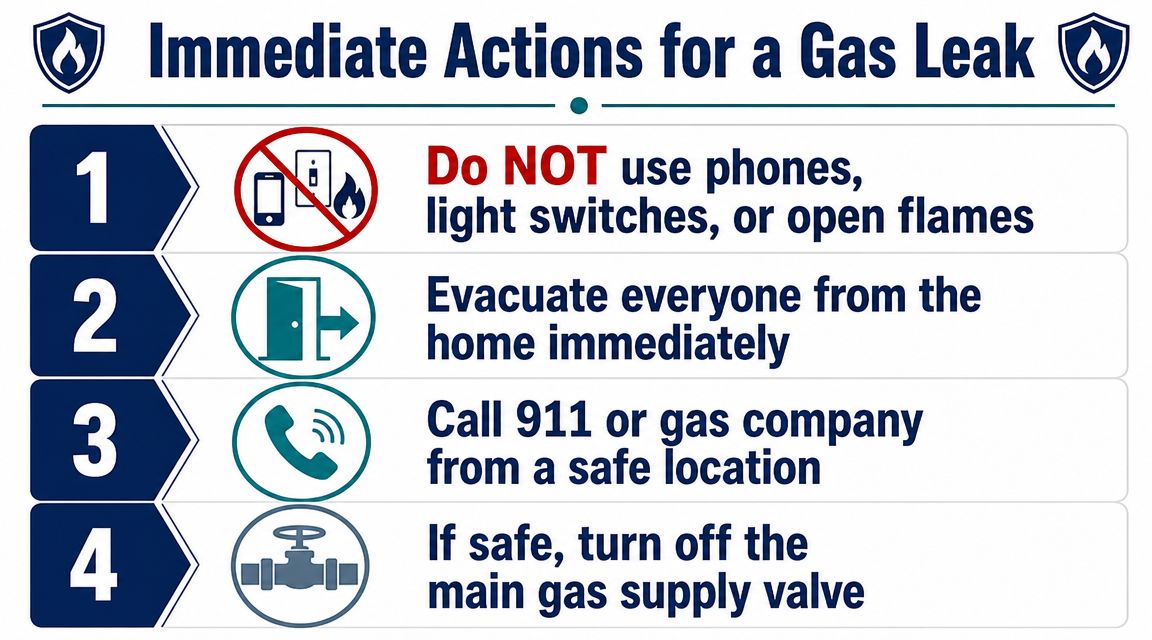
When you suspect a gas leak, the order of your actions matters more than anything else.
The order matters
Use this checklist in order:
- Leave the home first: Get everyone out, including pets. Don't stay behind to gather belongings.
- Avoid anything that can spark: Don't use light switches, appliances, flames, or a phone inside the house.
- Call from a safe location: Contact emergency services or your utility once you're away from the building.
- Shut off the gas only if it's safe to reach: If the meter or main shutoff is accessible without passing through a dangerous area, closing it can stop additional release.
Official safety guidance also notes non-obvious signs such as bubbling water, dead vegetation, blowing dirt, frozen ground, clouded vapor, or faint hissing, and warns that those signs still justify an emergency response even without odor, as outlined by Indiana pipeline safety guidance for gas leak recognition.
Leave first. Confirmation can wait. Repair can wait. People cannot.
If you need a plain-language overview of how emergency gas-line problems are typically handled after evacuation, this Blue Gas Express gas line guide is a useful companion read. If the issue turns into a confirmed line repair, gas line repair service is the type of work that should be handled by a licensed contractor after the site is made safe.
The window question
Homeowners encounter conflicting advice. Some consumer guides say to open doors and windows. Some official guidance warns against opening windows because it may delay evacuation and could potentially create a spark.
In practice, the safest rule for a homeowner under stress is this: don't let ventilation become a reason to stay inside. If you can shut off the gas safely on your way out, do it. If opening a door is part of leaving, that's different from lingering to air the place out. Evacuation comes first every time.
Gas Safety FAQ What Los Angeles Homeowners Ask Most
How is a gas leak different from carbon monoxide
A natural gas leak is usually associated with warning signs like odor, sound, or visible outdoor clues. Carbon monoxide is a separate hazard tied to fuel-burning equipment and needs its own detection strategy. If you feel unwell around an appliance issue, don't try to diagnose the difference on the spot. Leave the area and get the right help.
What if you rent your home
If you rent, report any suspected gas issue to the landlord or property manager right away after you've moved to safety and contacted the emergency line as needed. Don't let a maintenance chain delay emergency action. Safety calls come first. Lease responsibility and repair coordination come after the immediate hazard is addressed.
How do you lower the chances of a leak
Prevention is mostly about not ignoring small warning signs and keeping gas appliances and connections in serviceable condition. If an appliance smells off, has repeated shutdown issues, or has had recent connector work, have it checked before it turns into a bigger problem.
For Los Angeles homes, water heaters are one of the appliance categories that deserve attention because they combine gas supply, ignition components, and venting concerns in one system. If your unit is acting up, gas water heater repair is a better next step than trial-and-error resets or repeated relighting attempts.
A good rule for homeowners is simple. Learn how to detect a gas leak at home, but don't confuse detection with repair. Your job is to notice, respond, and stay safe. The repair is a separate step.
If you suspect a gas leak or need a licensed plumber to inspect a gas appliance, line, or connection, contact EZ Plumbing. We serve Los Angeles with emergency response and scheduled gas leak diagnostic and repair work, and we keep the process focused on safe isolation, accurate leak location, and proper correction.