
Basement Pipe Leak: Emergency Repair Guide 2026
You go downstairs and catch it before your brain fully names it. The damp smell is stronger than usual. There's a dark line spreading across the concrete, a drip ticking from somewhere behind storage bins, or a thin ribbon of water running along the wall toward the floor drain. In that moment, most homeowners jump straight to the same conclusion: a basement pipe leak.
Sometimes that's right. Often, it isn't.
That distinction matters because the fix for a leaking copper line is completely different from the fix for groundwater pushing in at the cove joint where the wall meets the slab. If you treat foundation seepage like a pipe problem, you can spend money opening walls, replacing sections of pipe, and still end up with the same wet floor next week.
Table of Contents
- That Sinking Feeling Discovering a Basement Leak
- Your First 30 Minutes Emergency Basement Leak Response
- How to Diagnose the Source of Your Basement Leak
- Exploring Permanent Repair Options and Costs
- Proactive Maintenance to Prevent Future Pipe Leaks
- When You Need an Expert Call EZ Plumbing
That Sinking Feeling Discovering a Basement Leak
A wet basement has a way of making every problem feel bigger than it is. Homeowners worry about ruined storage, mold, electrical hazards, and whether the water means a cracked foundation or a failed pipe hidden under concrete. That reaction is normal.
It also helps to know this isn't some strange one-off event. About 98% of basements will experience some form of water damage during their lifetime, and over 60% of U.S. homes with basements experience water penetration, especially in homes older than 20 years, according to Ohio State Waterproofing's summary of basement leak prevalence. Basement moisture is a mainstream home problem, not a rare disaster that only happens to neglected properties.
The practical response is to slow down and sort the problem by priority. First protect people and property. Then stop active water if it's coming from plumbing. Then figure out what you're dealing with.
A basement pipe leak can be a pressurized supply line, a slow drain seep, a failed valve, condensation that looks worse than it is, or groundwater intrusion showing up where homeowners least expect it. The right repair starts with the right diagnosis.
Your First 30 Minutes Emergency Basement Leak Response
If water is actively showing up, the first half hour matters. The goal isn't a perfect cleanup. The goal is to prevent the situation from getting worse.
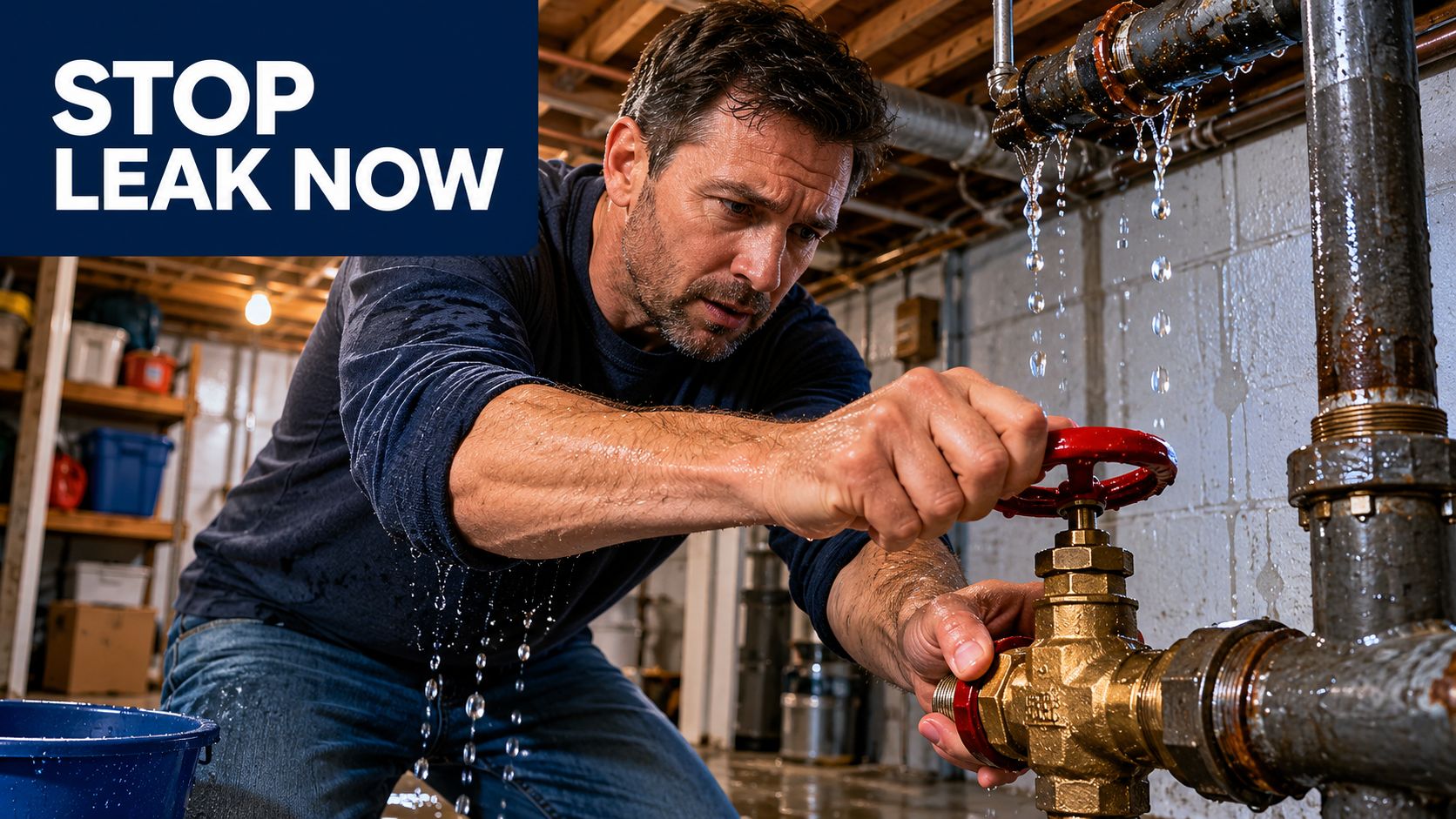
Shut off the source first
If the water appears to be coming from a supply pipe, shut off the house main as soon as you can. If you aren't sure where that valve is or what type you have, this guide on how to shut off your main water supply helps you identify it quickly.
Look for these clues that the leak is likely pressurized plumbing:
- Active spraying or steady dripping from a pipe or fitting. That usually points to a supply-side problem.
- Water continuing even when no fixture is running. That's a warning sign the line may still be under pressure.
- Fresh water near valves, water heaters, laundry hookups, or exposed copper. Those are common failure points in basements and utility areas.
Safety warning: If water is near outlets, appliances, extension cords, or your electrical panel, stay out of the wet area until power to that area is safely addressed by a qualified person.
If the leak seems tied to a specific fixture line, you may be able to isolate that branch valve instead of shutting down the whole house. If you can't identify the source quickly, shut off the main and work from there. Water damage gets expensive fast. One source reports that approximately 14,000 people in the U.S. experience a water damage emergency every day, about 1 in 60 insured homes files a water or freezing-damage claim each year, and the average insurance payout is $11,605, according to water damage statistics compiled here.
Contain the spread
Once active water is slowed or stopped, keep it from reaching finished walls, stored items, and anything absorbent.
Use what you already have:
- Buckets and shallow pans under active drips to catch water.
- Old towels or rags to build a temporary barrier that redirects water away from drywall bottoms.
- A wet/dry vacuum for pooled water on concrete.
- Plastic totes, wood scraps, or bricks to lift boxes and belongings off the slab.
Move cardboard, fabric, books, and rugs first. Concrete can handle getting wet. Stored paper goods and finished materials usually can't.
Don't waste time trying to mop every inch if water is still entering. Stop or isolate the source first, then clean.
If the area has a musty smell or older staining, don't assume today's puddle tells the whole story. Many basements have more than one moisture issue happening at the same time.
Document before you clean up too much
Take photos and a short video before you move everything. Get the floor, the wall, the nearest pipe, the appliance connections, and any visible staining or corrosion.
That record helps in three ways:
- Your plumber can see what the leak looked like at its worst.
- Your insurer may want proof of the source and affected area.
- You can compare later and tell whether the repair solved the problem.
If you can, note simple details while they're fresh. Was the washing machine running? Had it just rained? Did the leak slow after the main valve was shut? Those details often tell more than the puddle itself.
How to Diagnose the Source of Your Basement Leak
The biggest mistake I see is treating every wet basement floor like a broken pipe. A lot of homeowners hear “basement pipe leak” and skip the basic question that should come first: is it really plumbing?
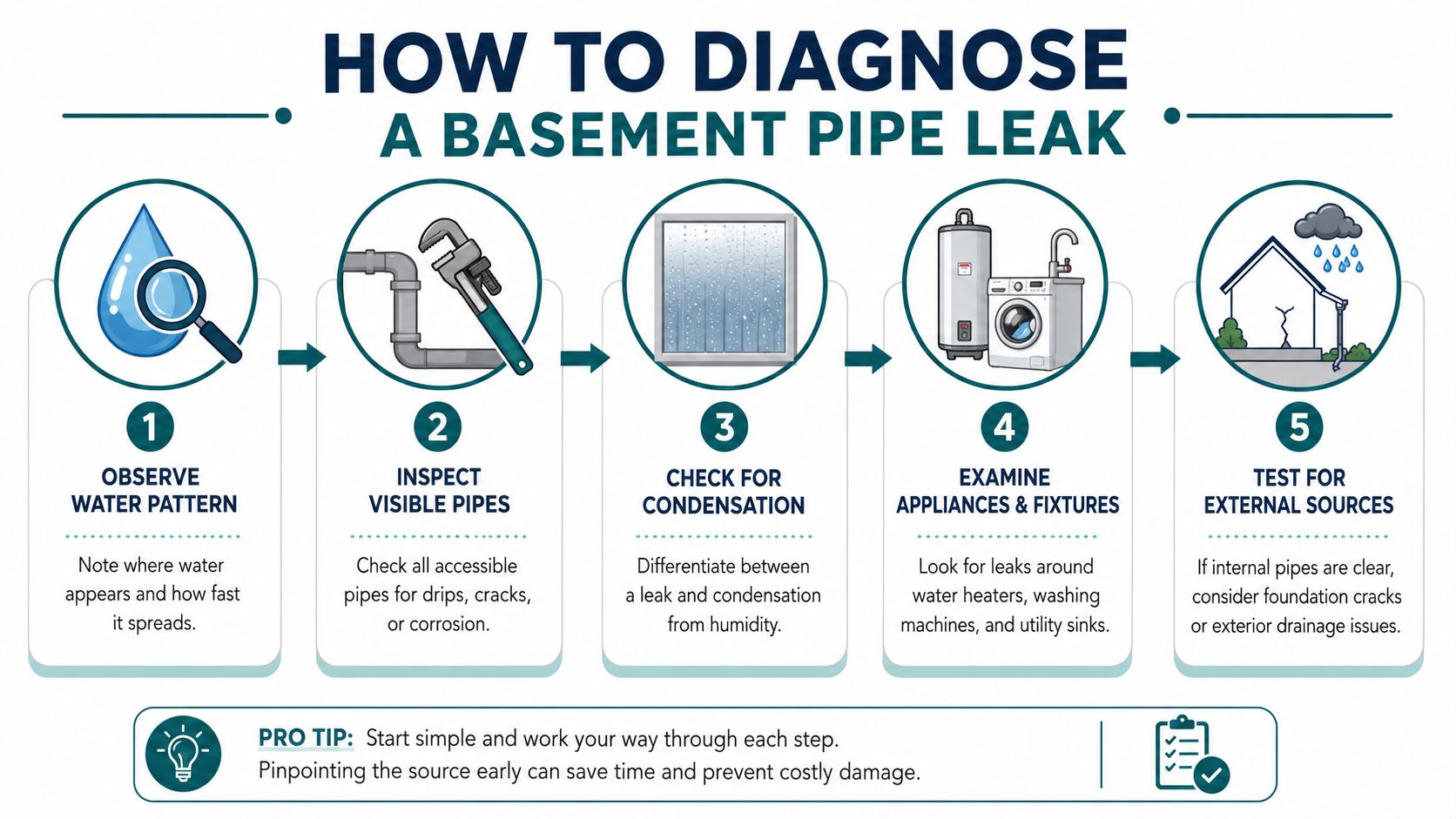
Start with the water pattern
The location and behavior of the water tell you a lot.
If water shows up directly below an exposed pipe, valve, hose bib, laundry connection, or water heater fitting, plumbing moves to the top of the list. If it's gathering along the perimeter, especially where the wall meets the floor, don't assume the nearest pipe is guilty. A common homeowner pitfall is misdiagnosing a pipe leak that is groundwater intrusion. A visibly wet basement is not automatically a failed pipe. In many cases the underlying problem is exterior water management or hydrostatic pressure on the slab, as discussed in this example of basement seepage being mistaken for a pipe leak.
Use this simple logic:
- If the water appears in the middle of the floor near a fixture or under a line, suspect plumbing first.
- If it tracks along the wall-floor joint, suspect groundwater or exterior drainage.
- If it only happens when a fixture is used, suspect a drain, waste, or appliance discharge line.
- If it appears after rain, look hard at seepage, grading, downspouts, and foundation entry points.
A quick visual can help, but don't rely on one clue alone. Here's a useful overview before you keep going:
Check whether the plumbing system is under pressure
Supply leaks usually behave differently from seepage. They often stay active while the line is pressurized, even if nobody is using water. One of the easiest homeowner checks is the water meter.
Use your meter only if it's accessible and safe. Then review how to read a water meter for leaks and see whether the leak indicator is moving when all fixtures are off. If it is, that strongly suggests a pressurized leak somewhere on the supply side.
Then narrow it down:
- Main off, leak stops. That points toward supply plumbing.
- Main off, seepage continues. That leans toward groundwater or a drainage issue.
- Leak only appears during shower, laundry, or sink use. That often means a drain or waste pipe issue rather than a supply line.
Practical rule: Test the system in the same conditions that created the problem. If the floor only gets wet during laundry, running every faucet in the house won't tell you much.
Also inspect for mineral buildup, green staining on copper, rust at threaded fittings, damp insulation, and staining around pipe penetrations. Those clues often mark the origin point.
Use proper leak-location logic before opening concrete
For hidden basement or under-slab leaks, the right workflow is not guesswork. Repair guidance for under-slab leak work recommends combining acoustic listening devices or electronic leak detection with visual tracing of external moisture patterns, then isolating the line and confirming the failure with a pressure or flow test before opening concrete or replacing pipe, as outlined in this under-slab leak repair overview.
That matters because the most expensive part of many repairs isn't the pipe. It's access. If someone starts breaking slab or opening finished areas before the source is confirmed, labor climbs fast and the wrong area may get opened.
When the clues are mixed, think in categories:
| Symptom | Most likely category | Usual next move |
|---|---|---|
| Fine spray, steady drip, corrosion at fitting | Pressurized supply leak | Isolate line, repair fitting or pipe section |
| Water after fixture use only | Drain or appliance discharge leak | Test that fixture and inspect drain path |
| Seepage at perimeter or cove joint | Groundwater intrusion | Check exterior drainage and waterproofing path |
| Wet slab with no visible pipe leak | Hidden line or under-slab issue | Professional leak detection before demolition |
Exploring Permanent Repair Options and Costs
Once the source is confirmed, the repair should match the failure. By avoiding the wrong fix, homeowners save money. A pinhole in accessible copper, a bad shutoff valve, a failed drain under slab, and groundwater at the cove joint are four different jobs.
What works for a small isolated leak
Spot repairs are appropriate when the damaged section is limited and the surrounding pipe is still sound. That can mean replacing a short piece of copper, swapping a failed valve, or repairing one pinhole if the rest of the line isn't heavily corroded.
For slab-related leaks, Angi reports pinhole leak repairs at $150 to $800, with overall slab-leak repair averages ranging from $630 to $4,400 in its foundation and slab leak cost guide. Small repairs make sense when the leak is clearly local and access is reasonable.
What doesn't work well is repeating spot repairs on a line that's deteriorating throughout. If one section fails because the whole pipe is aging out, another weak point often shows up later.
When replacement or rerouting makes more sense
If the pipe is buried, hard to access, or failing in multiple areas, replacement or rerouting is often the cleaner long-term answer. Angi lists reroutes at $600 to $4,000 and cured-in-place repair at $80 to $250 per linear foot in the same cost guide.
The key trade-off is disruption versus long-term reliability:
- Open repair works when the leak is accurately located and access damage will be limited.
- Rerouting avoids repeated slab openings when a buried line is unreliable.
- Epoxy-based or trenchless rehabilitation can help on certain lines, but only after proper diagnosis confirms the pipe type and failure pattern.
For trenchless rehabilitation used on some basement-related drain or supply lines, contractors commonly report initial installation success rates in the 90% to 98% range, with long-term design life often cited at 50+ years when prep and curing are done correctly, according to this discussion of trenchless pipelining benchmarks. The practical takeaway is simple. Don't judge the method by the sales pitch. Judge it by whether the contractor verifies the work with post-install inspection and testing.
Repair cost comparison
Water damage gets expensive beyond the pipe itself. One summary notes an average insurance payout of $11,605 for water damage claims, while the leak repair may be much smaller if caught early. That gap is why quick diagnosis matters more than cosmetic cleanup.
| Repair Method | Best For | Typical Cost Range |
|---|---|---|
| Pinhole spot repair | Small isolated leak in otherwise sound pipe | $150 to $800 |
| General slab leak repair | Hidden leak requiring access and repair | $630 to $4,400 |
| Cured-in-place repair | Certain damaged lines where trenchless rehab is appropriate | $80 to $250 per linear foot |
| Reroute | Inaccessible or repeatedly failing buried line | $600 to $4,000 |
The main mistake is misclassification. If groundwater is the issue, no plumbing repair will keep that basement dry. If a buried supply line is the issue, sealing surface cracks alone won't solve it either.
Proactive Maintenance to Prevent Future Pipe Leaks
Once you've dealt with one wet-basement event, prevention stops feeling optional. It becomes part of normal home maintenance.
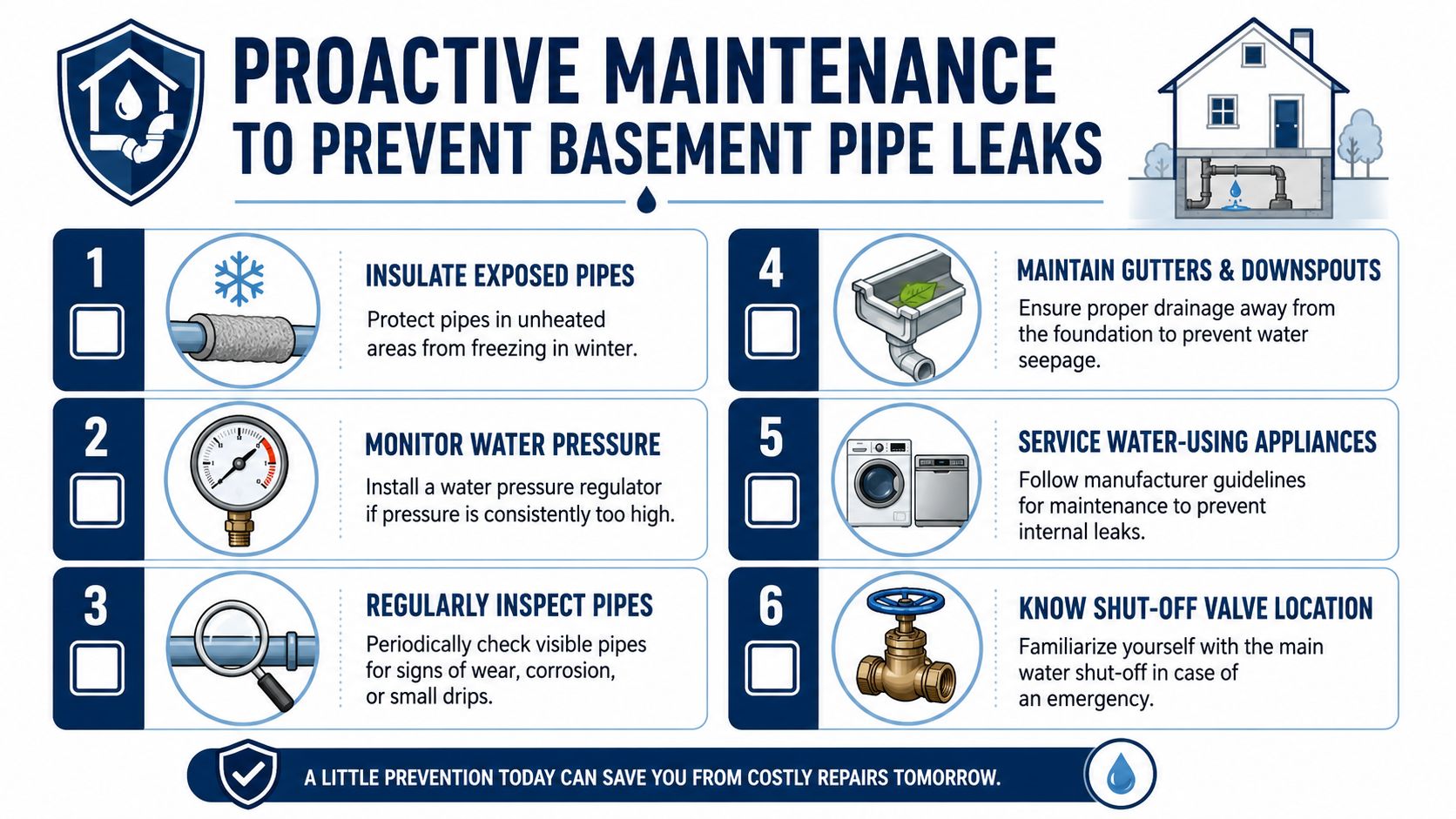
The maintenance habits that actually help
A few simple habits catch most small problems before they turn into emergency calls:
- Inspect exposed pipes seasonally. Look for corrosion, mineral deposits, damp joints, and staining below fittings.
- Check appliance connections. Washing machine hoses, utility sink traps, water heater valves, and supply stops deserve a quick look.
- Keep exterior water moving away from the house. Gutters, downspouts, and grading matter because basement moisture isn't always plumbing.
- Know your shutoff locations. The main valve isn't useful if nobody in the house can find it quickly.
- Protect vulnerable piping in cold conditions. If part of the basement or crawlspace gets cold, insulation and freeze protection matter.
Homeowners in colder climates often benefit from broader seasonal checklists. If you want a practical example, this guide to property maintenance for Utah homes is useful for thinking through winter plumbing risks, even if your house is in a different region. For local routine care, a solid maintenance baseline is regular inspection, minor repairs before failure, and staying consistent with essential plumbing maintenance in Los Angeles.
Small drips rarely stay small. They either get found early, or they turn into drywall, flooring, and air-quality problems later.
Why smart leak sensors are worth using
For small or intermittent leaks, most advice stops at “call a plumber.” That's incomplete. Practical guidance increasingly points to smart water sensors as a useful prevention layer because they can send smartphone alerts and catch drips at valves or joints before they become slab or mold problems, as noted in this basement leak prevention discussion.
These devices make the most sense near:
- Water heaters
- Laundry supply valves
- Utility sinks
- Basement bathrooms
- Any exposed shutoff or older fitting that has shown minor seepage before
They don't replace inspection, and they won't solve groundwater intrusion. What they do well is shorten the time between “leak starts” and “somebody knows about it.”
When You Need an Expert Call EZ Plumbing
Some basement leaks are manageable until regular business hours. Others need a plumber right away, and sometimes a waterproofing contractor instead of a plumber. The hard part for homeowners is knowing which situation they're in.
Call a pro if any of these are true:
- You can't identify or operate the main shutoff
- The leak is under slab, behind finished walls, or impossible to trace visually
- Water appears near electrical equipment or a furnace
- The floor gets wet only when drains are used
- You see wall cracks, slab movement, or recurring seepage at the perimeter
- You already tried a repair and the same area got wet again
A plumbing contractor should handle confirmed supply leaks, drain failures, valve problems, under-slab diagnostics, and repairs that require line isolation, pressure testing, cameras, or acoustic location tools. In Los Angeles, EZ Plumbing is one option for that kind of work, including emergency response and same-day scheduled repair when the issue is clearly plumbing-related.
If the evidence points to exterior intrusion instead, a waterproofing path may be the right one. Homeowners comparing those problems often find it useful to read examples focused on drainage and waterproofing, such as this guide on ensuring a dry home in Kalamazoo, because it shows how different the solution looks when the water source is outside the plumbing system.
Don't wait for certainty if the water is active, hidden, or causing damage. Waiting is how small leaks turn into demolition jobs.
If you've got a basement pipe leak and need fast, professional help, contact EZ Plumbing. They've served Los Angeles since 1989 and offer 24/7 emergency response, same-day scheduling for many repairs, and licensed diagnostics for hidden leaks, drain problems, and slab-related plumbing issues. Call (818) 908-2710 or schedule online to get the leak identified correctly and protect the property before the damage spreads.