
Clear Drains: Your 2026 Guide To Cleaning Sewer Lines
You hear the toilet gurgle when the washing machine drains. The shower starts pooling around your feet. There's a sewer smell outside near the cleanout, or worse, under the kitchen sink. If you own a home in Pasadena, manage an HOA in Santa Monica, or oversee a small apartment building in the Valley, that combination usually means the problem isn't random. Something in the line is starting to fight the flow.
In Los Angeles, sewer issues often build slowly and then show up all at once. Older homes, mature trees, heavy kitchen use, long lateral runs, and patched-together repairs from different decades all add pressure to the same system. Cleaning sewer lines isn't just about making water go down again. It's about figuring out what the line is telling you before a small warning turns into a backup.
Table of Contents
- The Unmistakable Signs of a Sewer Line Problem
- Why Sewer Lines Clog Common Causes in Los Angeles Homes
- A Guide to Sewer Line Cleaning Methods
- Seeing is Believing The Role of CCTV Camera Inspections
- DIY Fixes vs Calling a Professional Plumber
- Preventative Maintenance to Avoid Future Sewer Nightmares
- Your Los Angeles Sewer Solution with EZ Plumbing
The Unmistakable Signs of a Sewer Line Problem
Property owners rarely search for cleaning sewer lines out of casual curiosity. Instead, they look for answers because something in the house suddenly feels off. One bathroom starts acting up, then another fixture joins in. The sink burps. The toilet flushes lazily. A smell hangs around even after you've cleaned the room.
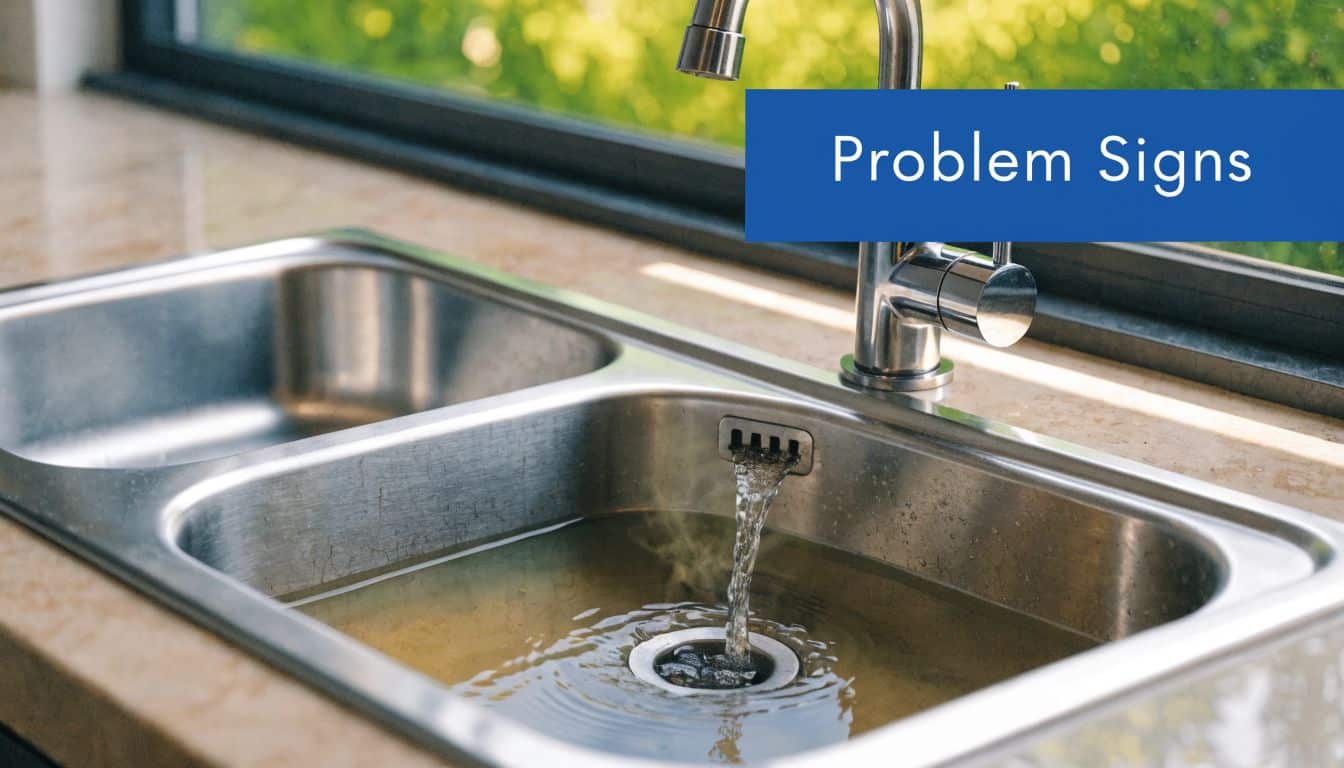
In the field, the pattern matters more than any single symptom. One slow sink can be a local clog. Multiple fixtures struggling at the same time often points to the main line. That's the difference between a small nuisance and a problem that can affect the whole property.
Common warning signs inside and outside
- More than one drain is slow: If the shower, toilet, and sink all start misbehaving together, the blockage is often deeper in the system.
- Gurgling sounds: Air gets trapped when wastewater can't move freely. The drain starts talking back.
- Foul odors: Sewer gas around drains, the yard, or the cleanout usually means waste isn't moving the way it should.
- Water where it shouldn't be: A tub filling when the toilet flushes is a classic sign that the line is struggling to carry discharge away.
A sewer line rarely fails without warning. Homeowners usually get clues first. They just don't always realize the clues belong together.
There's a reason modern sewer maintenance matters so much. The systems we depend on today grew out of the sanitation revolution of the 19th century, when cities began building large sewer networks to protect public health. London's famous system, led by Joseph Bazalgette, began in 1859 according to the Science Museum, laying the groundwork for the managed infrastructure homes now rely on.
If you're comparing symptoms before making a service call, this guide to signs of sewer line problems gives a useful homeowner-level checklist. The important part is acting before a partial blockage turns into sewage coming back into the house.
Why Sewer Lines Clog Common Causes in Los Angeles Homes
Los Angeles properties clog for familiar reasons, but the local mix makes the causes show up in specific ways. Older houses in Pasadena and Glendale often have aging lines. Westside properties with mature landscaping deal with aggressive root systems. Multi-unit buildings and busy family homes put more volume through the pipe, which makes buildup happen faster.
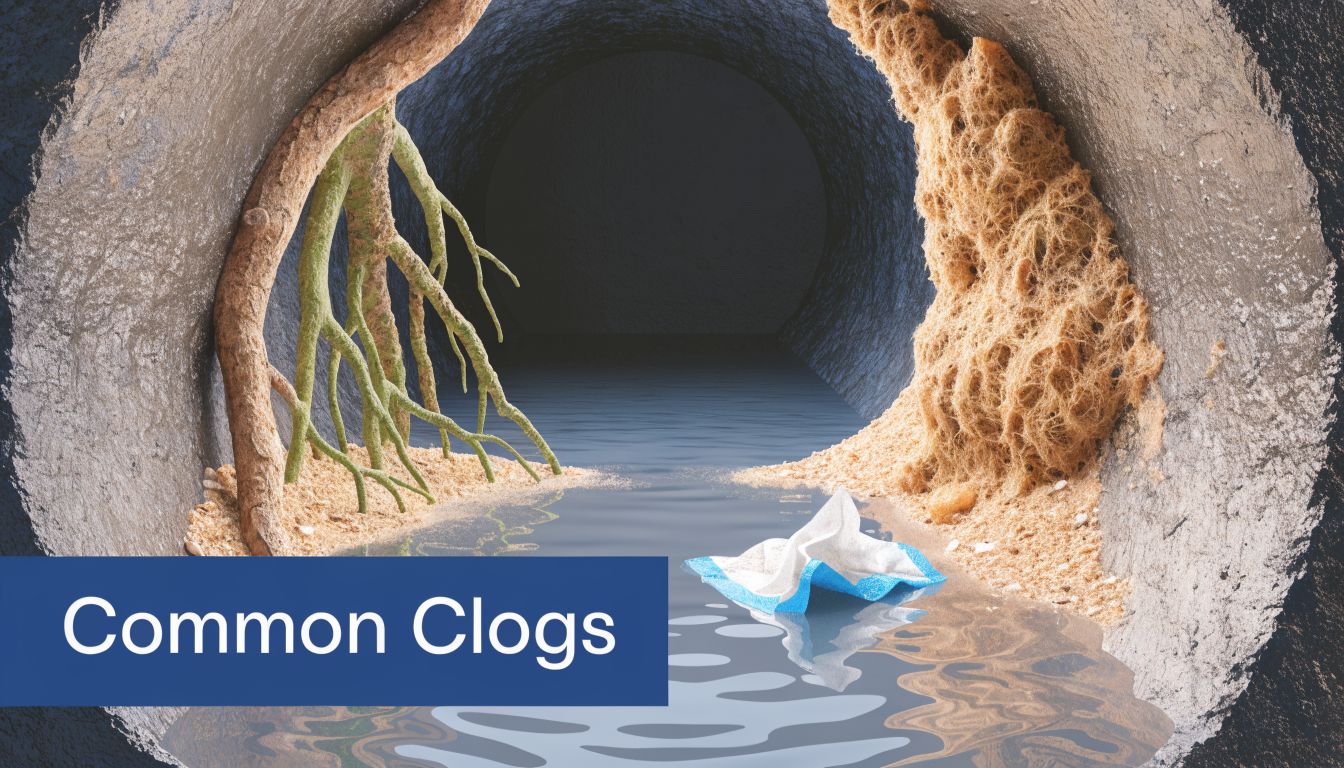
A sewer line clogs when something narrows the path, catches debris, or breaks the smooth flow inside the pipe. Think of the line like an artery. If the walls stay clean and the pipe stays intact, waste moves. If grease coats the walls, roots push in, or a section sags, everything starts collecting.
The big four causes plumbers see most often
Grease and kitchen waste
Grease doesn't usually stop the line in one day. It cools, clings, and keeps collecting. In homes with heavy cooking, especially where a garbage disposal gets used like a second trash can, that coating turns the pipe wall sticky enough to trap more debris.
Tree roots
Roots don't need a large opening. They exploit tiny cracks, loose joints, and weak spots where moisture escapes. Once inside, they behave like a net and grab paper and waste. If you're also thinking about landscaping near buried utilities, this article on protecting your home from root damage is a useful companion read.
Improper flushing
Wipes, paper towels, hygiene products, and other “flushable” items don't move through sewer lines the way toilet paper does. They snag, twist, and build a plug. One bad habit repeated over time can create a blockage far from the bathroom where it started.
Pipe age and structural defects
Some pipes don't just get dirty. They deform, crack, offset, or partially collapse. In that case, cleaning helps only if the structure still allows proper flow.
Why older infrastructure changed the trade
In the United States, sewer treatment and management took time to mature. One historical source notes that by 1900 only two U.S. cities had sewage treatment facilities, and by 1926 that number had grown to 20, marking a shift toward engineered systems that needed professional maintenance and operation, as described in this history of sewers overview.
That matters for Los Angeles owners because many properties now sit on infrastructure installed, altered, or repaired across different eras. A line may contain old materials, newer connections, and years of wear all in one run. That's why recurring clogs usually have a cause beneath the symptom.
A Guide to Sewer Line Cleaning Methods
Not every clogged sewer line needs the same tool. That's where many homeowners get frustrated. They hear “drain cleaning” and assume every service is basically the same. It isn't. The right method depends on what's in the pipe, how far in the blockage sits, and whether the problem is buildup or structural damage.
When snaking makes sense
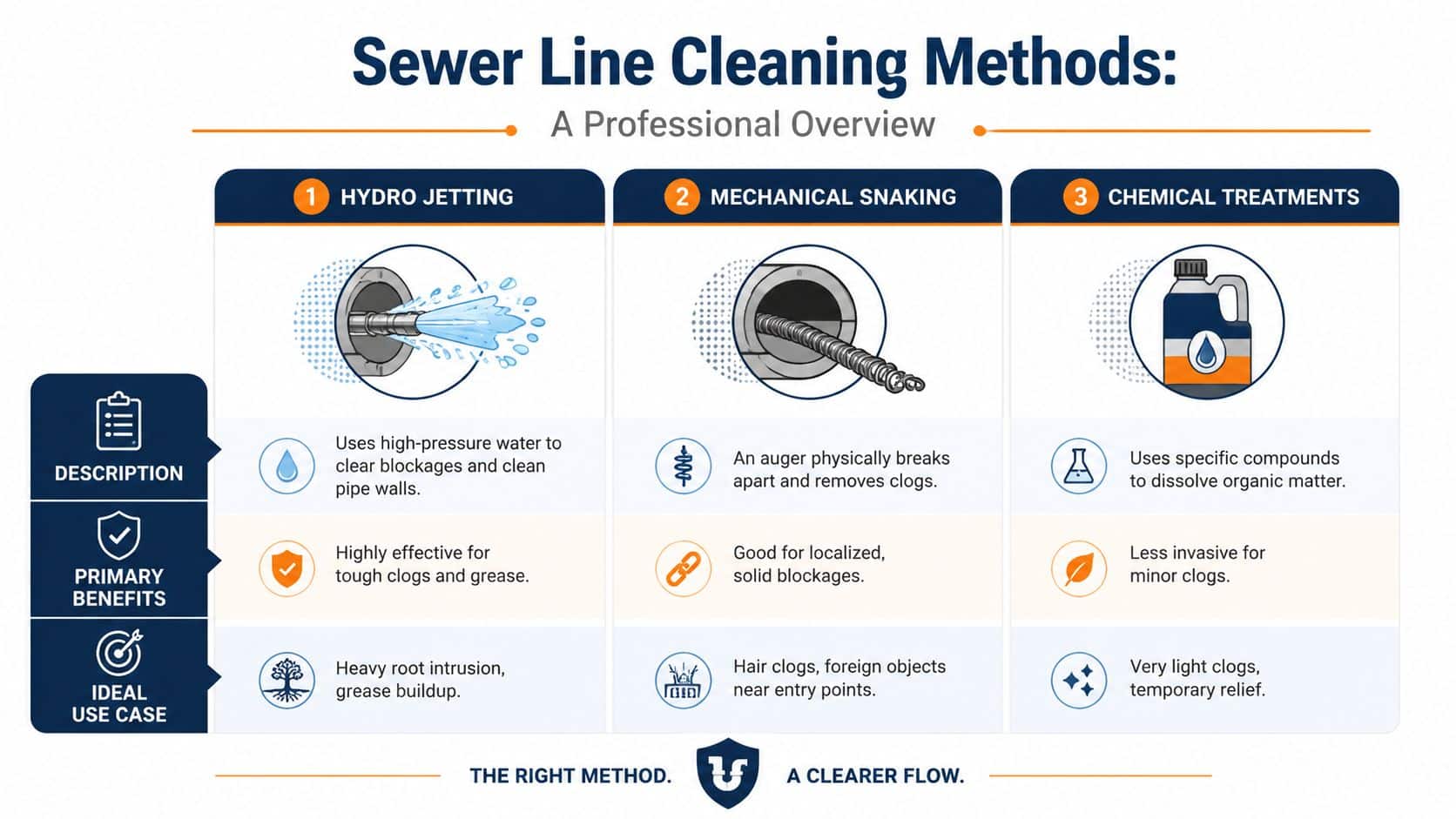
A mechanical snake, also called an auger or rodding machine, is often the fastest way to open a simple blockage. It works by feeding a cable into the line to break through or pull back an obstruction. For a localized clog near the access point, it can be the right call.
Snaking works well when:
- The clog is solid and limited: Hair, paper buildup, or a lodged object near a fixture or cleanout can respond well.
- You need immediate flow restored: It can reopen a line quickly.
- The pipe may not be a good candidate for aggressive cleaning: Some older or fragile lines need a more cautious approach.
The drawback is that snaking often creates a passage rather than a full cleaning. Wastewater can move again, but residue remains on the pipe wall. That leftover layer gives the next clog a place to start.
Why hydro jetting cleans more completely
Hydro jetting uses high-pressure water to scour the interior of the pipe. The practical advantage is straightforward. It cleans across the full internal diameter instead of boring a small hole through the obstruction. According to this explanation of hydro jetting versus snaking, hydro jetting scrubs away grease and sludge and can even cut through roots, while snaking typically only opens a path through debris.
Practical rule: If the line keeps clogging after it's been “cleared,” the problem often isn't lack of access. It's leftover buildup.
For recurring kitchen line problems, grease-heavy mains, and lines with root intrusion, hydro jetting usually addresses the cause more directly. It's often paired with a prior camera inspection so the technician knows whether the pipe can safely handle the pressure and whether the blockage is buildup, roots, or broken pipe.
If you want to see what that service involves, hydro jetting for sewer and drain lines is one professional option homeowners and property managers in Los Angeles often review when comparing cleaning methods.
Where chemical and enzyme products fit
Chemical or enzyme-based products sit in a different category. They're not the first choice for a main sewer line blockage, and they're not a substitute for mechanical cleaning when the pipe is packed with grease, roots, or solids.
They can be useful in a narrow lane:
- Light organic buildup: Enzyme maintenance products may help with minor residue in certain drains.
- Temporary support between cleanings: In some properties, they're used as part of maintenance, not rescue work.
- Situations where a homeowner wants a gentle first step: As long as expectations stay realistic.
They're a poor fit when the line is already backing up, when multiple fixtures are affected, or when the pipe may be damaged. In those cases, liquid products often waste time and can complicate the next step.
A side by side comparison
| Method | Best for | Strength | Limitation |
|---|---|---|---|
| Mechanical snaking | Localized blockages, solid obstructions | Restores flow quickly | Often leaves residue on pipe walls |
| Hydro jetting | Grease, sludge, recurring clogs, roots | Cleans the full pipe interior more thoroughly | Needs proper diagnosis first |
| Chemical or enzyme treatments | Very light organic buildup | Less invasive as a maintenance aid | Doesn't solve major sewer line blockages |
When homeowners ask what works best, the honest answer is this: the best method is the one that matches the actual condition inside the pipe. A simple clog and a failing line can look similar from inside the house, but they need very different responses.
Seeing is Believing The Role of CCTV Camera Inspections
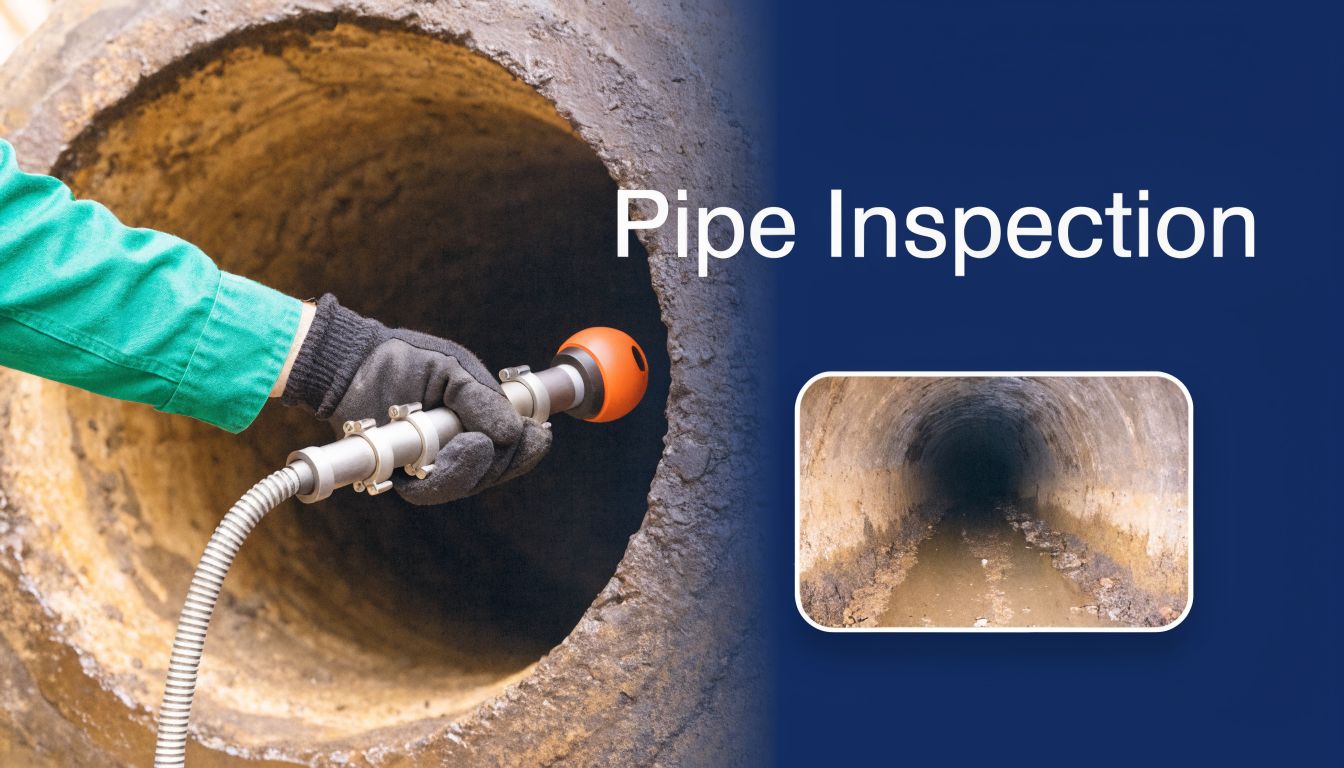
Good sewer work starts with seeing the line. Without that, cleaning is partly guesswork. A sewer camera inspection changes that by showing the inside of the pipe in real time.
For Los Angeles owners, this matters because two houses on the same block can have very different pipe histories. One may have a grease blockage. The next may have roots at a joint. Another may have a cracked section under hardscape. The symptoms can overlap, but the repair path shouldn't.
What the camera actually shows
A CCTV sewer camera is fed into the line through an access point. The technician watches the footage to locate the blockage and identify what's causing it. That can include:
- Grease and sludge buildup along the pipe wall
- Root intrusion entering through joints or cracks
- Bellies or standing water where the line no longer drains correctly
- Cracks, offsets, or collapse that cleaning alone won't fix
A visual inspection also helps locate the issue with precision. That matters on properties with long runs, mature landscaping, decorative concrete, or limited access.
Here's a quick look at the process in action:
Why diagnosis comes before cleaning
A camera inspection helps prevent the wrong tool from being used on the wrong pipe. If a line is fragile, heavily rooted, or structurally compromised, the cleaning method needs to match that reality. If the issue is mostly grease and the pipe is sound, a more thorough cleaning approach may make sense.
That's why many plumbers treat the inspection as the turning point in the call. Once you can see the problem, recommendations get clearer. The work stops being trial and error.
Cleaning without inspection can reopen a line. Inspection tells you whether the line is healthy enough to stay open.
For homeowners comparing options, sewer camera inspection services show how this diagnostic step is used before deciding between cleaning, repair, or both.
DIY Fixes vs Calling a Professional Plumber
Some drain problems are fair DIY territory. Some aren't. The hard part is knowing where that line sits before you waste a weekend, damage the pipe, or end up with sewage in the house.
A single slow bathroom sink is different from a main sewer line issue. Homeowners can often handle simple fixture clogs with basic tools and a little patience. But cleaning sewer lines at the property main is a different category because the risk goes up fast.
Safe steps you can try
Start small and stay conservative. Good DIY means low force, low risk, and clear limits.
- Use a plunger correctly: A sink or toilet plunger can clear a minor fixture clog if you get a proper seal and work it steadily.
- Try a small hand snake: This makes sense for a nearby stoppage in a sink, tub, or shower drain.
- Stop using the affected fixture: If draining is slow, adding more water only raises the chance of overflow.
- Pay attention to patterns: If one drain is slow, monitor it. If several fixtures react together, stop the DIY approach.
Signs the job has moved past DIY
If the toilet gurgles when another fixture drains, if sewage appears in the tub or shower, or if multiple drains back up at once, you're likely dealing with the main line. That's where homeowner tools stop being practical.
Calling a professional is the safer move when:
- More than one fixture is involved
- The clog keeps returning after you clear it
- There's sewage smell or visible wastewater
- You suspect roots or pipe damage
- You're dealing with an apartment, HOA, or shared line
Rented power snakes can also create expensive problems in older lines. Too much force can damage fittings, get a cable stuck, or fail to solve the underlying issue if the pipe wall is layered with residue. Liquid drain chemicals add another risk. They don't work well on major sewer stoppages and can leave harsh material sitting in the line or fixture.
If wastewater has entered living space, cleanup is part of the emergency, not an afterthought.
For that side of the problem, these essential sewage cleanup tips are worth reviewing while you arrange plumbing help. Once sewage is involved, the priority is safety, containment, and proper diagnosis.
Preventative Maintenance to Avoid Future Sewer Nightmares
Preventing a sewer backup is usually less dramatic than solving one. It comes down to habits, timing, and knowing which properties need more attention. In Los Angeles, older homes and higher-use buildings benefit the most from staying ahead of buildup.
A practical benchmark is annual cleaning for residential sewer lines, while commercial properties often need more frequent service, as noted in this guidance on how often drains and sewer lines should be cleaned. The reason is simple. Regular cleaning helps prevent backups and gives technicians a chance to spot root intrusion or pipe defects before they become major failures.
Habits that keep lines open
- Keep grease out of the drain: Let it cool, collect it, and throw it away.
- Flush only what belongs in the sewer: Toilet paper only. Wipes and hygiene products cause too many preventable stoppages.
- Watch the trees near the line: Mature roots and old sewer joints are a bad combination.
- Take recurring slow drains seriously: Repetition usually means more than a one-time clog.
When routine cleaning is worth scheduling
If your property has a history of backups, older underground piping, heavy kitchen use, or shared occupancy, routine service becomes a maintenance decision rather than an emergency reaction. HOAs, landlords, and property managers usually see the value first because repeated unit calls often trace back to the same main line.
For a local overview of why scheduled service matters, regular drain cleaning for LA homeowners explains how preventive maintenance fits properties in this market. The goal isn't to clean for the sake of cleaning. It's to preserve flow, reduce surprise failures, and catch problems while they're still manageable.
Your Los Angeles Sewer Solution with EZ Plumbing
Cleaning sewer lines the right way comes down to three things. Identify the symptom pattern, confirm the cause, and use the method that fits the pipe. That matters in Los Angeles because the housing stock is mixed, the tree cover varies by neighborhood, and many owners are dealing with systems that have been modified over decades.
A homeowner in Pasadena may be dealing with an older line and root intrusion. An HOA in Santa Monica may be dealing with recurring buildup in a shared lateral. A commercial property in West Hollywood may need a more frequent maintenance rhythm because downtime affects tenants and customers right away. The right response starts with clear diagnosis, not guesswork.
EZ Plumbing has served Los Angeles since 1989 and works with homeowners, HOAs, property managers, and commercial properties across areas including Beverly Hills, Santa Monica, West Hollywood, Pasadena, Glendale, Burbank, and the San Fernando Valley. The company provides 24/7 emergency response, same-day scheduling for planned work, sewer diagnostics, drain cleaning, hydro jetting, and repair recommendations based on what the line needs.
If your drains are warning you, don't wait for sewage to make the decision for you.
If you need a calm, experienced next step, contact EZ Plumbing to schedule service or request emergency help. You can call (818) 908-2710 for support with sewer line cleaning, camera inspections, recurring backups, and main line problems anywhere in the Los Angeles service area.