
Pressure Relief Valve Water Heater: A Homeowner’s Guide
You hear a faint drip in the garage at night. In the morning there's a small puddle near the water heater, and now you're wondering if it's a bad tank, a loose pipe, or something more serious. That concern is valid. A water heater can leak for simple reasons, but one small part on the side or top of the tank deserves immediate attention because it's tied directly to safety.
That part is the pressure relief valve water heater owners usually overlook, also called the T&P valve. It doesn't get much attention until it starts dripping, hissing, or leaving water on the floor. But it's one of the few components on the heater that stands between normal operation and a dangerous pressure problem. In Los Angeles homes, where municipal pressure can already run high and code compliance matters, understanding this valve isn't optional. It's basic home safety.
If you want more practical home plumbing guidance, EZ Plumbing also shares helpful homeowner plumbing tips that cover common issues before they turn into expensive repairs.
Table of Contents
- That Mysterious Drip Your Water Heater's Unsung Hero
- How a Pressure Relief Valve Prevents Catastrophe
- Diagnosing Common Water Heater Valve Problems
- Your Annual DIY Safety and Maintenance Check
- When to Replace Your Valve The Code and Safety Rules
- Call EZ Plumbing for Safe Water Heater Service
That Mysterious Drip Your Water Heater's Unsung Hero
A lot of homeowners first notice the T&P valve by accident. They hear a brief hiss. They see moisture under the discharge pipe. Or they find a shallow puddle and assume the whole water heater is failing. Sometimes the tank is the problem. Often, though, the valve is doing exactly what it was built to do.
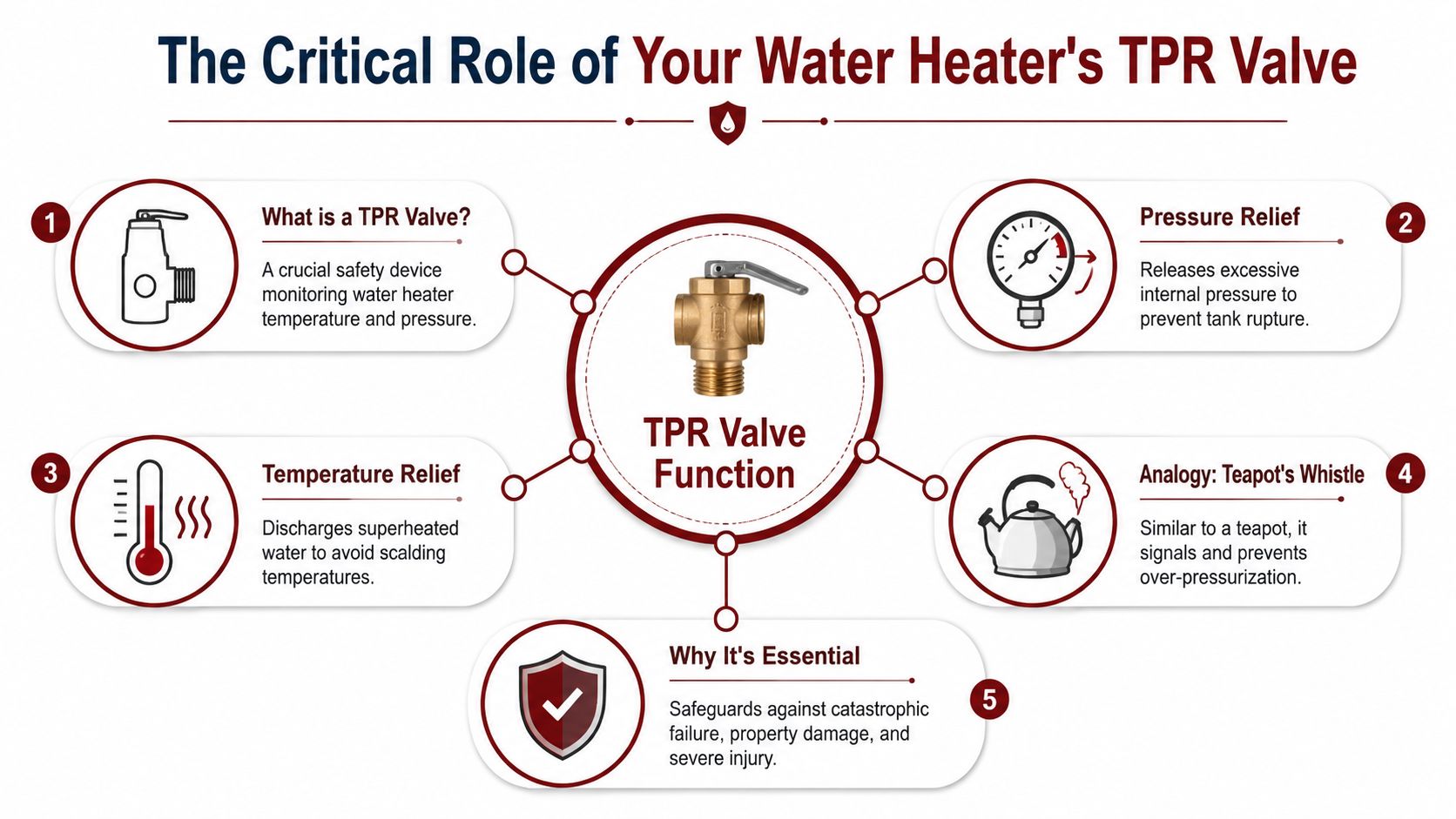
The T&P valve is the water heater's unsung hero. It sits for years, and when pressure or temperature climbs too high, it opens and releases water before the tank gets into dangerous territory. Think of it as the emergency exit on the appliance. You hope it never needs to work, but you absolutely want it there and functioning.
In the field, one of the most common mistakes homeowners make is treating any drip as a nuisance instead of a warning sign. A drip can mean the valve is protecting the heater from excess pressure. It can also mean the valve is wearing out, debris has collected inside it, or the plumbing system has a bigger pressure issue upstream.
A leaking relief valve isn't just about the valve. Sometimes it's reporting a system problem.
That matters even more in Los Angeles. Local homes often deal with higher incoming pressure, closed plumbing systems, and additions or remodels that changed how the water heater behaves. A pressure relief valve water heater issue can look minor at first, then turn into repeat leaking, damaged flooring, or a code problem when the discharge piping isn't set up correctly.
Homeowners don't need to memorize every plumbing rule. They do need to recognize that this valve is a safety device first, and a maintenance item second.
How a Pressure Relief Valve Prevents Catastrophe
A water heater works under pressure every day. The moment water is heated inside a closed tank, that pressure has to be controlled. The T&P valve is the part that stands between normal operation and a dangerous failure.
What the valve actually does
A teapot whistle gives steam a safe way out before pressure keeps rising. A water heater's T&P valve serves the same purpose, but with much higher stakes because it is controlling scalding water and stored tank pressure.
A residential T&P valve is designed to open at 150 psi or 210°F, according to Watts' T&P relief valve reference. Those are the two danger points plumbers watch for. If pressure climbs too high, the valve opens. If temperature gets too high, it can open even if pressure is not the main problem.
That dual action matters in the field. I do not treat this valve like a minor accessory, because it is one of the few parts on the heater built specifically to prevent a tank from reaching a dangerous condition.
Practical rule: If a T&P valve is capped, plugged, isolated, or piped incorrectly, the water heater no longer has its intended emergency release path.
Why Los Angeles homes need closer attention
Los Angeles homeowners run into this issue more than many general articles admit. City water pressure can be high, pressure-reducing valves can create a closed system, and remodel work often changes piping around the heater without addressing thermal expansion. The result is predictable. The water heats, expands, and looks for somewhere to go.
If the system is set up properly, that extra volume is controlled safely. If it is not, the relief valve may start opening during heating cycles. In some homes, that shows up as an occasional discharge. In others, it becomes repeat leaking, wet drywall, rust at the base of the heater, or a discharge line that was installed in a way that does not meet code.
That is also where local compliance matters. In Los Angeles, a safe installation is not just about having a valve threaded into the tank. The discharge piping has to terminate correctly, the valve cannot be blocked, and the overall setup has to work with current safety and energy requirements, including Title 24 work that often goes hand in hand with water heater replacement or upgrade projects.
Here is the trade-off homeowners should understand:
- What works: A correctly rated T&P valve, proper discharge piping, and a plumbing system that accounts for thermal expansion and incoming pressure.
- What fails in practice: Swapping the valve without checking house pressure, expansion control, or whether the discharge pipe was installed to code.
- What I never recommend: Treating repeated discharge as harmless because the heater still makes hot water.
A small brass valve carries a big safety job. When it opens, it is relieving pressure on purpose. When it cannot do that safely, the risk shifts back to the tank, and that is not a gamble any Los Angeles homeowner should take.
Diagnosing Common Water Heater Valve Problems
A T&P valve usually gives warning signs before it fully fails. The challenge is reading those signs correctly. Homeowners often focus on the puddle, but the pattern of the leak tells you a lot.
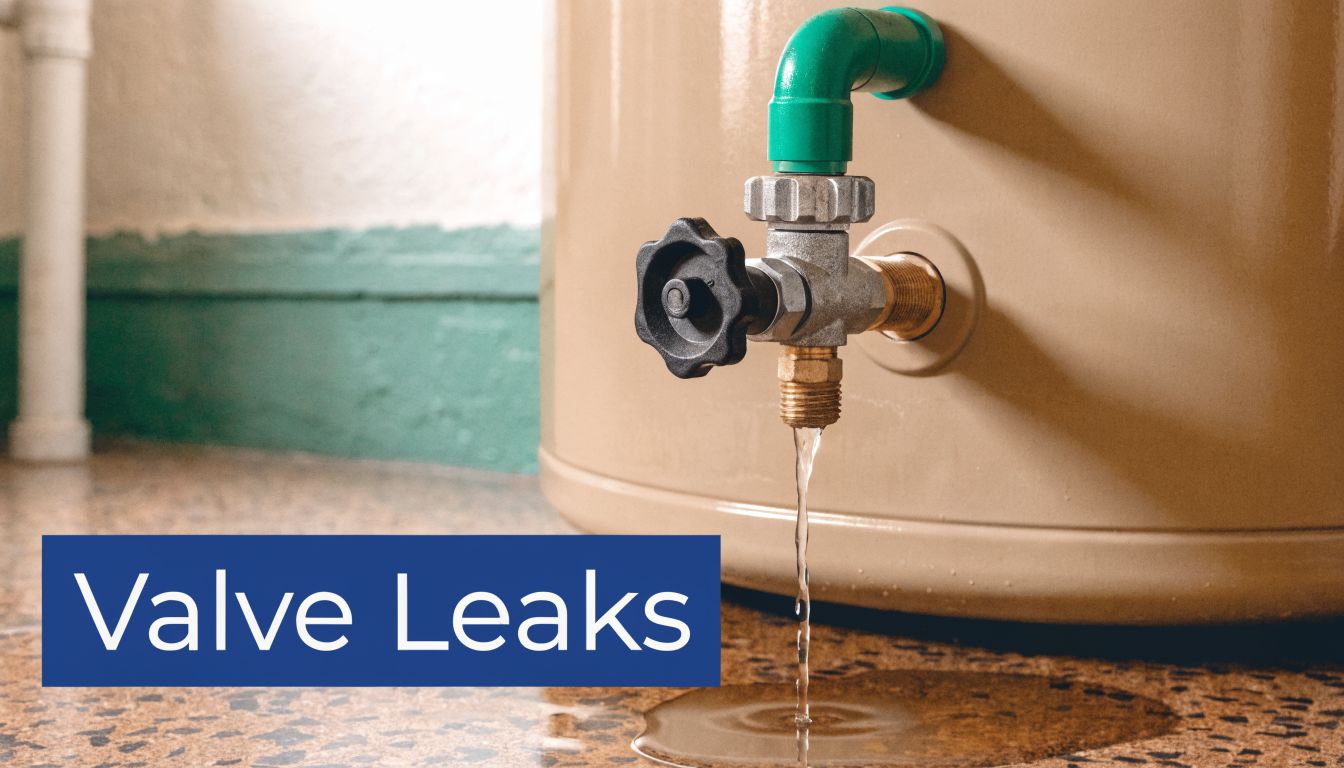
What a drip usually means
Some valves drip only during the heating cycle. Others leak steadily all day. Some stop after a manual test, then begin again a week later. Those are different clues.
According to Structure Tech's T&P troubleshooting overview, water heater T&P valve failures or chronic leaks affect up to 25% of systems over 5 years old, with thermal expansion accounting for 60% of cases. The same source notes that high municipal water pressure affects over 40% of U.S. homes, which lines up with what plumbers regularly see in many Los Angeles neighborhoods.
That's why replacing the valve alone doesn't always solve the problem. If the house pressure is high, or if the plumbing system is closed and has nowhere to absorb expansion, the new valve may leak just like the old one. The valve isn't always the cause. Sometimes it's just the messenger.
If a new relief valve starts dripping soon after installation, stop blaming the part first. Check the system pressure and expansion control.
Other times, the valve itself is the issue. Mineral buildup can keep the seat from sealing cleanly. Age and wear can weaken the mechanism. A valve that has been forced open by harsh conditions repeatedly may never reseal properly.
TPR Valve Symptom and Cause Checklist
| Symptom | Likely Cause | Recommended Action |
|---|---|---|
| Occasional drip from discharge pipe | Thermal expansion during heating cycle | Have the system checked for expansion control and overall pressure conditions |
| Constant dripping | Valve seat wear, debris, or ongoing high pressure | Stop ignoring it. Have the valve and house pressure evaluated |
| Sudden puddle after no previous leaking | Relief event caused by pressure or temperature spike | Treat it as a safety issue and inspect the heater promptly |
| Drip begins after manual test and won't stop | Valve didn't reseal due to mineral buildup or wear | Replace the valve rather than hoping it seals later |
| No discharge ever, even on an older neglected unit | Valve may be stuck or inoperative | Have it professionally tested and replaced if needed |
| Water near heater but not at discharge pipe | Leak may be from tank, fittings, or supply lines | Confirm the source before assuming the T&P valve is bad |
A few practical distinctions help:
- Intermittent leaking often points to pressure swings.
- Steady leaking is more likely to mean a bad valve, persistent overpressure, or both.
- Visible rust or crust at the valve outlet usually means the leak has been going on longer than the homeowner realized.
- Hot water at the discharge line means caution. That line can scald.
The important thing is not to disable the valve, cap the line, or plug the outlet. Those shortcuts don't fix the problem. They remove the safety function.
Your Annual DIY Safety and Maintenance Check
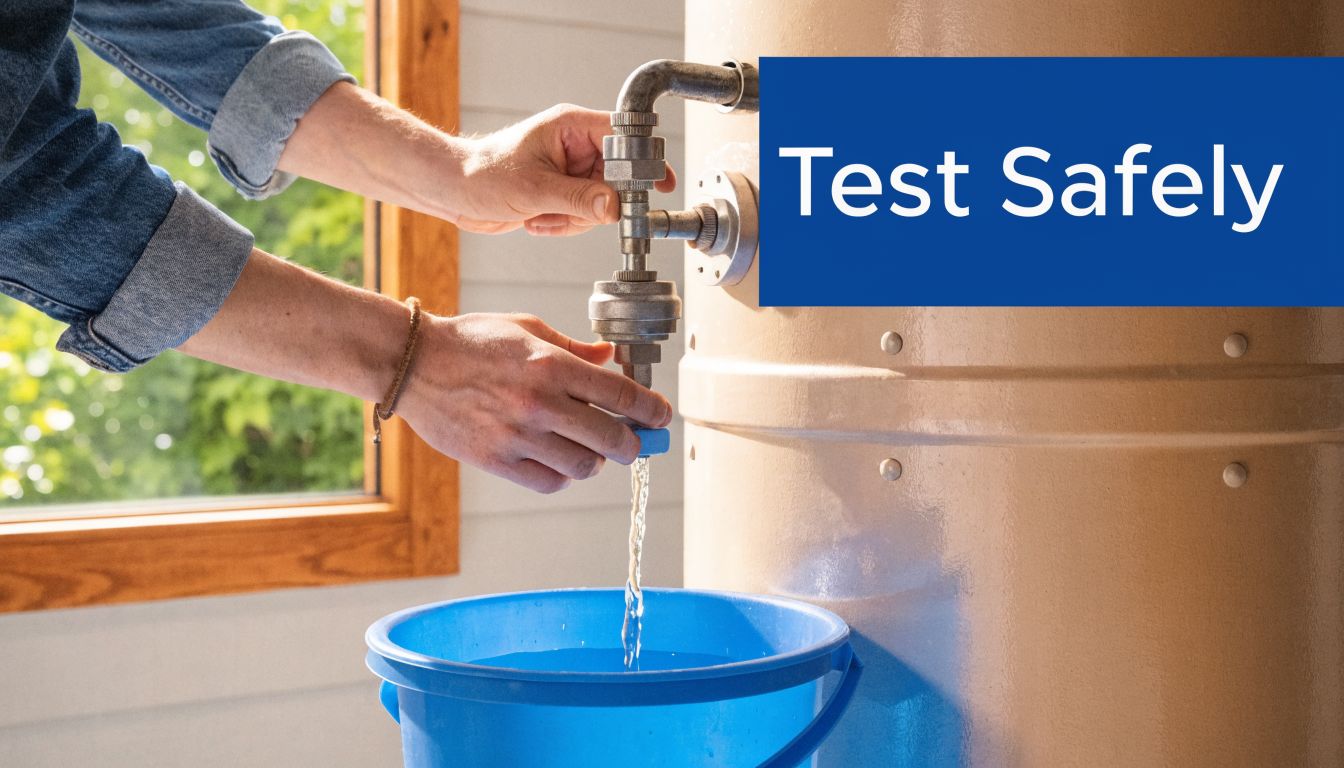
A homeowner can do a basic T&P valve check, but it has to be done carefully. You're dealing with hot water, a live plumbing system, and a safety device that must reseal when finished. If the setup looks questionable before you begin, stop and call a plumber.
For a broader walkthrough on safe homeowner water heater tasks, this step by step water heater DIY guide for LA homes is a useful companion.
Before you touch the lever
First, look at the discharge pipe. It should be connected, directed to a safe termination point, and not aimed where someone could get sprayed with hot water. Never test a valve that dumps into an unsafe area.
Then check the area around the heater:
- Clear the space: Move boxes, paint cans, and stored items away from the discharge area.
- Protect yourself: Wear gloves and keep your face and arms away from the pipe opening.
- Use a bucket only if appropriate: Catching some discharge can help, but don't improvise in a cramped setup where the bucket makes the test less safe.
Never stand directly over or in front of the discharge outlet while testing.
How to test it safely
Lift the lever briefly and let it snap back. Don't hold it open for an extended time. You're checking whether water discharges and whether the valve reseals.
A basic pass looks like this:
- You lift the lever. Water comes out through the discharge pipe.
- You release the lever. The flow stops cleanly.
- You watch afterward. The valve doesn't continue dripping.
A basic fail looks different:
- No water comes out at all. The valve may be stuck.
- The lever feels frozen or unreliable. Don't force it.
- It keeps dripping after the test. The valve may not be resealing.
Some manufacturers recommend periodic lever testing, and it's a reasonable habit when the valve and discharge setup are in good condition. But this is a maintenance check, not a repair method. If the valve leaks after testing, looks corroded, or you're unsure where the pipe terminates, that's where homeowner DIY should stop.
A pressure relief valve water heater problem is one area where “I watched a video and gave it a try” can create a bigger issue if the valve doesn't close again.
When to Replace Your Valve The Code and Safety Rules
Some valves can be monitored after a minor one-time drip. Others need replacement, and there shouldn't be much debate about it. If the valve won't reseal, shows corrosion, leaks repeatedly, or has an obviously improper discharge setup, replacement is usually the safer path.
Clear signs replacement is the right call
Watch for these conditions:
- Failed manual test: The valve doesn't open, doesn't discharge properly, or won't close afterward.
- Visible deterioration: Corrosion, mineral crust, or ongoing moisture around the body and outlet.
- Repeated discharge: The same symptom comes back after prior attention.
- Unknown installation quality: Especially common after handyman work, remodels, or old water heater swaps.
There's also a practical judgment call. Even if a valve can technically still open, a heavily worn or contaminated valve isn't something most plumbers want to gamble on. This part exists for emergency conditions. It needs to work on demand.
Why Los Angeles code compliance matters
California adds another layer. This Title 24 discussion of water heater pressure relief valve dripping and compliance notes that California's Title 24 Plumbing Code mandates specific discharge piping and annual testing for multi-family dwellings, and that 23% of recent plumbing violations in LA County involved improper T&P valve setups. That's a major reason DIY replacement can backfire.
The risk isn't only the valve itself. It's the entire installation:
- Discharge piping has to be correct. Wrong routing, wrong materials, or unsafe termination can create a burn hazard and a code issue.
- Multi-family properties face tighter oversight. HOAs, landlords, and property managers need maintenance records and consistent compliance.
- Improper DIY work can create downstream problems. Insurance questions, failed inspections, and repeat leaks are all common consequences.
A T&P valve replacement is simple only when you ignore code, piping details, and system pressure. A proper replacement checks all three.
Los Angeles homes also present practical complications. Tight garage layouts, older piping, seismic strapping, remodel add-ons, and pressure conditions all affect how a replacement should be handled. That's why licensed plumbing work matters here more than generic online advice suggests.
Call EZ Plumbing for Safe Water Heater Service
If your water heater relief valve is dripping, hissing, corroded, or failing a test, the smartest next move is to get the system evaluated as a whole. The right service call looks beyond the valve itself. It checks the heater, the discharge piping, the pressure conditions, and whether the installation still makes sense for the home.
EZ Plumbing has served Los Angeles since 1989, handling emergency leaks, scheduled water heater repairs, and code-conscious work for homeowners, landlords, HOAs, and property managers. If you like to vet contractors through third-party directories, HomeProBadge plumbing pros is one more place to research professionals before booking service.
For homeowners deciding between urgent and routine service, the rule is straightforward:
- Call right away if water is actively leaking, the discharge is hot, the heater is making unusual sounds, or you suspect a pressure event.
- Book scheduled service if the valve drips intermittently, failed a recent test, or the setup looks old or questionable.
- Request a full water heater check when the symptom keeps returning after prior repairs.
For direct service details, EZ Plumbing's water heater repair page outlines the kinds of issues the team handles across Los Angeles. The benefit of an experienced local plumber isn't just replacing a part. It's getting a safe diagnosis, a code-compliant installation, and a clear answer about whether the valve, the pressure conditions, or the heater itself is the actual issue.
A pressure relief valve water heater problem can start as a small drip. It shouldn't be treated as a small decision.
If your water heater's relief valve is leaking, won't reseal, or you're unsure whether the setup meets Los Angeles code, contact EZ Plumbing. Their licensed, insured team provides 24/7 emergency response and same-day scheduling for safe, professional water heater service across Los Angeles.