
What Causes Sewage Smell in Bathroom? Easy Fixes
You walk into the bathroom, and that sharp rotten-egg smell hits before you even reach the sink. Most homeowners do the same thing first. They clean the counter, empty the trash, spray air freshener, and hope it goes away. If the smell is coming from your plumbing system, none of that solves the cause.
In Los Angeles, this problem shows up in a few very local ways. Guest baths sit unused long enough for traps to dry out. Hard water leaves mineral scale that helps sludge cling inside drains. Older neighborhoods like Pasadena and Glendale still have aging drain and sewer lines that are more vulnerable to buildup, root intrusion, and hidden leaks. Even small seismic shifts can slowly loosen seals over time.
The good news is that what causes sewage smell in bathroom usually follows a pattern. Start with the simple checks that cost nothing. Then move to fixture-specific failures. Then look at venting and the main sewer line if the smell is spreading or returning. If you're also trying to separate sewer odor from stale-air problems elsewhere in the house, this guide on how to fix musty odors in your home is useful because musty and sewage smells often get confused at first.
Table of Contents
- That Unmistakable Smell and Your Plan of Attack
- The Easiest Fix Is Your P-Trap Dry
- Beyond the Trap Clogs and Biofilm Buildup
- Investigating Toilet and Wax Seal Failures
- When the Problem Is Deeper Vent Stack and Sewer Line Issues
- Your Diagnostic Checklist and When to Call an LA Plumber
That Unmistakable Smell and Your Plan of Attack
A bathroom sewage smell feels urgent because it is. Sometimes the cause is minor. Sometimes it's a warning that sewer gas is getting past a seal that should be blocking it. The trick is not to guess.
The most reliable way to approach it is to go in order from easiest to hardest. Start with the drains that don't get used much. Then inspect for sludge and clogs. After that, focus on the toilet base. If the smell shows up in more than one fixture, or if you hear gurgling, move your attention to venting and the sewer line.
Here's the practical sequence I recommend to Los Angeles homeowners:
- Check the least-used drain first. Guest bath sink, shower, tub, or floor drain.
- Clean visible drain buildup. Especially in sink overflows and shower openings.
- Smell low around the toilet base. A failed seal often concentrates odor there.
- Listen for system symptoms. Gurgling, bubbling, and slow drains in multiple fixtures usually point to a bigger issue.
- Notice neighborhood and house age. Older Pasadena and Glendale homes often have different plumbing risks than newer remodels in West LA.
Practical rule: If one drain smells, think fixture. If several fixtures smell or gurgle, think system.
A lot of people waste time on surface cleaning because the smell seems to be “in the room.” Sewer odor usually isn't a room-cleaning problem. It's a barrier problem. Water in a trap, a wax seal, a vent path, or a sewer pipe is failing to contain or redirect gas where it belongs.
That calm, step-by-step approach matters. It keeps you from jumping straight to expensive work when the fix may be as simple as adding water to a drain.
The Easiest Fix Is Your P-Trap Dry
A P-trap is the curved section of pipe under a sink, and similar trapped sections exist at tubs and showers. Its whole job is to hold water. That water acts like the visible water in a toilet bowl. It seals the drain so sewer gas stays in the plumbing system instead of entering your bathroom.
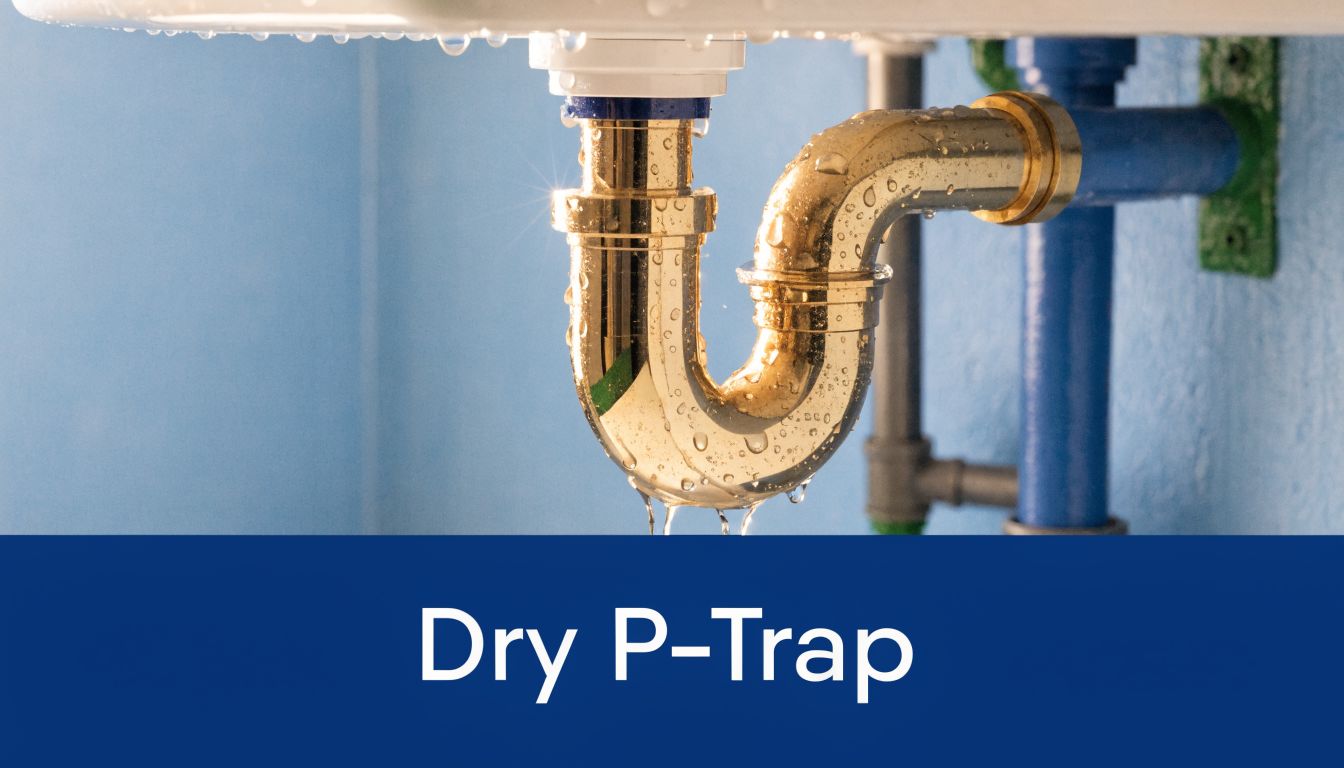
A dry trap is one of the first things to check because it's common and easy to fix. A dry P-trap is a primary cause of sewage odor, accounting for 25-30% of residential complaints, and the water barrier blocks hydrogen sulfide, a gas detectable by humans at 0.5 parts per million (PPM), which is why even a small breach creates a strong rotten egg smell, according to this plumbing explanation of dry P-traps and sewer gas.
Why this happens so often in Los Angeles
In LA, this shows up most in guest bathrooms, back units, powder rooms, and showers that barely get used. Dry air, regular HVAC use, and simple lack of water flow can let that trap seal disappear. In some homes, minor seismic movement also doesn't help. Small vibrations over time can affect older joints and make already-marginal seals less reliable.
You usually notice a few patterns:
- The smell is strongest near one drain. Sink, shower, or tub.
- The bathroom isn’t used often. Vacation periods and guest baths are classic cases.
- The odor comes and goes. Air movement in the room can change how strong it feels.
Run the water before you assume the worst. This is the cheapest test in the whole process.
What to do right now
Start simple. Run water into the suspect sink, tub, or shower for about half a minute. If there are several little-used drains in the bathroom, refill all of them. Then leave the room for a bit and come back.
If the smell drops sharply, you likely found the issue.
For a bathroom that sits unused for stretches, do this:
- Refill the drain regularly. A brief weekly run is usually enough to maintain the seal.
- Add mineral oil for vacancy. A small amount over the water helps slow evaporation.
- Don't forget hidden drains. Floor drains and overflow-connected fixtures get missed all the time.
Later in the process, it helps to see how the trap works in practice:
If you refill the trap and the smell returns quickly, that usually means the problem isn't just evaporation. At that point, look inside the drain itself for sludge or move on to the toilet and vent system.
Beyond the Trap Clogs and Biofilm Buildup
When the trap has water in it and the bathroom still smells foul, the next suspect is usually buildup inside the drain. This is different from straight sewer gas. The odor often comes from decaying organic matter clinging to the pipe walls, sink overflow passage, or shower drain body.
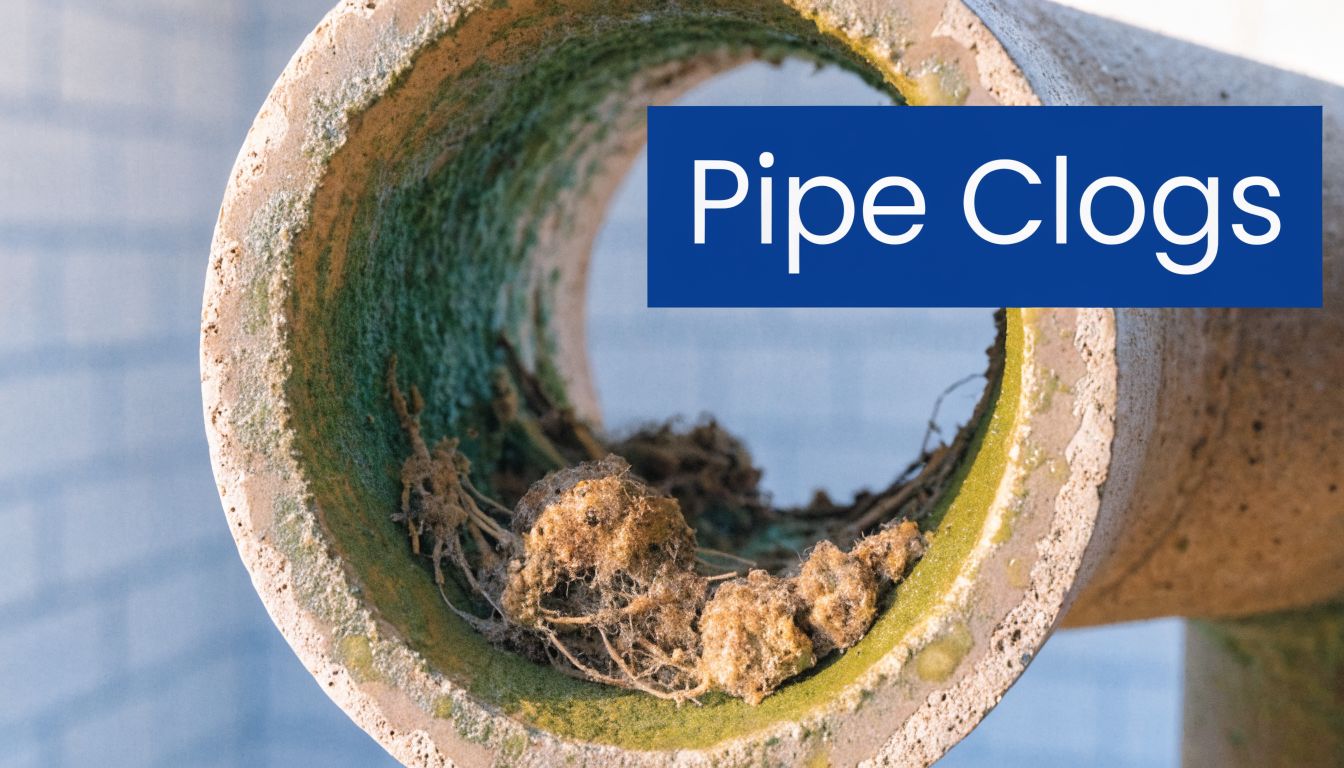
What biofilm actually is
Biofilm is the slimy layer made from hair, soap scum, skin cells, toothpaste residue, and other organic debris. In Los Angeles, hard water minerals give that layer more structure, so it sticks faster and smells worse. Homeowners often scrub the visible drain opening and miss the inside edge, the trap arm, or the sink overflow channel where the odor keeps regenerating.
A useful industry snapshot is that clogs and biofilm are a major share of these calls. Wet wipes contribute to 50% of blockages, according to this overview of bathroom sewage smell causes and drain blockages. That matters because wipes don't break down like people expect, and once they catch hair and residue, they create a stubborn odor source.
The smell profile is a little different from a dry trap. It can be more sour, swampy, or fermented. Still nasty. Just different.
What works and what usually makes it worse
For DIY cleaning, I prefer methods that remove buildup without beating up the piping.
- Pull out visible debris first. Hair and sludge at the stopper or strainer should come out by hand with gloves or a small plastic drain tool.
- Clean the overflow opening. In bathroom sinks, that hidden passage is a repeat offender.
- Use an enzymatic drain cleaner. It works slower than a harsh chemical opener, but it targets organic residue instead of trying to burn through it.
- Flush with hot water after mechanical cleaning. That helps carry loosened slime away.
What usually disappoints homeowners is the quick chemical fix. Strong liquid drain openers may clear part of a clog, but they often leave the sidewall film behind. They can also sit in the trap and create a whole separate problem when a plumber has to open the line later.
If the smell keeps returning after “cleaning,” the drain probably wasn't fully cleaned. The slime layer is still there.
If the drain is slow, recurring, or affecting more than one unit in a property, professional cleaning is usually the better answer. For larger buildup problems, hydro jetting is more complete than basic snaking because it strips the inner pipe walls instead of just poking a path through the blockage. If you want a plain-language overview of safe maintenance, this drain cleaning guide for LA homeowners is a solid reference.
Property managers who handle out-of-area units often run into the same challenge of finding qualified local help. In those cases, something like VerticalRent's Wimauma service pro directory shows the general model of verifying service providers before dispatching them, which is smart anywhere, including LA.
Investigating Toilet and Wax Seal Failures
If the smell is strongest at the base of the toilet, stop thinking about the sink drain and start thinking about the seal below the toilet. The toilet doesn't connect directly to the floor flange with a hard gasket. It uses a wax ring or similar sealing system to block gas and water from escaping at that junction.
A broken wax seal under the toilet is the source of about 15% of bathroom sewage odor complaints, and these seals typically last 10-20 years before they can dry out, crack, or compress enough to let gas escape, as noted earlier in the section on drain and odor causes.
Signs the toilet base is the problem
This one is easier to narrow down than people think. You don't need tools to spot the common clues.
Look for these:
- The odor sits low to the floor. It gets stronger when you bend near the toilet base.
- The toilet rocks slightly. Even a small wobble matters.
- The smell gets worse after flushing. Pressure changes can push odor through a compromised seal.
- There may be staining or moisture nearby. Not always, but it's a warning sign when present.
In Los Angeles homes, age and movement matter here. An older toilet that's been in place for years can slowly lose compression at the seal. Small seismic activity won't wreck a healthy installation overnight, but it can contribute to gradual shifting in older bathrooms.
Why this repair usually should not be DIY
Replacing a wax ring sounds simple until the toilet has to come off cleanly, the flange has to be checked, the floor condition has to be evaluated, and the fixture has to be reset at the proper height and alignment. If the toilet was rocking, there may also be flange damage or floor unevenness that a new wax ring alone won't solve.
Here's the short version:
| Symptom | Likely meaning | Best next move |
|---|---|---|
| Smell only near toilet base | Failing seal | Schedule toilet service |
| Toilet rocks when pushed gently | Seal and mounting issue | Don't keep using it |
| Smell after flushing | Gas bypass during discharge | Have the base inspected |
If the toilet is loose, don't keep testing it. Repeated movement can make the seal worse and can damage the flange below. When that happens, the repair gets more involved.
For homeowners dealing with a suspected toilet-base problem, this toilet repair service page gives a good overview of the kinds of issues that usually need hands-on professional work.
When the Problem Is Deeper Vent Stack and Sewer Line Issues
Once the smell shows up in more than one place, the diagnosis changes. A single smelly sink is usually local. A bathroom where the sink, tub, and toilet all act strange at the same time points to the system behind the fixtures.
That system depends on venting. Your plumbing vent stack lets sewer gases exit through the roof and keeps air pressure balanced so traps and drains work correctly. When venting is blocked, pressure problems can pull water out of traps or force gas back toward the bathroom.

How vent problems announce themselves
Vent stack issues rarely arrive as smell alone. They usually come with sound and drainage symptoms.
Watch for this combination:
- Gurgling drains. Air is struggling to move where it should.
- Slow drainage in multiple fixtures. Not just one sink.
- Bubbling in the toilet bowl. Especially when another fixture drains.
- Odor that returns even after local cleaning. Because the cause is upstream.
Emerging data from LA sanitation reports show a 15% rise in vent-related sewer smells due to clogs from “flushable” wipes and other debris that can block roof vents and create pressure imbalances, according to this discussion of bathroom sewer smell and vent blockage issues.
That matters in multi-unit Los Angeles buildings. One person's flushing habits can create effects that show up in a different unit. HOA and apartment layouts can hide vent problems until the smell becomes a repeated complaint.
Multiple fixtures acting up at once usually means the issue is past the fixture. That's when a roof vent or sewer line becomes much more likely.
Older LA sewer lines and root intrusion
In neighborhoods with older infrastructure, especially Pasadena and Glendale, the main sewer line deserves serious attention. Older clay, cast iron, and aging joints are more vulnerable to intrusion and collapse. Tree roots are especially aggressive because they don't need a big opening. They only need moisture and a small point of entry.
A hidden sewer line issue can show up as:
- Sewage smell in more than one bathroom
- Repeated drain backups
- Wet areas or unusual odors outside
- Problems that return shortly after cleaning
Tree root intrusions are a major cause of sewer line trouble, contributing to up to 40% of sewer-related service calls, and professional camera inspections are considered the gold standard for diagnosing those hidden problems, as noted earlier in the dry-trap source material.
Relying on guesswork can become expensive. A cable snake may reopen a path temporarily, but it won't tell you whether roots, a belly, a cracked section, or a misaligned joint is causing the recurring odor. A camera inspection will.
For homeowners who are seeing repeated symptoms or for property managers dealing with recurring complaints, a sewer camera inspection is the cleanest way to stop speculating and identify the exact defect.
Your Diagnostic Checklist and When to Call an LA Plumber
At this point, the best move is to make the decision simple. Don't treat every sewage smell like a sewer-line disaster, and don't keep trying DIY fixes when the symptoms clearly point to something deeper.
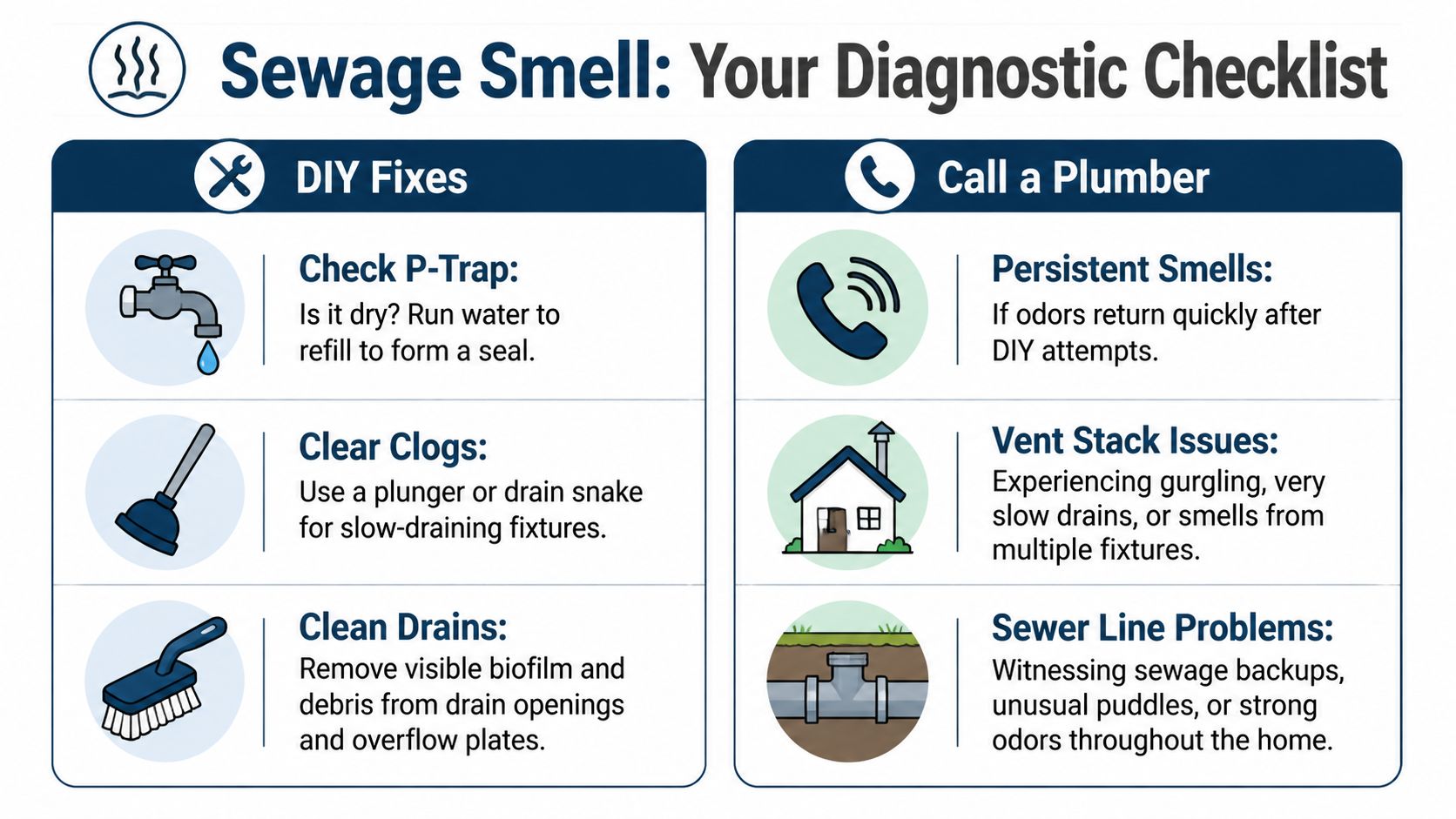
A fast decision guide
Use this checklist in order.
- Start with the unused drain. If the bathroom or fixture doesn't get much use, refill the trap and see whether the smell fades.
- Move to visible buildup. Clean the drain opening, stopper, and sink overflow if present.
- Check the toilet base. If the odor is concentrated low and the toilet moves, stop there and book service.
- Listen to the whole house. Gurgling, bubbling, and multiple slow fixtures point away from a simple local issue.
- Think about the age of the property. Older LA homes and buildings are more likely to have root intrusion or aging line defects.
When to stop troubleshooting and book service
A homeowner can do basic elimination. A plumber should take over when the symptoms suggest failed seals, blocked venting, or a compromised sewer line.
Call for professional help if:
- Odors come back quickly after refilling and cleaning
- More than one fixture is involved
- The toilet rocks or leaks at the base
- You hear gurgling in drains or bubbling in the toilet
- Backups, yard odors, or outside wet spots are showing up
Here's the practical dividing line:
| If you notice | Try this first | If it doesn't change |
|---|---|---|
| Smell from one rarely used drain | Refill trap | Inspect for drain buildup |
| Smell from sink or shower with slime | Manual cleaning and enzymatic treatment | Have the drain professionally cleaned |
| Smell at toilet base | Gentle movement check only | Schedule toilet reset and seal replacement |
| Smell in multiple fixtures with gurgling | Don't climb to the roof or guess | Book vent and sewer diagnostics |
Los Angeles homes bring a few extra complications. Hard water helps biofilm hang on. Older neighborhoods have more aging lines. Mild but frequent ground movement can expose weak points that stayed hidden for years. That mix is why a sewer smell that seems small can either disappear with one easy fix or keep returning until someone properly diagnoses the system.
If root intrusion is part of the picture, remember this point from the earlier source material: tree roots contribute to up to 40% of sewer-related service calls, and a camera inspection is the right way to confirm what's happening before a bigger backup develops.
If your bathroom smells like sewage and you want a clear answer instead of guesswork, EZ Plumbing can help. EZ Plumbing has served Los Angeles since 1989 and handles everything from simple drain odor problems to vent stack diagnostics, toilet seal failures, hydro jetting, and sewer camera inspections. The team works across Beverly Hills, Santa Monica, Pasadena, Glendale, Burbank, West Hollywood, and the San Fernando Valley, with 24/7 emergency response and same-day scheduling for many non-emergency calls. Call (818) 908-2710 or schedule online through the website to get a licensed, insured plumber who will identify the source and recommend the cleanest fix.