
How to Read a Water Meter for Leaks: A Step-by-Step Guide
You open the water bill, look at the total, and your first thought is that something has to be wrong. Maybe nothing inside the house looks wet. No dripping faucet. No puddle in the yard. No obvious slab leak sign. But the bill climbed anyway.
That’s usually when the water meter becomes the most useful tool on the property.
A meter can tell you whether water is moving when the house is supposed to be completely still. It can also tell you whether the leak is steady, occasional, inside the home, or somewhere between the meter and the house. If you know how to read a water meter for leaks, you can do a solid first diagnosis yourself before replacing parts blindly or scheduling unnecessary work.
Table of Contents
- Why Your Water Meter Is Your Best Leak Detective
- Locating and Safely Accessing Your Water Meter
- Reading the Three Main Types of Water Meters
- Performing a Timed Test to Quantify the Leak
- Common Pitfalls and Pro Tips for Accurate Readings
- When Your Findings Mean It's Time to Call EZ Plumbing
Why Your Water Meter Is Your Best Leak Detective
Most homeowners think of the meter as a billing device. In practice, it’s your first diagnostic tool.
The biggest advantage is speed. Before you cut into drywall, swap out fixtures, or assume the utility made a mistake, the meter can confirm whether water is moving through your plumbing system when everything is off. That answer changes what you do next.
A small leak is easy to underestimate. The low-flow indicator on a residential meter can detect leaks wasting as little as 1 gallon per hour, and that adds up to nearly 11,641 gallons annually. In Los Angeles, that can mean $50 to $100 extra per month, and undetected leaks can account for 10-20% of residential water use according to the UC ANR leak detection guidance.
Practical rule: If the bill jumped and your habits didn’t, trust the meter before you trust your assumptions.
I’ve seen the same pattern again and again in Los Angeles homes. A homeowner notices a high bill, checks the obvious fixtures, finds nothing, and waits another cycle. Meanwhile, a toilet flapper, irrigation valve, or underground line keeps moving water every day. By the time the leak becomes visible, the repair is often more disruptive than it needed to be.
Your meter helps you answer three useful questions fast:
- Is water moving right now: If the leak indicator moves with all fixtures off, you have active flow.
- Is the leak likely small or significant: A short check can confirm activity, and a timed reading can show volume.
- Is the problem inside or outside: A shutoff test can help separate house plumbing from a yard or service line issue.
If you want more homeowner diagnostics like this, the EZ Plumbing guide library is a good place to keep bookmarked.
Locating and Safely Accessing Your Water Meter
For most Los Angeles single-family homes, the meter sits near the curb or sidewalk in a concrete or plastic box marked WATER. If you’ve never opened it before, expect it to be dirty. That’s normal.
Use a large flat screwdriver or meter box tool to lift the lid. Go slowly. Some lids are heavier than they look, and older covers can shift or bind if dirt has packed around the edges.
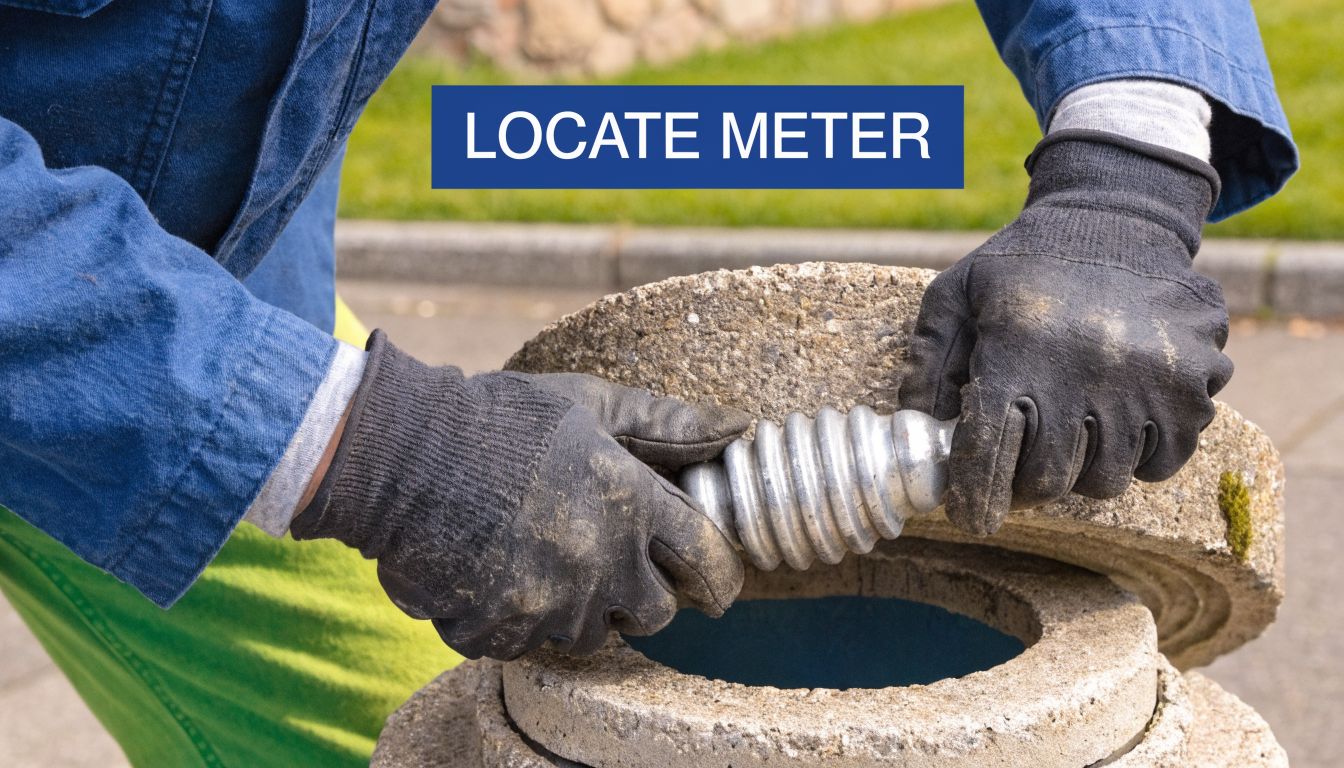
What you’ll usually find inside
Meter boxes in Southern California collect all kinds of debris. Dry dirt, leaves, cobwebs, mud, and standing water are common. Some boxes are clean enough to read right away. Others need a little prep before you can see the face clearly.
A careful approach works best:
- Open the lid fully and set it aside securely
- Look first, then reach in
- Clear loose debris gently around the register
- Use a flashlight if the face is shaded or muddy
- Avoid forcing or twisting anything attached to the meter
Don’t grab valves with pliers just because they’re right in front of you. Many problems start when someone tries to “help” a stiff valve and creates a new leak.
What not to do at the meter box
The meter assembly belongs to the utility side of the system, so treat it carefully. Homeowners should focus on reading it, not wrenching on it. The curb stop and related hardware aren’t the place for trial and error.
If you already know you have a dripping or suspect shutoff problem inside the property line, this guide on a leaking shut off valve helps you understand the difference between a fixture-side valve issue and a supply-side problem.
A clean view matters more than people think. If the face is obscured, your leak test can be wrong before it starts. Take an extra minute, clear the sightline, and make sure you can read the numbers or display.
Reading the Three Main Types of Water Meters
Not every meter in Los Angeles looks the same. Some homes still have classic analog registers. Others have straight-reading odometer faces. Newer properties and upgraded service areas may have digital or smart displays.
The one thing they all share is this: somewhere on the register, there’s usually a low-flow indicator. That’s the part you watch first when checking for a leak.
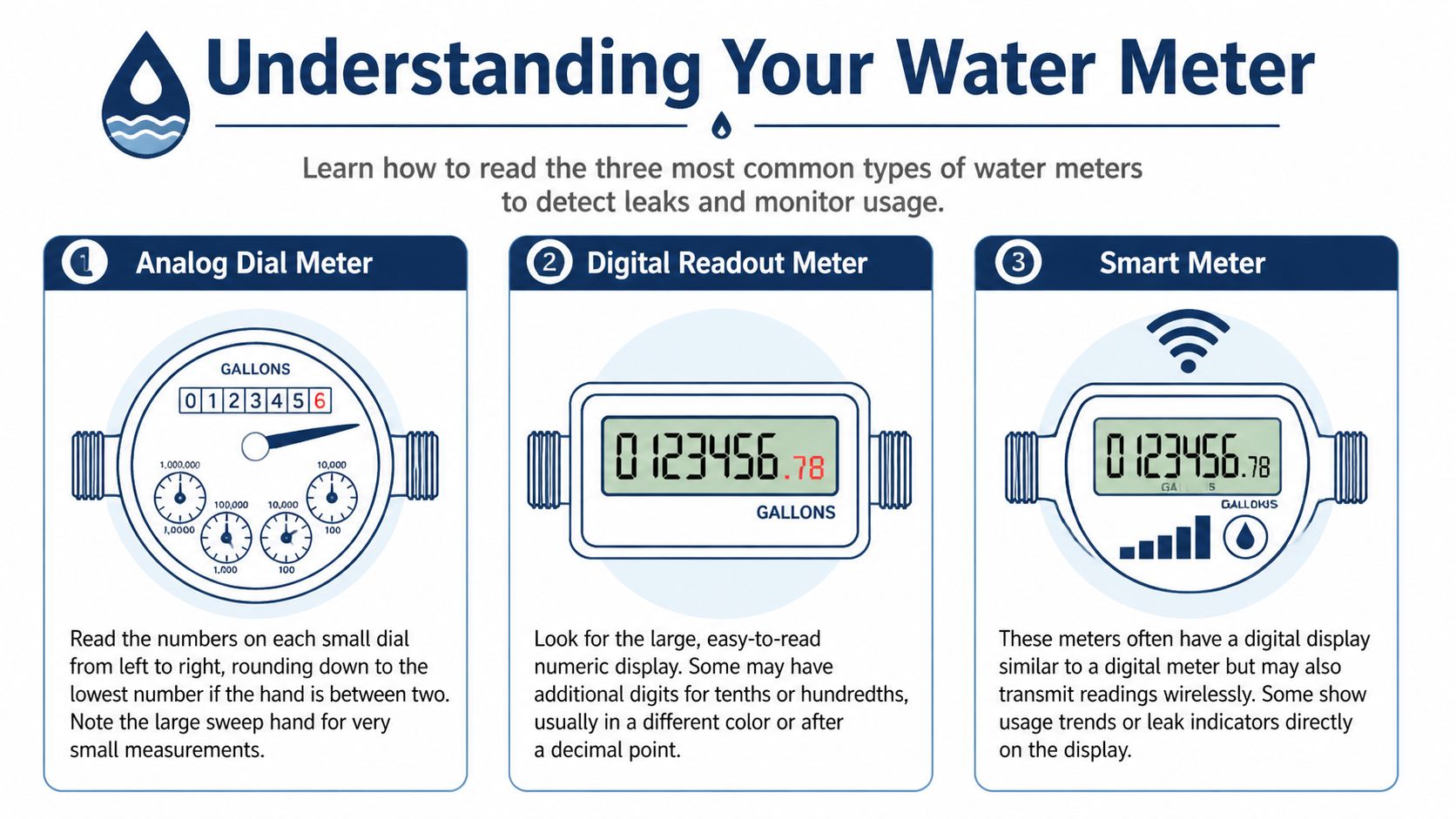
Analog dial meters
These are the meters that look the most intimidating at first. You may see a large sweep hand, several small markings, and a tiny colored triangle, star, or gear-shaped indicator.
The good news is you usually don’t need to interpret every mark to answer the leak question.
Start here:
- Look for the leak indicator: It’s often the smallest moving part on the face.
- Shut off all water use: Faucets, showers, irrigation, dishwasher, washer, and ice maker.
- Watch the indicator closely: Even a slight twitch matters if nothing in the house should be using water.
The static water meter test has a success rate of over 90% for detecting continuous flows, and the key is that low-flow indicator. On many residential meters, it’s calibrated to register flows as low as 1/8 gallon per minute. Watching it for 2 to 3 minutes with all water off is enough to confirm a continuous leak, based on the Action Leak explanation of the static meter test.
Odometer style meters
These are the easiest for most homeowners to read. The display works a lot like a car odometer. You read the numbers left to right.
Some odometer meters also include a sweep hand or a small indicator for low flow. If yours has both, use them together. The odometer gives you total volume. The small indicator tells you whether flow is happening right now.
What works well on these meters is a two-part check:
- Watch the leak indicator for immediate movement.
- Record the full reading if you want to measure loss over time.
That combination is more useful than either method alone.
Here’s a quick visual walkthrough if you want to compare meter faces while you’re standing at the box:
Digital and smart meters
Digital meters remove some guesswork, but they create a different problem. People assume the display is self-explanatory, then miss the leak icon or cycle past the screen they need.
On digital and smart meters, look for:
- A usage number on the main display
- A flow symbol or faucet icon
- A cycling screen that may show current movement instead of total use
If the screen is blank, try your flashlight first. Some digital displays are easier to read once the face is clean and lit. Don’t pound on the lid or jab at the display.
A moving icon with no water intentionally running means the meter is doing its job. It’s telling you water is leaving the system somewhere.
For leak detection, don’t get distracted by every number on the screen. Focus on whether the meter shows active flow with the property supposedly at rest. That’s the signal that matters most.
Performing a Timed Test to Quantify the Leak
A moving indicator tells you there’s a leak. A timed test tells you how serious it is.
This is the part homeowners skip too often. They confirm that something is wrong, then stop there. But if you can tell whether the leak is minor, steady, or aggressive, you’ll make a better decision about urgency and repair.
A longer meter reading test offers 85% accuracy in confirming hidden leaks. One example from EBMUD’s meter reading guidance shows that if the meter changes by 10 cubic feet in 24 hours, multiplying by 7.48 gives 74.8 gallons per day, which indicates a Class II leak requiring professional attention.
How to run the test cleanly
The quality of the result depends on how still the house stays during the test. If someone flushes a toilet, runs an ice maker cycle, or triggers irrigation, the reading becomes less useful.
Use this sequence:
Pick a quiet time
Early morning or late evening works well if the household is busy.Shut down all intentional water use
Check sinks, showers, laundry, dishwasher, irrigation, and appliances.Record the meter reading carefully
Write it down or take a phone photo so you don’t rely on memory.Wait through the test period
Keep the house off water the entire time.Read the meter again
Any difference is water that went somewhere.
If the number changed and nobody used water, the plumbing system did.
Calculating your leak rate
You don’t need a complicated formula. Just use the same units your meter shows and convert if needed.
| Meter Reading Type | Calculation Step | Example |
|---|---|---|
| Cubic feet | Second reading minus first reading | 10 cubic feet used |
| Gallons from cubic feet | Multiply cubic feet by 7.48 | 10 × 7.48 = 74.8 gallons |
| Daily loss | Use the full test period as your baseline | 74.8 gallons in 24 hours |
If your meter already reads in gallons, the math is even simpler. Subtract the first reading from the second. That difference is the leak volume during the test window.
For homeowners, the practical takeaway is simple. A timed test turns a vague problem into a usable number. That helps when you’re deciding whether to replace a toilet part, keep monitoring, or schedule leak detection before the next bill arrives.
Common Pitfalls and Pro Tips for Accurate Readings
A lot of bad leak checks come from a perfectly honest mistake. The homeowner does the test correctly for a few minutes, sees no movement, and assumes the plumbing is fine. Then the next bill shows the same unexplained usage.
That happens because not every leak runs continuously.

Why a short test can miss a real leak
Brief indicator checks are excellent for steady leaks. They’re weaker for leaks that cycle on and off.
Intermittent leaks can account for up to one-third of all household leaks, and a running toilet can waste 10,000 gallons annually while still evading a short meter check if it drips only from time to time, according to the SAWS guidance on reading a water meter to identify leaks.
That’s why a toilet with a worn flapper is so often the hidden culprit. You look at the bowl, it seems quiet, and the meter appears still during a short test. Then the tank refills later and the water loss starts again.
If your short test is negative but your bill still looks wrong, do this instead:
- Run an extended observation: Record the total meter reading, then recheck it periodically over several hours.
- Test toilets separately: Food coloring in the tank can reveal silent bowl seepage.
- Isolate irrigation: Turn off the outdoor system and repeat the observation on a separate cycle.
- Pay attention to patterns: Overnight movement often points to fixtures inside the house. Daytime spikes can point to irrigation or occupancy-driven use.
Debris, blocked views, and valve mistakes
Real-world meter boxes aren’t showroom clean. Dirt on the glass, fogged covers, standing water, and insect nests all make homeowners think the dial is unreadable when it just needs basic cleanup and light.
A few field habits help:
- Use a flashlight, not guesswork: Reflections can hide tiny indicator motion.
- Clear the lid area first: Loose debris can fall onto the register while you’re reading it.
- Take a photo for comparison: Zooming in on your phone often makes small digit changes easier to spot.
Another common mistake is turning the wrong valve. If you want to know whether the leak is inside the house or between the meter and the structure, shut off the home’s main valve, then watch the meter again. If the meter still shows movement after the house is isolated, the problem is likely outside the home side plumbing and needs professional diagnosis.
The cleanest isolation test is simple. Close the house main, leave the meter alone, and see whether water still registers.
That single step often saves hours of guesswork.
When Your Findings Mean It's Time to Call EZ Plumbing
Some meter results point to an easy next step. Others tell you the problem has moved past homeowner diagnosis.
If your testing suggests a toilet issue, a fixture supply problem, or another obvious indoor leak, you may be able to handle the first round of checks yourself. But once the meter says water is moving and the source still isn’t visible, it’s time to stop guessing.
A professional should get involved when:
The meter moves with the house main shut off
That points to a leak in the yard, service line, or another area you can’t fix with a fixture repair.The timed test shows measurable ongoing loss
Once the meter proves consistent water movement, delay just means a higher bill and more risk.You can confirm the leak but not locate it
Hidden wall leaks, slab leaks, and underground line failures need proper equipment and a methodical approach.You manage a multi-unit or commercial property
Multiple fixtures, irrigation zones, and shared plumbing make meter diagnosis more complex.
For Los Angeles properties, that’s where targeted professional leak detection services make sense. The value isn’t just finding out that you have a leak. It’s finding the leak without tearing up the wrong area first.
EZ Plumbing has served Los Angeles since 1989 and works with homeowners, HOAs, property managers, and commercial properties across the region. If your meter test points to a hidden or underground issue, a licensed plumber can narrow it down, confirm the repair path, and keep the damage from spreading.
If your water bill doesn’t match your actual usage, don’t wait for visible damage to prove there’s a problem. EZ Plumbing helps Los Angeles homeowners and property managers track down hidden leaks, diagnose service line issues, and fix the problem cleanly. Call (818) 908-2710 or schedule service online for fast, reliable help.