
Water Heater Venting Problems: Warning Signs and Fixes
Water heater venting failures can let carbon monoxide into your home, and any symptom you notice should be treated as potentially dangerous. If you smell an unusual odor near your water heater, see soot around the vent connections, or your carbon monoxide alarm sounds, act immediately rather than waiting to see if it resolves on its own.
If you suspect a venting problem right now:
- Ventilate the area by opening windows and doors
- Evacuate the home if a CO alarm is sounding
- Shut off the gas supply at the appliance valve if you can do so safely
- Call 911 or your local fire department for an active CO alarm
- Contact a licensed plumber for inspection and repair
Rust around the vent, a yellow or flickering flame, and water stains near the flue pipe are all signals that venting failures often precede detectable CO buildup — don’t wait for the alarm to confirm it.
TL;DR:
- Rust, soot, water stains, and yellow or flickering flames indicate venting problems that can lead to dangerous carbon monoxide buildup if ignored.
- Negative house pressure from exhaust fans or improper vent slopes can cause backdrafting and should be checked regularly, especially after furnace upgrades.
- Visual inspection, draft testing with exhaust fans on, and combustion analysis by a licensed plumber are essential steps to diagnose vent failures accurately.
- Catastrophic venting issues often require permit-approved repairs involving vent rerouting, relining, or material upgrades, which only a licensed professional should perform.
- Routine annual checks of vent caps, joints, and visible flues help prevent future failures and reduce the risk of CO poisoning and mold growth.
Table of Contents
- Signs of Venting Problems You Shouldn’t Ignore
- What Causes Water Heater Venting Failures?
- What to Do Immediately if You Suspect a Vent Failure
- How to Check Your Water Heater Vent Yourself
- When Do You Need a Licensed Plumber for Venting Repairs?
- What EZ Plumbing Does for Venting Repairs
- Preventing Future Vent Problems
- Recognizing Carbon Monoxide Buildup From a Failing Vent
- How to Safely Clear a Blocked Vent
- Common Mistakes Homeowners Make Diagnosing Vent Issues
- Does Your Water Heater Type Change Your Venting Needs?
- Health Risks Beyond Carbon Monoxide
- Key Takeaways
- Why Vague Venting Advice Puts Homeowners at Risk
- Get Your Venting System Inspected by a Licensed Plumber
- Sources
Signs of Venting Problems You Shouldn’t Ignore
Not every symptom carries the same urgency, but each one tells you something specific about what’s failing inside your vent system.
- Rust or corrosion near vent connections. This usually points to condensation forming inside the flue, which happens when exhaust gases cool too fast, often because the vent is oversized or improperly insulated.
- Soot or dark staining around the draft hood or vent pipe. Soot means incomplete combustion, which produces higher carbon monoxide levels than a clean-burning flame.
- Persistent moisture or water stains on ceilings, walls, or near the unit. Beyond structural damage, trapped moisture invites mold growth, which creates a separate respiratory hazard entirely apart from venting.
- Unusual odors, even faint ones. Carbon monoxide itself is odorless, but a burning or metallic smell near the heater often signals overheating components or gas leakage worth investigating immediately.
- A yellow or flickering flame instead of a steady blue one, which indicates the burner isn’t getting enough combustion air or the flue isn’t drafting properly.
- Increased indoor condensation on windows near the water heater closet, a subtle sign that exhaust gases are spilling into the living space instead of exiting outdoors.
- CO alarm activation, which requires immediate evacuation regardless of any other symptom present.
Photograph rust patterns, soot marks, and water stains before calling a technician. These records, as Water System Wiki notes, speed up diagnosis considerably because a plumber can compare fresh damage against older staining.
What Causes Water Heater Venting Failures?
Most venting problems trace back to one of a handful of mechanical or environmental issues, and knowing which one you’re dealing with determines whether it’s a quick fix or a code-driven repair.
- Blocked terminals. Bird nests, leaves, and ice buildup at the vent cap are among the most common and most fixable causes of poor draft.
- Disconnected or loose vent connectors. Corrosion, missing screws, or joints that have simply worked loose over years of thermal expansion let combustion gases escape before reaching the outdoors.
- Incorrect slope or sagging vent runs. Vent piping needs a continuous upward pitch, and manufacturer guidance recommends maintaining an upward pitch of at least a quarter inch per foot, a standard reflected in both NFPA 54 and the IRC.
- Mismatched vent materials. Category I atmospheric heaters and Category IV condensing units require different vent materials entirely, and mixing them is a documented cause of CO spillage.
- An orphaned water heater after a furnace upgrade. When a high-efficiency furnace replaces an older unit, the water heater often gets left venting alone through a chimney that’s now oversized for its output, which causes condensation and backdrafting.
- Negative house pressure. Tightly sealed homes and high-CFM exhaust fans can starve the water heater of combustion air, pulling exhaust back down the flue instead of letting it rise.
- Power-vent blower failure. On powered systems, a failed blower or tripped pressure switch commonly triggers lockout codes rather than a dangerous spill, but it still needs professional diagnostics.
What to Do Immediately if You Suspect a Vent Failure
Treat every suspected venting issue with the same urgency until you’ve ruled out the worst-case scenario.
- Evacuate and call 911 if your CO alarm is active. Do not re-enter the home until fire department personnel confirm it’s safe.
- Shut off the gas at the appliance valve only if you can reach it without re-entering a hazardous area. If you’re unsure where the valve is or feel unsafe approaching it, skip this step and wait for professional help.
- Turn off high-CFM exhaust fans like kitchen range hoods or bathroom fans, since these can worsen negative pressure and pull exhaust gases into living spaces.
- Open windows and doors to encourage cross-ventilation while you wait for help to arrive.
- Document what you’re seeing. Photos of soot, water stains, or the flame color, along with notes on when symptoms appear, help a technician diagnose faster.
Pro Tip: Note whether symptoms worsen when the clothes dryer, bathroom fan, or kitchen hood is running. That pattern often points straight to negative-pressure backdrafting rather than a mechanical vent failure.
How to Check Your Water Heater Vent Yourself
Some diagnostic checks are safe for homeowners to perform, and they often narrow down the cause before a technician even arrives.
- Inspect the exterior vent cap and visible flue from the ground when possible; only use a stable ladder if you’re comfortable with roof access, and never inspect a roof terminal alone or in wet conditions.
- Check vent connector joints for gaps, rust, or missing screws, and gently re-seat any obviously loose sections without forcing connections that resist.
- Verify continuous upward slope along the horizontal vent run. A sagging section that dips before rising again disrupts draft and usually means a hanger needs adjustment.
- Run a simple draft test. Hold a smoke pen or an extinguished match near the draft hood with exhaust fans running to simulate worst-case pressure conditions. Smoke that gets pulled into the hood indicates good draft; smoke that spills into the room signals backdrafting, a problem Water System Wiki attributes most often to blockage or insufficient combustion air.
- Clear obvious debris like leaves or a bird’s nest at the cap by hand, but stop there if the cap itself needs to be removed.
Stop immediately and call a licensed plumber if you find corroded connectors, Category IV plastic venting, or if the fix would require working inside a chimney or touching gas line connections. Our gas water heater troubleshooting guide walks through additional checks you can safely perform before that point.
When Do You Need a Licensed Plumber for Venting Repairs?
Some venting repairs are simple enough for a handy homeowner. Others cross into work that legally requires a licensed contractor and, often, a permit.
- Vent replacement or rerouting almost always requires a permit, since it changes how combustion gases exit the structure.
- Category IV condensate handling and connector sizing changes require pressure-rated materials and solvent-welded joints, work that licensed contractors are trained and equipped to inspect properly.
- Chimney relining after an orphaned water heater situation is specialized work that directly affects fire and CO safety.
- Repeated power-vent lockouts, visible holes in the vent pipe, or persistent backdrafting despite clearing obvious blockages all warrant an immediate service call rather than continued DIY troubleshooting.
A qualified technician brings a draft gauge and combustion analyzer to the job, tools that quantify exhaust performance instead of relying on a match flame. Ask about license number, insurance, and whether the job requires a permit before work begins.
Pro Tip: Ask your technician to show you the draft reading before and after the repair. A visible before/after comparison confirms the fix actually solved the problem instead of just masking a symptom.
What EZ Plumbing Does for Venting Repairs
EZ Plumbing holds a C-36 license (#583868) and handles water heater venting diagnostics and repair throughout the greater Los Angeles area, including emergency response for active CO concerns.
Our diagnostic process follows a consistent workflow:
- Visual inspection of the vent system, connectors, and termination point
- Draft and spillage testing under worst-case exhaust conditions
- Combustion analysis when readings suggest incomplete burning
- Permit-aware repair, relining, or rerouting when code requires it
We’re the right call for confined-space venting issues, Category IV condensing systems, and orphaned water heaters left behind after a furnace upgrade. Before your appointment, gather your photos, note when symptoms occur, and make sure the water heater closet is accessible. If a replacement makes more sense than a repair, our water heater installation guide covers what that process looks like.
| Diagnostic Step | What It Confirms |
|---|---|
| Visual inspection | Connector integrity, corrosion, and vent material compatibility |
| Draft/spillage test | Whether exhaust is exiting properly under real-world pressure |
| Combustion analysis | Burn quality and CO output at the source |
| Permit review | Whether the repair requires code-compliant rerouting or relining |
Preventing Future Vent Problems
A short annual routine catches most venting issues before they become dangerous.
- Inspect the vent cap, connector joints, and visible flue once a year, checking for corrosion, condensate staining, or debris buildup.
- Run a basic draft check with exhaust fans on to confirm the system still handles worst-case pressure conditions.
- Revisit your venting setup after any furnace replacement. An orphaned water heater is one of the most overlooked causes of delayed backdrafting, sometimes not surfacing until the following winter.
- Consider makeup-air or high-low venting if your home has been sealed, insulated, or had additional exhaust fans installed since the water heater went in.
- Keep a simple log of inspection dates and any repairs, so patterns become visible over time.
Pro Tip: Set a recurring reminder tied to daylight saving time changes. Checking your vent system twice a year, once you turn clocks forward and once you turn them back, keeps the task from slipping through the cracks.
Recognizing Carbon Monoxide Buildup From a Failing Vent
Carbon monoxide symptoms often mimic the flu, which is exactly what makes venting-related CO buildup so dangerous. Headaches, dizziness, nausea, and fatigue are the earliest signs, and they typically worsen the longer someone stays in the affected space and improve once they leave the house.
A pattern worth watching for: if multiple household members feel sick at the same time, especially after the water heater or furnace has been running, that’s a strong signal pointing toward CO rather than a common illness. Pets often show symptoms before people do, since their smaller body mass reacts faster to elevated CO levels. A lethargic or disoriented pet is worth taking seriously.
Confusion and impaired judgment appear as CO concentration rises, which is part of why victims sometimes don’t recognize the danger they’re in. At higher concentrations, loss of consciousness can happen quickly, with little warning beyond the initial flu-like symptoms.
Battery-powered and hardwired CO detectors remain the only reliable way to catch buildup before symptoms appear, since the gas itself has no smell, color, or taste. Placement matters: install detectors near sleeping areas and on every level of the home, not just next to the water heater. If your detector activates, treat it as a real emergency every time, even if you’ve had false alarms before. A detector reaching end-of-life or a low battery can produce erratic behavior, but the safe response is always the same: evacuate first, investigate second.
How to Safely Clear a Blocked Vent
Vent blockages are among the most fixable causes of venting problems, but the process still calls for caution.
Start outside. Locate the vent terminal, usually on the roof or an exterior wall, and look for obvious obstructions: bird nests, leaves, spider webs, or ice buildup in colder months. If you can see debris from the ground, that’s often enough to confirm the cause without further investigation.
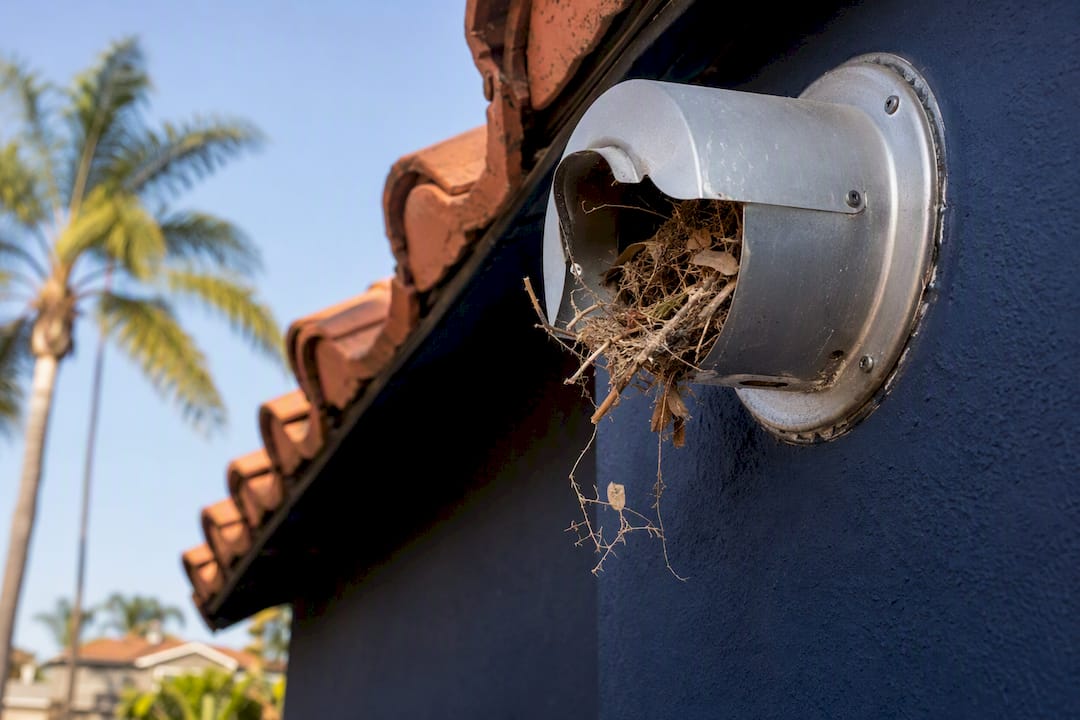
Turn off the water heater before touching the terminal. Shutting off the gas supply and letting the unit cool prevents any risk of contact with hot flue gases during the cleanup.
Remove debris by hand or with a soft brush, working from the outside in. Avoid using sharp tools that could puncture or dent the vent cap, since even small damage can affect draft performance later.
Check for ice specifically in winter months. Ice buildup at the terminal is common in cold climates and often re-forms if the underlying cause, usually excess condensation from an oversized or orphaned vent, isn’t addressed.
Reassess after clearing. Once debris is removed, run a smoke-pen test with exhaust fans operating to confirm draft has returned to normal. If smoke still spills instead of drawing into the hood, the blockage wasn’t the only problem.
Stop and call a professional if the cap itself is damaged, corroded, or difficult to remove. Forcing a stuck or rusted terminal risks breaking connections you can’t easily repair yourself, and a cracked cap needs replacement rather than reinstallation.
Common Mistakes Homeowners Make Diagnosing Vent Issues
The biggest mistake is treating a single clean test result as proof the system is safe. A draft test performed with all exhaust fans off doesn’t reflect real household conditions, and a vent that drafts fine in that scenario can still backdraft the moment a bathroom fan or clothes dryer kicks on.
Another common error is confusing a cleared blockage with a solved problem. If debris caused the backdraft, clearing it helps, but if the underlying cause is an oversized chimney from an orphaned water heater, the symptoms will return, often within a season.
Homeowners also frequently misjudge slope. A vent that looks level to the eye can still be out of the required 1/4 inch per foot pitch, and even minor sagging disrupts draft enough to cause intermittent spillage that’s hard to catch during a quick visual check.
Working on gas connections without shutting off the supply first is a serious and avoidable risk. Any inspection near the gas valve or burner assembly should happen only after confirming the gas is off.
Finally, many people stop investigating once symptoms subside, rather than confirming the actual root cause. Intermittent backdrafting tied to weather conditions, wind direction, or exhaust fan use can disappear for weeks and then return, which is why a proper draft test under worst-case conditions matters more than a single day’s observation.
Does Your Water Heater Type Change Your Venting Needs?
Not all water heaters vent the same way, and the type installed in your home determines what problems are even possible.
Atmospheric (Category I) water heaters rely on natural draft, meaning hot exhaust gases rise through a vertical flue without mechanical assistance. These units are the most vulnerable to negative house pressure and blocked terminals, since they have no fan to push exhaust past an obstruction.
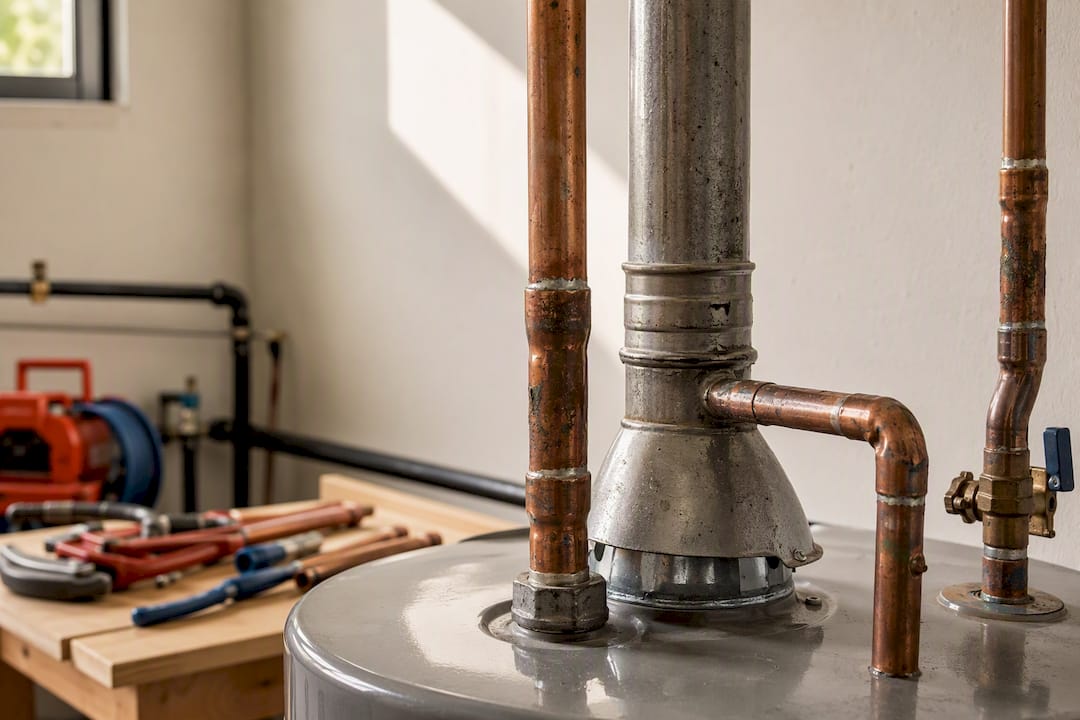
Power-vent water heaters use a blower to actively push exhaust out, which lets them vent horizontally and over longer distances than atmospheric units. This solves many draft problems but introduces a new failure point entirely: the blower motor and pressure switch. When either fails, the unit typically locks out rather than continuing to run with poor venting, which is a built-in safety feature but still requires professional repair.
Direct-vent and power-direct-vent systems draw combustion air from outside rather than the room, which removes negative-pressure risk almost entirely but requires two separate penetrations through the wall or roof, one for intake and one for exhaust, both of which need to stay clear.
Category IV condensing water heaters produce cooler, acidic exhaust that requires pressure-rated PVC or stainless vent material with solvent-welded joints, since dry-fitted connections in a positive-pressure system will leak flue gases into the home. If you’re unsure which category your unit falls into, our plumbing venting guide explains the classification system in plain terms.
Health Risks Beyond Carbon Monoxide
Carbon monoxide gets most of the attention, and rightfully so, but a failing vent system creates other health hazards that deserve equal caution.
Combustion byproducts beyond CO, including nitrogen dioxide and particulate matter from incomplete combustion, can aggravate asthma and other respiratory conditions even at levels too low to trigger a CO alarm. Anyone with existing respiratory sensitivity may notice symptoms before a detector does.
Chronic moisture from condensation buildup, often traced back to an oversized or orphaned vent, creates ideal conditions for mold growth in walls, ceilings, and the water heater closet itself. Mold exposure brings its own set of respiratory and allergy symptoms entirely separate from combustion gases.
Excess humidity from a poorly venting system can also accelerate corrosion on nearby electrical connections and metal fixtures, which introduces a secondary safety concern beyond air quality. None of these risks show up on a CO detector, which is exactly why visual inspection for moisture and staining matters as much as gas monitoring.
Key Takeaways
Water heater venting failures require immediate safety action first and diagnostic troubleshooting second, since the risk of carbon monoxide exposure outweighs the value of identifying the exact cause before acting.
| Point | Details |
|---|---|
| Safety comes first | Evacuate on any CO alarm activation and call 911 before attempting any troubleshooting. |
| Match symptoms to causes | Rust suggests condensation, soot suggests incomplete combustion, and yellow flames suggest poor draft. |
| Test under real conditions | Run draft checks with exhaust fans on, since worst-case pressure reveals problems a quiet test misses. |
| Know your vent category | Category I and Category IV systems use different materials, and mixing them causes CO spillage. |
| Call EZ Plumbing for code-driven repairs | Licensed diagnostics with draft testing and combustion analysis handle permit-required vent replacement, relining, and orphaned-vent fixes. |
Why Vague Venting Advice Puts Homeowners at Risk
Most venting advice online tells you to “check for blockages” and “call a professional if problems persist,” which is technically true and practically useless. The homeowners who get hurt aren’t the ones who ignore obvious symptoms. They’re the ones who run one clean draft test with the exhaust fan off, decide the system is fine, and never test it under the conditions that actually cause backdrafting.
The conventional wisdom undersells how much vent category matters. A Category I fix and a Category IV fix are not interchangeable jobs, and treating them as the same “vent problem” is how dry-fitted joints end up in positive-pressure systems that were never designed to tolerate a leak. Slope gets the same treatment: a quarter inch per foot sounds trivial until you realize most sagging vent runs fail that standard by a margin too small to see with the naked eye.
If you take one thing from this guide, prioritize the worst-case draft test over a quiet one, and treat vent category as a hard boundary rather than a technicality. Everything else, cleaning caps, tightening joints, checking slope, matters, but those two judgment calls are where real risk hides.
— EZ
Get Your Venting System Inspected by a Licensed Plumber
Clearing a blocked vent cap yourself is one thing. Diagnosing an orphaned water heater, mismatched vent category, or a chimney that needs relining is a different job entirely, one that requires licensed judgment and, often, a permit. That’s where EZ Plumbing fits into everything covered above.

We bring draft gauges and combustion analyzers to every venting call, not just a match and a guess, and we handle the permit process directly when a repair requires vent rerouting or Category IV upgrades. If your water heater has been showing any of the warning signs covered here, from soot around the connector to a yellow flame, don’t wait for a CO alarm to confirm the problem. Schedule an inspection through our water heater installation and repair page and get a licensed assessment of your vent system before winter humidity or a sealed-up house makes a marginal problem worse.
Sources
- The Top Installation Mistakes Plumbers See With Water Heaters – Rheem Manufacturing Company
- IRC 2024 Water Heater Venting: Category I vs Category IV Explained | Jaspector
- 7 signs your water heater venting is failing — Ignite Chimney
- How to Test and Fix a Backdrafting Water Heater – Water System Wiki
- Water Heater Venting Problems: Diagnosis and Repair | Water Heater Repair Authority