
Water Heater Noise: What Each Sound Means and When to Act
A noisy water heater is usually telling you one of four things: sediment is building up in the tank, water pressure is misbehaving, something is loose or expanding, or the unit is running normally and you are simply hearing it. Popping and rumbling are the most common complaints in Los Angeles, and they most often trace back to mineral sediment. Screeching, whistling and loud banging deserve faster attention. This guide walks through each sound, what causes it, what you can reasonably check yourself, and where a licensed plumber needs to take over.
TL;DR
- Popping, crackling and rumbling from a tank heater are most often caused by sediment on the bottom of the tank. They are rarely an emergency, but they mean the heater is working harder than it should.
- Banging or hammering that happens when a tap or appliance shuts off usually points to water hammer in the pipes, not a failing heater.
- High-pitched screeching or a whistling relief valve is different. Treat it as a pressure issue and have a licensed plumber look at it promptly.
- Heat pump water heaters hum like a clothes dryer by design. That alone is not a defect.
- Never cap, plug or block the temperature and pressure (T&P) relief valve, and never work on gas lines or burners yourself.
Table of Contents
- Is it normal for a water heater to make noise?
- First, work out where the noise is really coming from
- Popping, crackling and rumbling: sediment in the tank
- Banging, knocking and hammering
- Screeching, whistling and hissing
- Ticking, humming and the sounds that are fine
- Sound-by-sound reference
- Our perspective: what we see in Los Angeles homes
- When to call a licensed plumber
- How to keep a water heater quiet
- Water heater help from EZ Plumbing
- Frequently asked questions
- Sources
Is it normal for a water heater to make noise?
Yes, to a point. A tank heater heats, rests and cycles on and off all day, and that produces some sound. Rheem notes that a certain amount of operational noise is completely normal and expected, because the unit heats, cools and cycles throughout the day. A faint hum, a soft click as a burner lights or an element switches on, and a little ticking as metal expands and contracts are all ordinary.
What is not ordinary is a sound that is new, getting louder, or paired with other symptoms: water that runs lukewarm, a puddle near the base, rust-colored hot water, a gas smell, or a relief valve that is dripping or hissing. The useful question is not “is it loud?” but “did it change?”
First, work out where the noise is really coming from
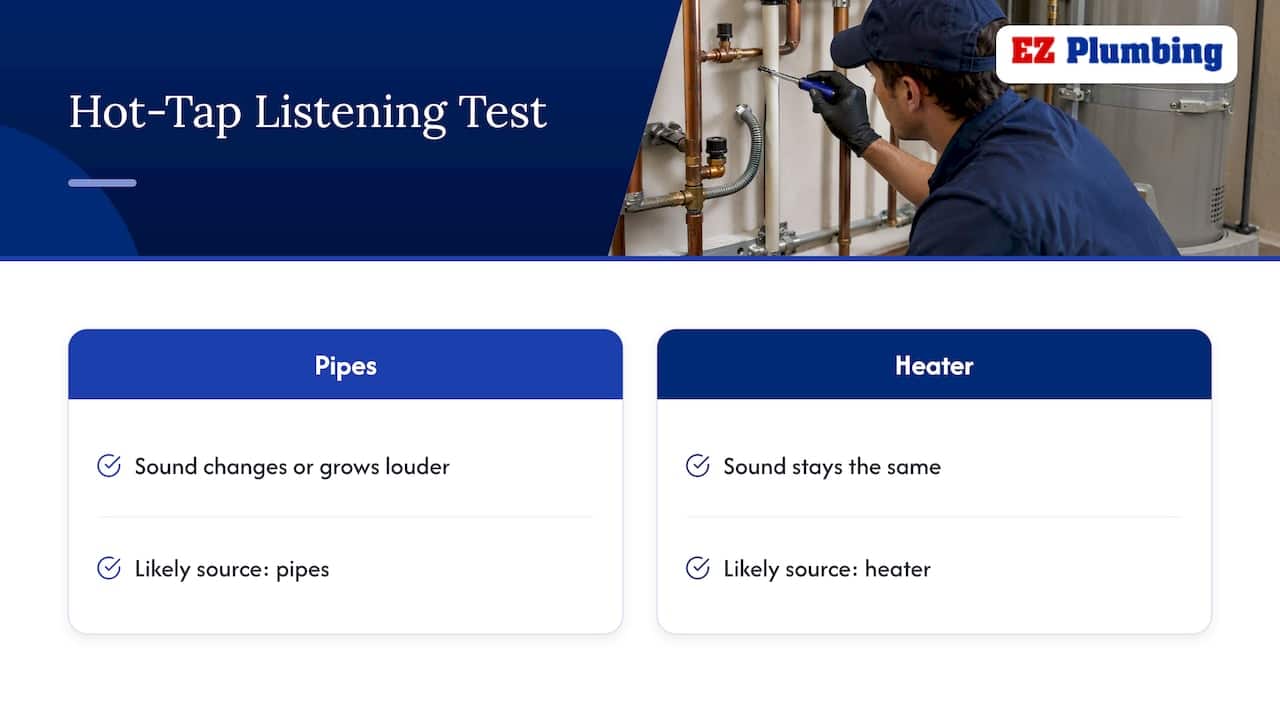
Before you blame the heater, separate the heater from the plumbing around it. A quick test recommended by plumbing guides: turn on a hot tap and listen. If the sound gets louder or changes, the cause is more likely in the pipes. If it stays the same whether water is running or not, the heater itself is the likelier source.
Then note three things, because they help a technician diagnose over the phone:
When it happens
During a heating cycle, right after someone uses hot water, when a faucet closes, or all the time. Sediment noise shows up while the burner or elements are firing. Water hammer shows up when flow stops suddenly.
What it sounds like
Popping and crackling, a low rumble, a high whistle, a tick or tap, a hum, or a hard bang. Each points to a different cause, covered below.
What kind of heater you have
Gas tank, electric tank, tankless, or heat pump. Many sounds are shared, but a few are specific. Gas units can rumble and pop from the burner side, electric units tend to sizzle when sediment covers a lower element, and heat pump units hum or whir as part of normal operation.
Popping, crackling and rumbling: sediment in the tank
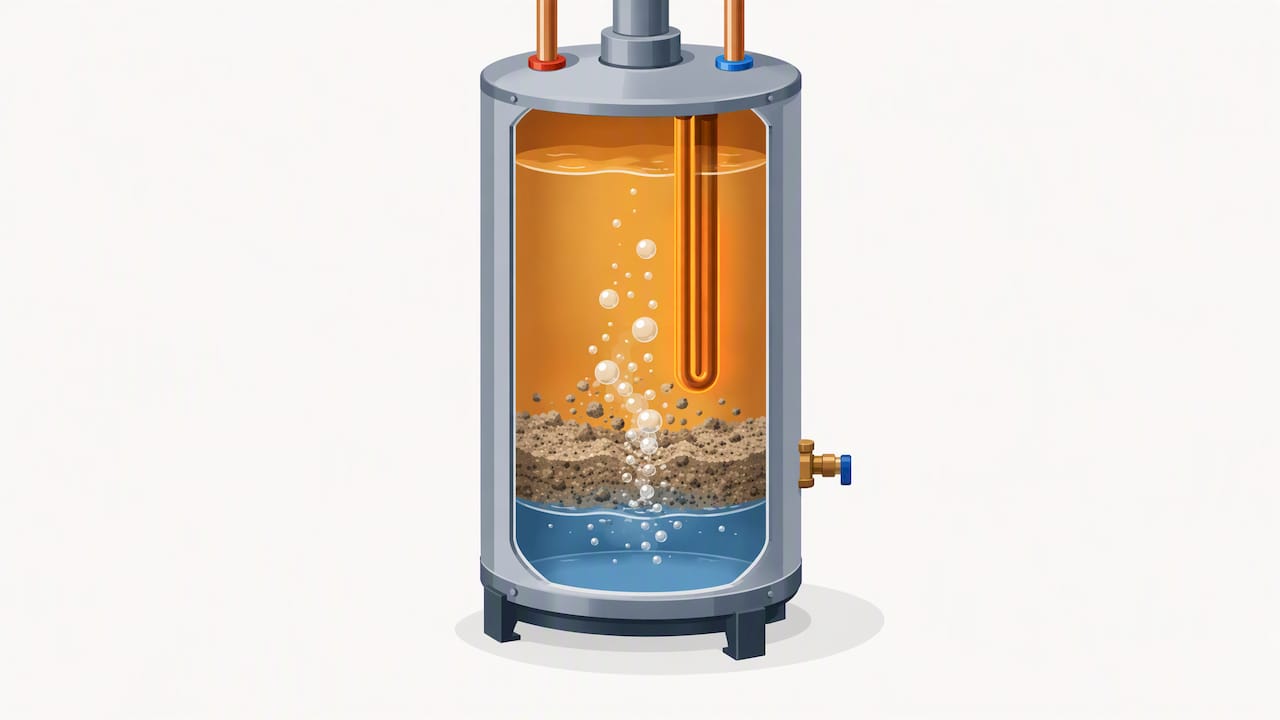
This is the big one, and it is the sound behind most searches for a popping water heater. Water carries dissolved minerals, mostly calcium and magnesium. When it is heated, some of those minerals come out of solution and settle to the bottom of the tank as scale and sludge. Over months and years that layer thickens and hardens.
Once there is a layer, water trapped underneath gets superheated and turns to steam. The steam bubbles push up through the sediment, and that is the popping or crackling you hear. A deeper rumble tends to mean the layer is thicker. The Spruce describes the same mechanism in its guide to why a water heater makes noises, and manufacturers say the same: A. O. Smith ties these sounds to mineral buildup in the tank.
Why Los Angeles tanks collect it faster
LA water is on the harder side. The Los Angeles Department of Water and Power publishes treated-water results, and its monitoring results tables show total hardness varying by supply source and treatment plant, with readings that can run from roughly 100 mg/L to over 270 mg/L as calcium carbonate. Which number applies to your home depends on your neighborhood and the blend of water that serves it. Higher hardness means more mineral to precipitate inside a tank every time it heats.
In practice, we see this most in older tanks that have never been flushed, in homes where the heater has been running 8 to 12 years, and in rentals where nobody has owned the maintenance. If you want a closer look at the topic from our side, we also cover why a water heater makes popping sounds and what the fixes involve.
Is a popping heater dangerous?
Usually not immediately. A. O. Smith’s guidance is that sediment noise is a signal to maintain the unit rather than an instant hazard. But it is not harmless. A sediment layer insulates the water from the burner or element, so the heater runs longer to deliver the same hot water. That raises your energy bill and stresses the tank bottom and, in electric units, the lower element. Left alone for years, it contributes to premature failure.
What you can do about it
The standard maintenance answer is a tank flush: shutting off power or gas, closing the cold supply, letting the tank cool, and draining through the drain valve until the water runs clear. For a heater with light, recent buildup, a flush can quiet it down. For a heater with years of hardened scale, the sediment may not come out at all through a standard drain valve, and the valve itself can clog or leak after being opened for the first time in a decade.
A few honest cautions:
- Hot water scalds. Let the tank cool before draining and route the hose somewhere safe.
- Gas heaters need the gas control set to pilot or off, and electric heaters need the breaker off before the tank empties, or the elements can burn out dry.
- If the drain valve will not open, only dribbles, or starts leaking afterward, stop. That is the point to call a plumber rather than force it.
Water conditioners are sometimes suggested as a cure. The U.S. Department of Energy’s Building America program notes in a technical report that electronic conditioning can reduce scale in piping but does not replace flushing minerals that have already settled. The same material cautions that over-softening can raise corrosion risk in some copper piping setups. If you are considering a softener in a home with copper lines, ask your plumber about it before buying one.
Banging, knocking and hammering
A hard bang when a faucet, dishwasher or washing machine valve snaps shut is typically water hammer: moving water stops suddenly and the pressure wave rattles the pipes. It often sounds like it is coming from the heater simply because the heater’s pipes are the ones that are loosely strapped or nearby.
The usual causes are high household water pressure, missing or waterlogged air chambers, loose pipe straps, or fast-closing valves. A. O. Smith publishes a technical bulletin specifically on water hammer and related heater noises, which gives a sense of how common it is.
Two things are worth checking. If the banging only happens when water stops, look at pressure and pipe support, not the tank. If the banging happens while the heater is heating, with no water running, that points back to heavy sediment or an expansion issue inside the tank. Persistent hammering is worth fixing even though it sounds merely annoying, because repeated pressure spikes stress fittings and connections, especially in older galvanized or aging copper lines common in pre-1970s Los Angeles houses. A plumber can check static pressure, test for a failed pressure regulator, and add arrestors where needed.
Screeching, whistling and hissing
High-pitched noises are a different category from sediment rumble. They typically mean water or steam is being forced through a small opening. The common culprits are a partly closed inlet valve, a failing or leaking temperature and pressure relief valve, or excess internal pressure.
The T&P valve is the single most important safety device on a tank heater. Rheem’s guidance is that a relief valve making noise should never be capped, plugged or ignored, because it is the mechanism that releases dangerous pressure. If it is whistling or discharging, the tank may be overheating or over-pressurized.
What to do, in order:
- Check that the cold-water inlet valve is fully open. A half-closed valve can whistle, and it is the one fix that costs nothing.
- If the noise continues, or you see steam or hot water coming from the discharge pipe, turn the heater’s thermostat down or shut off the power or gas at the control, then call a licensed plumber.
- Do not tamper with the relief valve, and do not attempt to replace it on a gas unit without the right training.
A hissing or sizzling sound is more specific. A short sizzle when the burner first lights can be condensation on a cold tank, which is normal. A continuous hiss with moisture, or a sizzle from an electric tank, can indicate a small leak dripping onto a hot surface, or sediment around an element. If you can see water, treat it as a leak.
Ticking, humming and the sounds that are fine
Ticking or tapping is often heat traps and pipes expanding and contracting as they warm. It is irritating but harmless. A hum or buzz can come from a loose element or a component vibrating in its mounting. Light humming and clicking are usually normal, and a loose part is an inexpensive fix.
Heat pump water heaters sound different by design
More Los Angeles homes are getting heat pump water heaters as part of efficiency upgrades, and they do not sound like the tank you grew up with. The compressor and fan produce a steady hum that people often compare to a clothes dryer. The Department of Energy’s retrofit guide for heat pump water heater installation covers practical points such as space, clearances and location, and sound is one reason placement matters. Installing on vibration-isolating pads and with proper brackets helps keep a normal hum from turning into a rattle through the wall.
If you have a new heat pump unit and the hum is steady and consistent, it is probably working. If it rattles, grinds or changes pitch, ask the installer to check mounting and clearances.
Sound-by-sound reference
| Sound | Most likely cause | Urgency | Reasonable first step |
|---|---|---|---|
| Popping or crackling | Steam bubbles under sediment | Low to moderate | Schedule a flush or inspection |
| Low rumbling | Thicker sediment layer | Moderate | Professional flush and tank check |
| Banging when taps close | Water hammer | Low to moderate | Check water pressure and pipe straps |
| Banging during heating | Heavy scale or expansion in tank | Moderate | Have a plumber inspect |
| Screeching or whistling | Restricted flow or T&P valve issue | High | Confirm inlet valve is open, then call a plumber |
| Hissing with moisture | Leak or condensation | Moderate to high | Look for water, call if found |
| Ticking | Heat traps, pipe expansion | Low | Usually none |
| Steady hum (heat pump) | Normal operation | None | None |
Our perspective: what we see in Los Angeles homes
We have been a family-owned company since 1989, and noisy water heaters are among the calls we hear most. A few patterns come up again and again.
First, the noise is rarely the real problem. It is the symptom people notice. By the time a tank is rumbling, the homeowner has often gone years without a flush, and the question becomes whether the tank is worth saving. We tell people straight when it is, and when it is not. A younger heater with moderate buildup is usually worth a proper flush and inspection. An older tank with heavy scale, corrosion at the base or a leaking fitting is usually better replaced, and we say so in writing before any work begins.
Second, houses here come from very different eras, and that matters. A 1950s bungalow with old supply lines behaves differently from a 2005 condo with a closet-mounted heater. Water hammer in an older home may be a sign of pressure or aging pipe, not the heater, and the fix is in a different place. Knowing the housing stock, and the local code requirements for venting, seismic strapping and permits, is part of diagnosing correctly.
Third, we would rather you call early than late. Sediment noise is rarely urgent, but whistling from a relief valve, any gas smell, or water around the base is. Our emergency dispatch is staffed by real local people, not a remote call center, around the clock.
And last, we document jobs for code compliance, so you have a record of what was done and why. We are a licensed C-36 plumbing contractor (License #583868), and we are fully insured.
— EZ
When to call a licensed plumber
You can safely check the inlet valve, note the sound and timing, and look for visible moisture. Beyond that, call a professional in these situations:
- Screeching, whistling or a relief valve that is discharging or hissing.
- Any smell of gas, or a yellow or flickering burner flame. If you smell gas, leave the home and call your gas utility or 911 from outside.
- Water pooling around the base, rusty hot water, or visible corrosion on the tank or fittings.
- A drain valve that will not open, or one that leaks after you flush.
- Noise that continues after a flush, or that gets progressively louder.
- A heater around 10 years old or more that has never been serviced.
Two more reasons to act sooner than later. Water damage from a failed tank can cost far more than maintenance, and the Texas Office of Public Insurance Counsel points out that damage from a leaking water heater may not be covered by insurance. That is a Texas agency, so check your own policy, but the principle applies to any homeowner. And an inspection also lets a technician check the anode rod and tank condition, which are invisible from outside.
How to keep a water heater quiet
Prevention is mostly boring, and it works.
Flush on a schedule
Annual flushing is the common manufacturer recommendation, and in harder-water areas of Los Angeles it is worth doing consistently. Once sediment has hardened, it is much harder to remove, so starting early matters.
Have the tank inspected
A technician can check the anode rod, the relief valve, the temperature setting, venting on gas units and the condition of the connections. If you have a property with multiple units, this is where a recurring schedule pays off.
Check pressure and pipe supports
High incoming pressure is a quiet cause of hammering and relief valve problems. A simple gauge on a hose bib tells you where you stand, and a plumber can fit or adjust a regulator if needed.
Think about the unit itself
If you are replacing an aging tank, ask about vibration pads, proper strapping and, for heat pump models, location and clearances. For tankless units, scale is the equivalent problem, and descaling matters. Our guide to cleaning a tankless water heater covers that, and our DIY troubleshooting guide explains what is safe to check on your own.
Water heater help from EZ Plumbing
If your heater is making noise and you want a licensed plumber to find out why, our team handles water heater repair, flushing and inspection, and water heater installation when replacement makes more sense. You can see the range of work on our Los Angeles water heater page and read a few of our recent jobs, such as this water heater inspection recap.
Our published hourly ranges are $150-$280 for residential work and $120-$240 for commercial work, and you can estimate your job on our rate calculator. We give written pricing up front, before work starts. For property managers and HOAs, we also offer commercial maintenance contracts through our commercial plumbing team. If the noise is a whistling relief valve or comes with a gas smell, use our 24/7 emergency plumbing line instead of waiting.
Frequently asked questions
Should I be concerned if my water heater is making noise?
It depends on the sound. Light humming, clicking or ticking is usually normal, and popping or rumbling from sediment is a maintenance warning rather than an emergency. Screeching, whistling, a hissing relief valve, a gas smell or water at the base should be checked by a licensed plumber promptly.
How do I stop my water heater from making noise?
The fix depends on the cause. For sediment, a tank flush is the usual remedy, although heavily scaled tanks may need professional service or replacement. For water hammer, the fix is in pressure, air chambers or pipe supports. For a whistling valve, close inspection by a plumber is the safe route.
Why is my water heater popping in Los Angeles?
Most often it is steam escaping through a layer of mineral sediment on the bottom of the tank. LADWP’s published results show hardness that varies across the city’s supply, and harder water leaves more scale. Flushing the tank on a regular schedule slows the buildup.
Are you supposed to hear your hot water heater?
Some sound is expected. Gas units click and whoosh when the burner lights, and electric units may tick as they heat. Heat pump models hum more than other types. A sound that is new, louder or paired with leaks or poor hot water performance is worth investigating.
Is a rumbling water heater about to fail?
Not necessarily. Rumbling signals significant sediment, and an older heater with heavy buildup is closer to the end of its life, but a younger tank can often be restored with proper servicing. An inspection will tell you whether repair or replacement makes sense.
Sources
- Los Angeles Department of Water and Power: Monitoring Results Tables
- Rheem: The Ultimate Guide to Water Heater Noises
- The Spruce: What to Do When Your Water Heater Is Making Noises
- A. O. Smith: Hot Water Heating Making Noises
- A. O. Smith: Technical Bulletins
- U.S. Department of Energy Building America: Expert Meeting Report on combination water heating systems
- Best Practices for the Retrofit Installation of Heat Pump Water Heaters
- Texas Office of Public Insurance Counsel: Preventing Damage from Water Heaters