
Homeowners’ Field Tested Playbook: Cut, Jet, Treat Roots in Sewer Lines
If you suspect roots in sewer pipes, stop non-essential water use and find your cleanout now. A licensed plumber will run a root cutter through the line first, since mechanical removal is the only thing that clears an active blockage, then follow with a camera inspection to check for cracks or collapse. From there, the scope determines whether you need chemical maintenance, a trenchless liner, or full replacement.
TL;DR:
- Mechanical root cutting is essential first, followed by hydro-jetting and chemical treatments to ensure long-lasting clearance.
- Camera inspections reveal whether roots have caused cracks, offsets, or collapses that may require relining or full pipe replacement.
- Older pipe materials like clay and cast iron are more vulnerable to root intrusion, making proactive replacement with modern PVC advisable.
- Regular inspections every one to two years and planting slow-growing trees away from sewer lines help prevent recurring root problems.
- DIY methods or chemical treatments alone are ineffective without prior mechanical clearing and proper diagnostics by a licensed plumber.
Table of Contents
- Warning Signs of Roots in Sewer Lines
- How Do Plumbers Diagnose Root Intrusion?
- Removing Roots From a Sewer Line: What Works and What Only Delays the Problem
- Repairing the Pipe After Roots Are Removed
- Preventing Roots From Coming Back
- What Does Root Removal and Repair Cost?
- DIY Steps vs. When to Call a Licensed Plumber
- What Field Experience With Los Angeles Sewer Lines Teaches Homeowners
- The Playbook Most Homeowners Get Backwards
- Get Your Sewer Line Scoped and Cleared the Right Way
- Where to Verify These Claims
- Sources
Warning Signs of Roots in Sewer Lines
A single slow drain usually means a local clog. Root intrusion tends to announce itself across the whole house at once, and that pattern is the fastest way to tell the two apart.
Inside the house, watch for these signals together rather than in isolation:
- Multiple drains running slow at the same time, especially the lowest fixtures in the house (basement floor drains, ground-floor tubs)
- Gurgling sounds from toilets or tubs when you run the washing machine or dishwasher
- Clogs that come back within weeks of being cleared, even after you’ve cleaned the trap
- Sewage backing up into a shower stall or floor drain, which signals a main line blockage rather than a fixture problem
Outside, the yard often tells the story before the plumbing does. A patch of unusually green, fast-growing grass tracing a line from the house toward the street can mark a leaking joint feeding roots exactly where you’d expect the sewer lateral to run. Soggy ground that never quite dries out, or a small sinkhole near the sewer path, points to a pipe that has already lost material underground.
Two quick checks help you gauge urgency before calling anyone. First, find your cleanout, usually a capped pipe near the foundation or along the property line, and note its location for later. Second, run a flush test: flush the toilet farthest from the street while someone watches the other drains for gurgling or backup. If several fixtures react, the problem sits in the main line, not an isolated branch. Our detailed breakdown of sewer line signs covers additional edge cases, including how age of the home changes your risk profile.
Roots rarely cause the original crack. They exploit joints and gaps that already leak moisture, which is why the same section of pipe tends to clog again unless the underlying opening gets sealed or replaced.
How Do Plumbers Diagnose Root Intrusion?
A trained eye can guess at root intrusion from symptoms alone, but guessing is exactly what a sewer camera inspection is meant to eliminate. The camera head travels through the line and streams live video, showing root masses growing through joints, hairline cracks, offset sections where the pipe has shifted, and outright collapse where the pipe is no longer round.
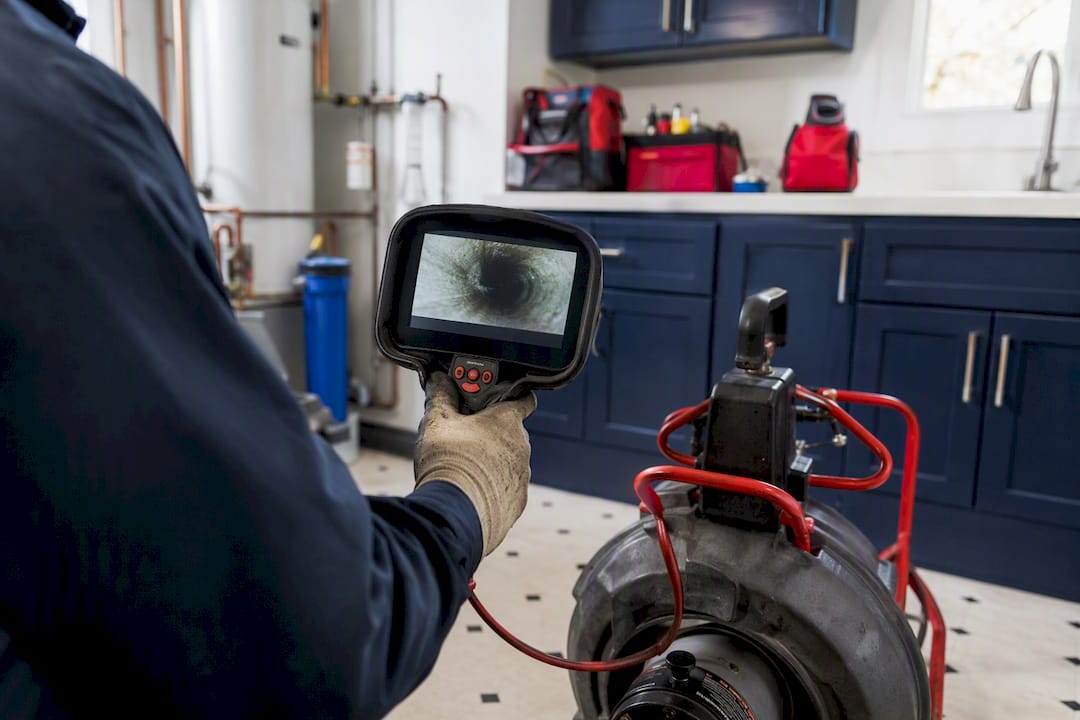
Locating equipment, often called a sonde, transmits a signal from the camera head to a handheld receiver above ground. That lets the technician mark the exact depth and position of a problem area on your lawn, which matters enormously if excavation ends up being necessary. Without it, digging becomes guesswork.
Skipping the scope after snaking is a common shortcut, and it’s the wrong one. Snaking can restore flow while leaving root fragments behind and hiding a widening crack that caused the intrusion in the first place. A camera pass after mechanical clearing is what actually tells you whether you’re looking at routine maintenance or a pipe headed toward failure.
When you hire someone to run a scope, ask for:
- Time-stamped video or images you can keep on file
- A clear description of where roots, cracks, or offsets were found, measured from the cleanout
- A written recommendation comparing relining versus replacement, with reasoning tied to what the camera actually showed
Pro Tip: Ask the technician to note the footage distance to each defect, not just “roots near the middle of the line.” That number is what a second contractor or your insurance adjuster will want if you get additional quotes later.
Removing Roots From a Sewer Line: What Works and What Only Delays the Problem
Clearing roots from a sewer line follows a specific order, and skipping steps is where most homeowners lose time and money. Mechanical cutting comes first. Hydro-jetting cleans up afterward. Chemicals maintain the result. Reverse that order and you’re just buying a few weeks before the same clog returns.
- Mechanical root cutting. A motorized cutter head, sized to match your pipe’s diameter and material, shreds the root mass and pulls debris back toward the access point. Cutter heads range from small serrated blades for tight residential lines to larger carbide-tipped versions for heavier intrusion. Using the wrong size head is a real risk with rental equipment. It can leave root collars in place or jam inside the pipe, which is one reason DIY snaking on a badly compromised line often makes things worse rather than better.
- Hydro-jetting. Once the roots are cut, high-pressure water blasts remaining debris, grease, and root hair off the pipe walls. This step matters more than most homeowners realize, since a pipe that looks “clear” after snaking often still has a rough, root-fringed interior that will re-clog within months. Drain cleaning through hydro-jetting is generally recommended after any significant root cutting job, not just for grease buildup.
- Chemical maintenance. This is where copper sulfate and foaming root killers, including Hercules-style R-D products, actually belong. These treatments adhere to root mass and slowly kill remaining feeder roots over several days. They cannot dissolve a solid root blockage fast enough to restore flow in an emergency, and they work as maintenance after mechanical opening, not as a substitute for it.
Roots are involved in over half of all sewer blockages tracked in municipal maintenance data, which is a big part of why plumbers default to the cut, jet, treat sequence rather than reaching for chemicals first.
Copper sulfate carries real limits worth knowing before you buy a jug at the hardware store. It’s toxic to tree roots on contact, but it’s also toxic to fish and can harm nearby vegetation if it leaches into soil, so some municipalities and states restrict or discourage its use near waterways or septic systems. Foaming root killers avoid some of that environmental concern since they’re designed to coat pipe walls rather than settle in soil, but neither product replaces the mechanical work. If your line has already collapsed or is severely offset, chemicals do nothing at all, since there’s no reachable root mass left to treat effectively.
Repairing the Pipe After Roots Are Removed
Clearing the roots solves today’s clog. It doesn’t fix the crack or joint gap that let the roots in, and that’s the decision homeowners actually need to make next.
Cured-in-place pipe (CIPP) lining works by inserting a resin-saturated liner into the existing pipe and curing it in place, creating a smooth new interior wall that seals over cracks and joint gaps. It’s less disruptive than digging, since it typically requires only small access points rather than trenching your whole yard. The catch is that CIPP requires a structurally continuous pipe to work. If the line has fully collapsed or is no longer round, there’s nothing for the liner to bond against, and the fix simply isn’t an option.
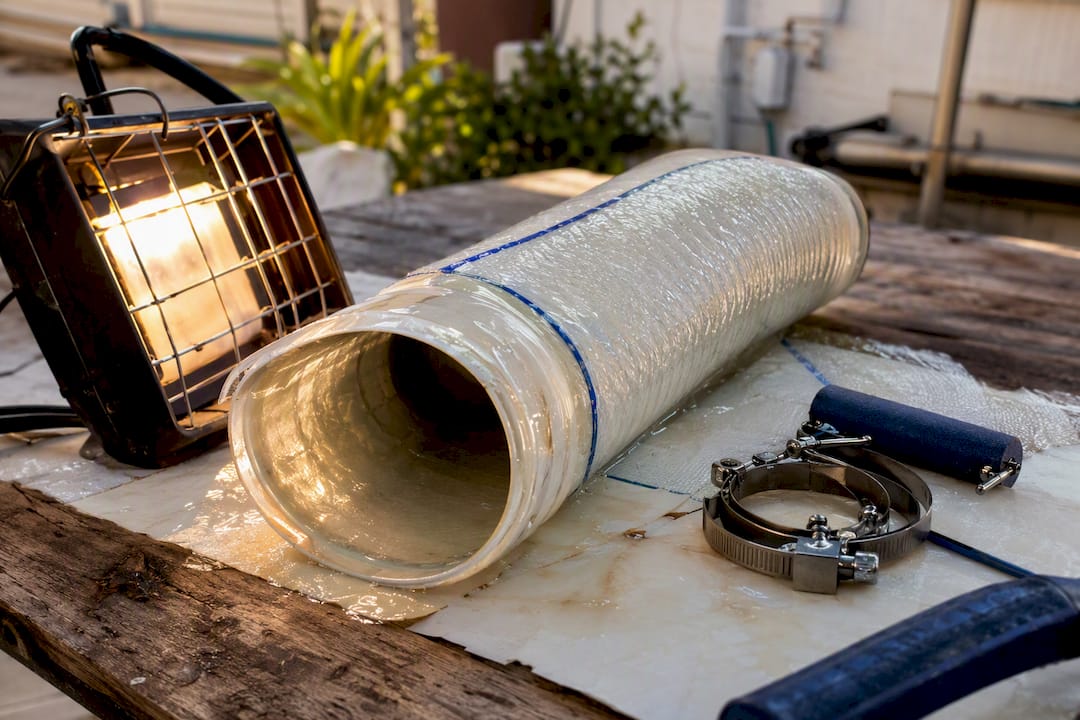
Open excavation and replacement becomes necessary when the camera shows a collapsed section, severe bellying, or a pipe so deteriorated that lining can’t restore its shape. This route disrupts landscaping and hardscaping along the trench path, and costs more upfront, but it’s the only real fix when the pipe itself is beyond saving.
Material matters more than most homeowners expect:
- Clay and cast-iron laterals, common in homes built before the 1970s, are far more vulnerable to root intrusion because their joints separate slightly over time, creating easy entry points.
- Modern PVC, installed correctly with solvent-welded joints, resists root infiltration for decades since it has far fewer seams for roots to exploit.
If your home still has its original clay lateral, replacement with PVC during a repair often makes more sense long term than lining an aging pipe that will keep degrading around the new liner. Our sewer line repair guide walks through how we evaluate which approach fits a given pipe’s condition.
Preventing Roots From Coming Back
Prevention is cheaper than any repair on this list, and most of it comes down to decisions made years before a clog ever shows up.
Tree placement is the biggest lever homeowners actually control. Fast-growing, thirsty species like willows, poplars, and silver maples send roots seeking any available moisture, and a leaking joint is basically an invitation. If you’re planting near a known sewer path, choose slower-growing, deeper-rooted species and keep them a meaningful distance from the line, ideally as far as the tree’s expected mature height. For existing mature trees you can’t remove, a physical root barrier, a vertical panel installed between the tree and the pipe, can redirect root growth downward and away from the lateral without harming the tree.
Inspection cadence matters just as much as landscaping choices. Homes with clay or cast-iron laterals, or properties with several mature trees near the sewer route, benefit from a camera check every one to two years to catch new intrusion before it becomes a backup. Chemical maintenance treatments make sense on this same schedule, applied after a professional has confirmed the line is mechanically clear, not as a standalone yearly ritual.
Backfill and bedding quality during original installation also plays a quiet but lasting role. Pipe laid on poorly compacted soil settles unevenly over years, opening joint gaps that roots later exploit. It’s not something you can fix after the fact, but it’s worth asking about if you’re having a section replaced.
- Keep sewer-safe tree species at a safe distance from known lateral paths
- Install root barriers around mature trees you can’t relocate
- Schedule camera inspections every one to two years for older pipe materials
- Treat chemically only after mechanical clearing, on the same maintenance schedule
Pro Tip: If you’re landscaping a property with an unknown pipe material, ask your plumber to run a camera scope before you plant anything near the suspected sewer path. It’s far cheaper than removing an established tree later. For broader tree management guidance, Texas Tree Transformations’ root intrusion resource covers root behavior around underground utilities in more depth.
What Does Root Removal and Repair Cost?
Costs vary by region and pipe condition, but rough ranges help you sanity-check a quote. Camera inspections alone typically run in the low hundreds of dollars. Snaking and hydro-jetting together often land in the mid hundreds. Trenchless CIPP lining usually costs several thousand dollars depending on pipe length, and full excavation and replacement can run considerably higher once landscaping restoration is included.
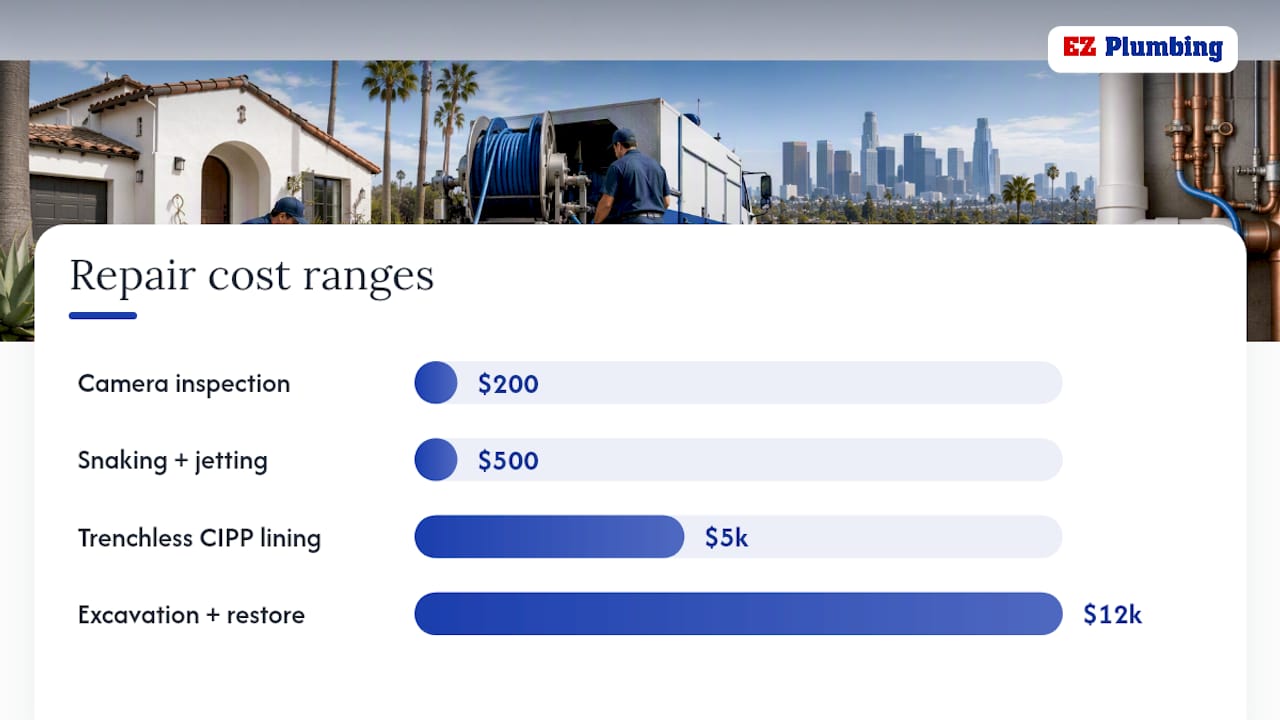
Paying for repeat mechanical cleaning every few months adds up faster than most homeowners expect, and it’s common for several years of recurring service calls to exceed the cost of a one-time trenchless repair.
Insurance rarely helps here. Standard homeowner policies generally treat root intrusion as gradual damage rather than a sudden accident, which puts it outside normal coverage. A service-line endorsement or rider, sold separately by many insurers, can cover exactly this kind of damage, so it’s worth checking your policy language before you assume you’re covered or uncovered.
- Get at least two written estimates before committing to relining or replacement
- Ask each contractor for their own scope footage rather than relying on a competitor’s video
- Keep your camera inspection report on file if you ever file a claim against a service-line rider
DIY Steps vs. When to Call a Licensed Plumber
Minimizing water use and locating your cleanout are safe first moves while you wait for a technician. If you have controllable irrigation running near the suspected sewer path, shutting it off temporarily reduces the moisture drawing roots toward the pipe.
Avoid pouring unknown drain chemicals down the line hoping to dissolve roots fast. Most consumer products aren’t formulated for that and can damage older pipe. Aggressive DIY snaking with rented equipment on a line you haven’t scoped can also turn a small crack into a full break.
Call a licensed plumber immediately if you see sewage backing up into the house, a sinkhole forming in the yard, multiple fixtures backing up at once, or a camera scope confirming collapse. Before hiring anyone, ask for their license number, proof of insurance, scope footage from your own line, a written estimate, and any warranty terms on the repair.
What Field Experience With Los Angeles Sewer Lines Teaches Homeowners
Ez-plumbing holds a C-36 license (#583868) and has spent years scoping and repairing sewer laterals across the greater Los Angeles area, where mature street trees and aging clay pipe are a common pairing. That combination shows up repeatedly on service calls. Before any tech leaves your property, confirm three things: scope footage in hand, mechanical cleaning completed before any chemical treatment, and a written estimate comparing relining against replacement.
The Playbook Most Homeowners Get Backwards
Most advice online treats chemical root killers as step one, probably because they’re the cheapest, easiest thing to buy at a hardware store. That ordering is backwards. Copper sulfate and foaming treatments can’t move through a solid root mass fast enough to fix an active backup, and pouring them down a blocked line while sewage sits in your basement wastes time you don’t have.
The bigger blind spot is skipping the camera scope after snaking clears the flow. A restored drain feels like a solved problem, but it tells you nothing about whether the crack that let roots in has gotten worse. We’ve seen homeowners snake the same line three or four times over two years before finally scoping it and discovering a joint offset that needed lining the entire time.
If there’s one priority worth fixing in how people approach this, it’s treating the scope as mandatory, not optional. It’s the only step that tells you whether you’re maintaining a healthy pipe or delaying a bigger bill.
— EZ
Get Your Sewer Line Scoped and Cleared the Right Way
Ez-plumbing handles the full sequence in one visit: mechanical root cutting sized to your pipe, hydro-jetting to clear residual debris, and a camera scope to confirm the line is structurally sound before we recommend anything further. That’s the difference between a plumber who reaches for a snake and calls it done, and one who shows you the footage before quoting a fix.

Every appointment includes a licensed technician, recorded scope footage you keep for your records, a written estimate comparing relining versus replacement when relevant, and warranty terms explained upfront, not buried in fine print. Whether you’re dealing with a recurring clog or a confirmed root mass, our drain cleaning and hydro-jetting service clears the immediate blockage, and our sewer line repair team handles everything from trenchless lining to full excavation if the pipe needs it.
If you’re seeing slow drains across multiple fixtures or a soggy patch tracing toward the street, book a camera inspection before the problem reaches your basement floor.
Where to Verify These Claims
The guidance above draws on documented industry sources rather than guesswork. For further reading:
- Plumbing & Mechanical’s technical breakdown explains professional-grade removal methods in more depth
- Oatey’s homeowner guide offers practical removal and prevention steps
- Progressive’s coverage overview clarifies typical insurance limitations on root damage
Sources
- Master the basics of sewer root removal | Plumbing & Mechanical
- How To Get Rid of Roots in Your Sewer Pipes | Oatey
- Insurance for sewer lines | Progressive