
Plumbing services guide: repairs, installations & emergencies
Navigating plumbing needs in Los Angeles is rarely straightforward. Between aging infrastructure in older neighborhoods like Silver Lake and Eagle Rock, hard water that accelerates mineral buildup, and clay sewer laterals that crack under root pressure, the range of problems you might face is wide. Whether you own a single-family home in the Valley or manage a multi-unit commercial property downtown, knowing which type of plumbing service you need, and how to find the right provider, can mean the difference between a quick fix and a costly, drawn-out repair. This guide breaks down the main service categories, explains how they compare, and helps you make a confident decision.
Table of Contents
- How to choose the right plumbing service for your property
- Essential plumbing services for homes and properties
- Specialized and emergency plumbing services
- Comparing plumbing service providers in Los Angeles
- Our unique perspective: why a tailored approach to plumbing matters most
- Get expert plumbing help for your LA property
- Frequently asked questions
Key Takeaways
| Point | Details |
|---|---|
| Know your needs | Identify your property type and choose plumbing services based on installation, repair, or emergency needs. |
| Prevent emergencies | Regular maintenance and leak detection are the best ways to avoid costly plumbing disasters. |
| Compare providers wisely | Check qualifications, reviews, and service guarantees before choosing a plumbing company. |
| Consider special services | Advanced solutions like trenchless repair and tankless heaters can offer added value and convenience. |
How to choose the right plumbing service for your property
Before you call the first number you find online, it pays to think through a few key factors. The wrong service type or provider can leave you with unresolved issues, surprise charges, or work that doesn’t meet Los Angeles municipal code requirements.
Property type is the first consideration. Residential plumbing typically involves single-family homes, condos, and small apartment buildings where systems are less complex and one licensed technician can usually handle most jobs. Commercial properties, including retail spaces, restaurants, office buildings, and multi-unit complexes, involve larger pipe diameters, grease traps, backflow preventers, and more demanding regulatory compliance. The skills and equipment required differ significantly.
Scheduled maintenance versus on-demand repair is another important distinction. If you’re proactive, proactive plumbing maintenance can prevent the majority of emergency calls. But many property owners only call a plumber when something has already failed. Both approaches are valid, but knowing which category your situation falls into helps you choose the right type of service upfront.
Emergency availability matters more than many people realize. Burst pipes, sewer backups, and water heater failures don’t wait for business hours. Before you hire any provider, confirm whether they offer 24/7 service and what their typical response time is for urgent situations.
Licensing and insurance are non-negotiable in California. A licensed plumbing contractor holds a C-36 license from the California Contractors State License Board (CSLB). Always verify license numbers before work begins, and confirm the company carries both liability insurance and workers’ compensation coverage.
Pricing transparency is often where trust is built or broken. Reputable companies provide written estimates before starting any work and explain the cost breakdown clearly. Be cautious of providers who give unusually low verbal quotes, as these often escalate once the job is underway.
Commercial clients may require both preventive maintenance and rapid emergency response due to SLAs and downtime costs, which means commercial property managers face a higher standard when selecting a plumbing partner.
Pro Tip: If you manage a commercial portfolio or HOA, prioritize companies that offer formal service-level agreements (SLAs) and documented response time guarantees for after-hours emergencies. A verbal commitment isn’t sufficient when tenant operations or lease agreements are on the line.
With selection criteria in mind, let’s examine the major types of plumbing services available.
Essential plumbing services for homes and properties
Having outlined the main criteria for selection, the following section details exactly what each major plumbing service involves, so you know what you’re hiring and what to expect.
Plumbing repair covers a broad range of fixes: leaking faucets, running toilets, broken shut-off valves, cracked supply lines, and damaged pipe sections. In older Los Angeles homes, galvanized steel pipes are a frequent culprit, corroding from the inside out and restricting water flow over time. A plumbing repair technician diagnoses the source of the problem, isolates the affected section, and replaces or seals it to restore proper function.
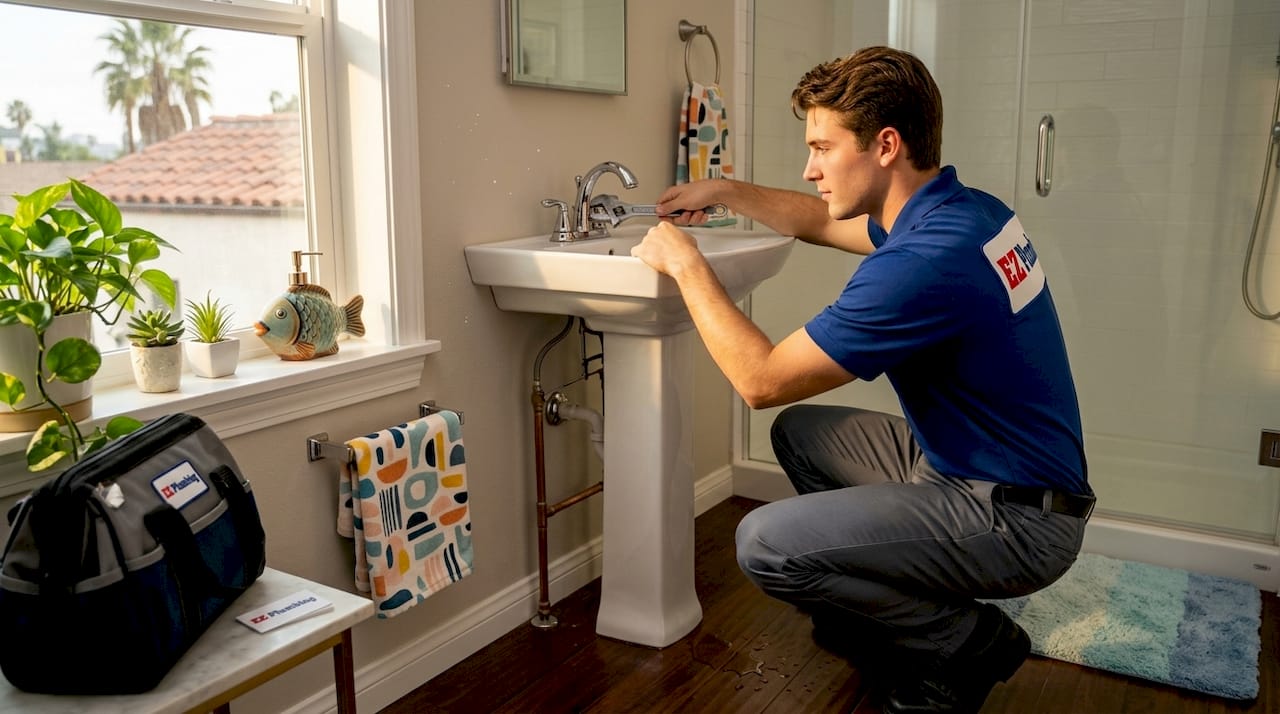
Installation services include water heaters, toilets, faucets, dishwashers, garbage disposals, and whole-home water filtration systems. Installation work is typically scheduled in advance, though water heater replacements sometimes become urgent when a unit fails completely and leaves a household without hot water.
Drain cleaning addresses slow or fully blocked drains caused by grease, hair, soap residue, or tree root intrusion. Drain cleaning solutions range from standard mechanical snaking for minor clogs to hydro-jetting, a high-pressure water method that completely clears buildup from pipe walls and is especially effective for commercial kitchens and large residential main lines.
Leak detection and repair involves locating water leaks that may be hidden inside walls, under slabs, or beneath concrete. Water leak detection using acoustic equipment, thermal imaging, or pressure testing allows technicians to pinpoint leaks without unnecessary demolition. Timely repair and leak detection help prevent extensive water damage and the costly structural repairs that follow when moisture is left unchecked.
Sewer line repair and replacement addresses problems in the main sewer line connecting your property to the city main. Tree roots are the most common cause of damage in Los Angeles, particularly in neighborhoods with large, mature trees. Sewer line repair can involve traditional excavation or trenchless methods like pipe lining and pipe bursting, which preserve landscaping while restoring full pipe function.
| Service type | Typical use case | Urgency level | Estimated cost range |
|---|---|---|---|
| Plumbing repair | Leaks, broken fixtures, valves | Moderate to high | $150 to $600 |
| Installation | Water heaters, toilets, faucets | Low to moderate | $300 to $2,500+ |
| Drain cleaning | Clogs, slow drains, root intrusion | Moderate to high | $100 to $800 |
| Leak detection | Hidden leaks, slab leaks | High | $200 to $600 |
| Sewer line repair | Cracked or root-damaged sewer pipes | High | $1,500 to $10,000+ |
Pro Tip: Schedule a camera inspection of your sewer line every two to three years, especially if your property has mature trees within 20 feet of the main line. Identifying early-stage root intrusion before it causes a full blockage can save several thousand dollars in emergency repair costs.
Specialized and emergency plumbing services
Now, let’s explore specialty services and how emergency plumbing differs from regular maintenance.
Emergency plumbing refers to services required immediately to prevent ongoing damage or restore critical function. Burst pipes, sewage backups into living spaces, complete loss of water pressure, and gas line issues connected to plumbing systems all qualify as emergencies. A reliable emergency plumber responds within one to two hours, brings the right equipment for diagnosis and repair, and stops the damage from spreading.
Video pipe inspection uses a flexible camera inserted into drain or sewer lines to capture real-time footage of the pipe interior. This technology eliminates guesswork, allowing technicians to see cracks, root intrusion, scale buildup, or misaligned joints before deciding on the best course of action. Advanced leak detection combined with video inspection saves significant time and protects your property from unnecessary excavation.
Trenchless pipe repair is a method that allows technicians to rehabilitate or replace underground pipe sections without digging open trenches. Pipe lining (also called cured-in-place pipe or CIPP) involves inserting a resin-coated liner that hardens inside the old pipe, creating a new smooth surface. Pipe bursting fractures the old pipe outward while simultaneously pulling a new pipe into place. Both methods are faster and less disruptive than traditional digging.
Specialized appliance installation includes tankless water heaters (which heat water on demand without a storage tank), whole-home water softeners, under-sink reverse osmosis filtration systems, and advanced backflow prevention assemblies. These installations typically require permits and inspections under Los Angeles Department of Building and Safety requirements, making licensed pipe repair services and installation professionals essential.
High-efficiency upgrades are increasingly relevant in California, where water conservation is both a regulatory priority and a financial concern. Low-flow fixtures, dual-flush toilets, and recirculating hot water systems reduce both water and energy consumption measurably.
“Rapid response reduces downtime and property damage, especially in multi-unit or commercial buildings.” ServiceTitan
Here are the top three reasons to keep a dedicated emergency plumber’s number saved and accessible at all times:
- Plumbing emergencies cause water damage that escalates quickly, often within hours, leading to mold growth, structural weakening, and damage to finishes and contents.
- In multi-unit residential or commercial buildings, a single burst pipe or sewer backup can affect multiple tenants simultaneously, creating liability exposure and operational disruption.
- Having a trusted provider already vetted means you’re not making rushed decisions under pressure, which is when mistakes and overcharges are most likely.
| Property type | Average emergency response time | Typical emergency service cost |
|---|---|---|
| Residential | 1 to 2 hours | $250 to $600 |
| Commercial (multi-unit) | 1 to 3 hours | $500 to $2,000+ |
| HOA / large complex | Under 1 hour (SLA-based) | Varies by contract |
Comparing plumbing service providers in Los Angeles
Once you know the services you need, narrowing down the best local plumber is all about asking the right questions.
Los Angeles has no shortage of licensed plumbing contractors, but quality, responsiveness, and honesty vary widely. A methodical approach to comparing providers protects you from costly mistakes and ensures the work is done right the first time.
Start with licensing verification. Confirm any prospective contractor holds a valid C-36 Plumbing Contractor license through the CSLB website. This check takes under two minutes and immediately filters out unlicensed operators who may not carry insurance or follow code requirements.
Insurance is equally important. General liability coverage protects your property if something goes wrong during the job. Workers’ compensation coverage protects you from liability if a technician is injured on your property. Reputable companies provide proof of both on request.
Online reviews offer real-world insight into reliability, communication, and workmanship quality. Look at patterns across multiple reviews rather than a single five-star or one-star outlier. Recent reviews carry more weight than older ones, as staff and practices change over time.
Warranties and service guarantees separate serious professionals from transactional operators. Ask specifically what the company guarantees on parts and labor, and whether they will return at no charge if an issue recurs within a defined period.
Commercial facilities and HOAs benefit from providers offering preventive maintenance plus rapid response under service-level agreements, which is a critical factor when comparing contractors for larger portfolios.
Pro Tip: Look for companies that have documented experience serving both residential and commercial clients. This breadth of experience means technicians have encountered a wider range of problems and are better equipped to handle unusual situations or complex system interactions.
Explore additional plumbing tips for LA properties to stay informed between service visits.
Before hiring any plumber, ask these key questions directly:
Are you licensed under California C-36 and can you provide your license number? Do you carry liability and workers’ comp insurance? What is your typical response time for emergencies? Do you provide written estimates before starting work? What warranty do you offer on parts and labor? Have you worked on properties of this type and age before?
Getting clear, confident answers to these questions is the fastest way to distinguish a trustworthy professional from one you’d regret hiring.
Our unique perspective: why a tailored approach to plumbing matters most
Stepping back, here’s why the conventional one-size-fits-all solution may not serve every property owner well.
Most people pick a plumber the same way they pick a restaurant when they’re already hungry. They search quickly, choose the first result that looks credible, and hope for the best. In low-stakes situations, that approach may work out. But plumbing problems, especially in Los Angeles where infrastructure age, soil conditions, and hard water all add complexity, rarely fall neatly into generic categories.
In our experience working across Los Angeles neighborhoods, a 1950s Craftsman bungalow in Pasadena needs a completely different service strategy than a 2019 mixed-use building in Culver City. The older home likely has galvanized supply pipes approaching the end of their useful life, original cast iron drain lines with significant scale buildup, and possibly clay sewer laterals that have cracked at joints. The newer building has modern PEX piping and ABS drains but may have already experienced fixture wear and might need water heater optimization as the original units approach the five to seven year mark.
The uncomfortable truth is that many plumbers don’t ask enough questions before they start work. They arrive, fix the visible symptom, and leave. Then three months later you’re dealing with the next failure, because no one assessed the larger picture. A tailored approach means the first visit includes enough inspection and conversation to understand the property’s full plumbing profile, not just the one thing that broke today.
For commercial property managers, this matters even more. Tenants and operations depend on functioning systems, and reactive-only maintenance creates a cycle of disruption and cost. The right provider will help you build a realistic inspection and maintenance schedule that accounts for your building’s specific systems, age, and occupancy patterns. The goal is to protect your pipes through informed, regular attention rather than emergency-driven reaction.
A tailored service plan also gives you better budget predictability, which matters whether you’re a homeowner trying to avoid unexpected expenses or a property manager accountable to owners or a board.
Get expert plumbing help for your LA property
If you’re ready to take action and solve your plumbing challenges, here’s where to start.
EZ Plumbing brings licensed, insured expertise to residential and commercial properties across the greater Los Angeles area. Whether you need a same-day solution or want to build a long-term maintenance plan, our team understands the specific demands of LA properties, from aging pipes in older neighborhoods to complex systems in newer commercial buildings.
Explore our full range of services designed to keep your property running without disruption. Upgrade your water heating system with energy-efficient tankless water heaters, catch problems early with professional leak detection services, or clear blocked lines with our expert drain cleaning professionals. With C-36 License #583868 and full compliance with LA municipal code, EZ Plumbing delivers the peace of mind that comes with knowing the job is done right the first time.
Frequently asked questions
What is the difference between residential and commercial plumbing services?
Residential plumbing services focus on homes and smaller apartment units with simpler systems, while commercial plumbing addresses larger, more complex buildings where commercial clients often operate under SLAs and face downtime costs that make rapid response essential.
How can I prevent emergency plumbing issues in my property?
Scheduling regular preventive maintenance and investing in professional leak detection are the most effective steps you can take, because timely repair and leak detection stop minor issues from becoming major water damage events.
When should I consider trenchless sewer repair?
Trenchless sewer repair is the right choice when your main sewer line has significant damage or root intrusion and you want to minimize excavation, preserve landscaping, and complete the repair faster than traditional open-trench methods allow.
Are tankless water heaters worth it for Los Angeles homes?
Tankless water heaters are a strong option for LA homes with high hot water demand, offering on-demand heating, longer equipment life compared to tank units, and potential savings on energy bills over time.
What questions should I ask before hiring a plumber?
Before hiring, confirm the plumber holds a valid C-36 license, carries liability and workers’ compensation insurance, provides written estimates, offers a labor and parts warranty, and has experience with your specific property type and age.