
Homeowners: 5 Safe DIY Checks for a Tripping Water Heater Breaker
A water heater that trips its breaker is almost always pointing to a shorted or grounded heating element, a failed thermostat that energizes both elements at once, or a loose connection overheating inside the panel or at the tank. If yours trips the moment you reset it, stop resetting it. Repeated resets on a true short generate heat and arcing at the fault point, and that risk grows every time you flip the switch back on.
TL;DR:
- An immediate trip often points to a grounded or shorted element; a trip after the heater runs can indicate an upper thermostat energizing both elements.
- With power confirmed off, a multimeter continuity check is the safest homeowner test; leave live voltage checks, arcing, and melted wiring to a licensed electrician.
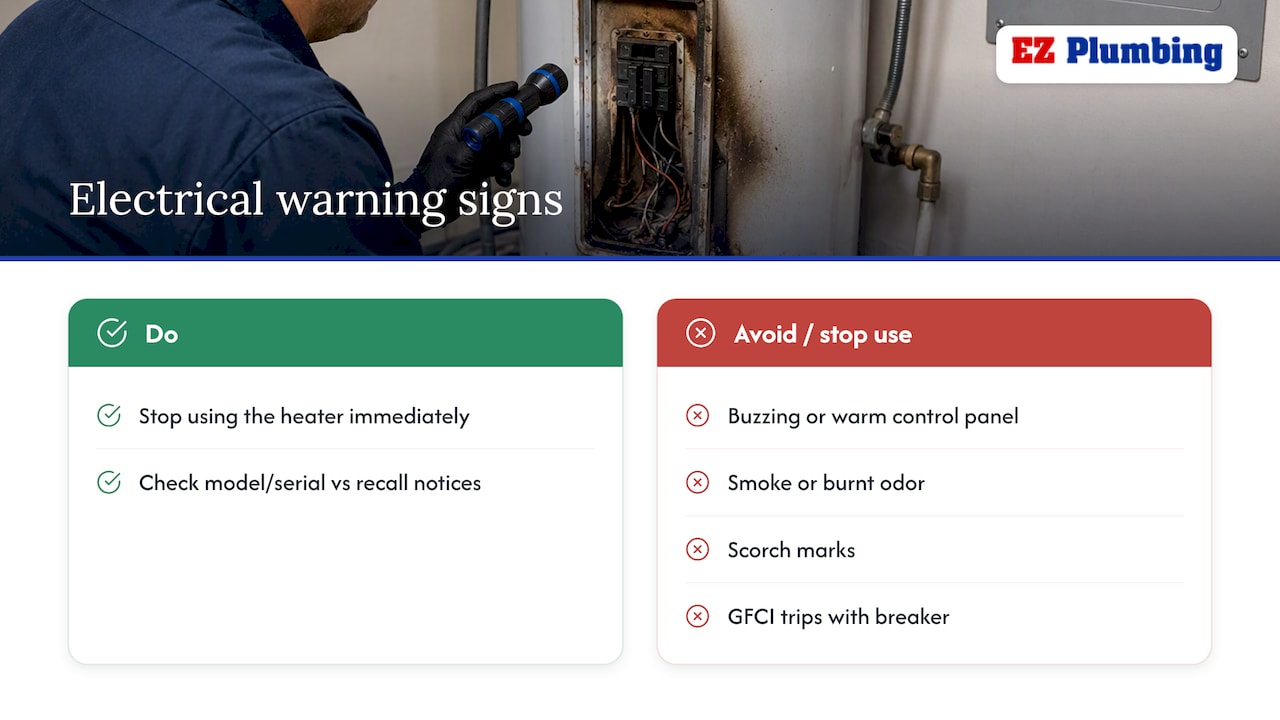
- Stop using the heater for buzzing, a warm panel, smoke, burnt odor, scorch marks, or a tripping GFCI, and check its model against recall notices.
- Replace a breaker only after the heater, wiring, and connections pass inspection; never install a larger one to silence trips, because it weakens overcurrent protection.
Table of Contents
- Top Causes: Element Faults, Controls, Wiring, and Breakers
- Step-by-Step Diagnostic Checklist for Homeowners
- Electrical Warning Signs and Recalls That Mean Stop Using the Heater
- When Replacing the Breaker Is the Right Call, and When It Isn’t
- What Repairs Typically Cost and How Long They Take
- When to Call a Licensed Plumber or Electrician
- Why We Treat Water Heater Electrical Faults as a Licensed Job
- Fast, Code-Compliant Water Heater Repair When You Need It
- FAQ
- Sources
Top Causes: Element Faults, Controls, Wiring, and Breakers
When a breaker trips the instant you reset it, we usually look first at the heating element. A shorted or grounded element draws far more current than the circuit allows, and the breaker reacts immediately rather than after the tank has been running a while. A common giveaway is lukewarm water instead of hot, paired with a failed continuity test across the element terminals.
A different pattern points to the thermostat or control board. When a faulty upper thermostat fails to cut power to the lower element, both elements can energize at the same time, pulling more current than the circuit was designed to carry. This failure mode tends to show up after the heater has been running for a while rather than the second you flip the breaker.
Loose terminal screws and corroded wire connections cause their own kind of trouble. A connection that isn’t tight enough builds resistance, and resistance builds heat. Over time that heat discolors the wire insulation, chars the terminal block, or leaves a faint burnt smell near the access panel, the kind of damage you can often spot before the breaker ever trips.
Finally, consider whether the breaker itself is mismatched to the circuit rather than failing:
- An undersized breaker paired with a water heater’s actual draw trips under normal operation, not because anything is broken.
- An overloaded circuit sharing load with other appliances can trip a correctly sized breaker during peak demand.
- A genuine short or ground fault trips the breaker regardless of circuit size, which is the scenario that calls for a full diagnostic rather than a bigger breaker.
Step-by-Step Diagnostic Checklist for Homeowners
Before touching anything inside the panel or the heater’s access covers, cut power at the breaker and confirm it’s dead with a non-contact voltage tester or a voltmeter. Never assume a flipped switch means the circuit is actually off.
- Note how the breaker behaves: does it trip the instant you reset it, or only after the heater runs for several minutes? That timing alone narrows the likely cause.
- Remove the access panel covers and look for scorch marks, melted insulation, or a burnt odor around the wiring and thermostats.
- With power confirmed off, test each heating element for continuity using a multimeter; an element that doesn’t show continuity, or shows continuity to the tank’s metal casing, is shorted or grounded.
- Check for voltage at the tank’s incoming terminals once power is restored briefly, confirming the circuit is delivering the expected voltage without fluctuation.
- Inspect the upper and lower thermostats and their wiring connections for looseness, corrosion, or visible damage.
Pro Tip: If you’re not fully comfortable restoring power to test voltage at the terminals, skip that step and call a licensed electrician instead. Element continuity testing with power off is the safest DIY check in this sequence.
Continuity testing with the power confirmed off is reasonable for a confident DIYer. Anything that requires power restored near open wiring, or any sign of arcing or melted components, belongs to a licensed electrician. Our water heater troubleshooting guide walks through these same checks in more detail if you want a second reference while you work.
Electrical Warning Signs and Recalls That Mean Stop Using the Heater
Resetting a breaker on a true short doesn’t just fail again, it builds heat at the fault point with each attempt, and that heat is what eventually leads to arcing or a melted connection. The CPSC’s analysis of faulty circuit breakers found that loose or failed connections inside breakers can reach excessive temperatures and create a fire hazard, which is exactly why repeated resetting on an unresolved fault is a bad habit.
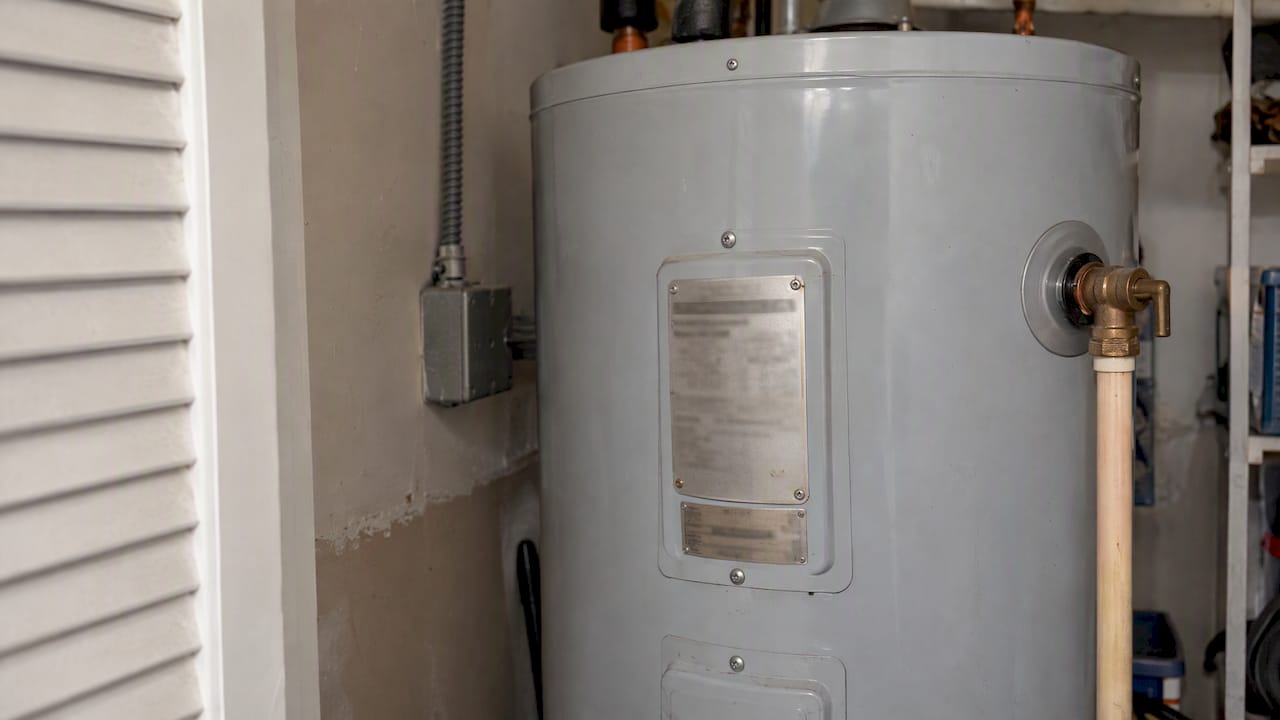
A documented safety case: the CPSC recall of Rheem water heaters involved control-panel overheating that posed a fire hazard, and the agency’s remedy was simple: stop using the affected units and get the manufacturer repair rather than attempting a workaround. If your water heater shows buzzing, a warm panel, smoke, a burnt odor, scorch marks, or a GFCI that trips along with the breaker, stop using it and check the nameplate’s model and serial number against current recall notices before doing anything else.
When Replacing the Breaker Is the Right Call, and When It Isn’t
A new breaker only belongs in the conversation after the heater, wiring, and connections have all checked out clean. DOE installation job aids call for verifying the wire size, the existing breaker’s rating, grounding, and the heater’s nameplate amperage before touching the panel, and that same guidance applies whether you’re installing new or troubleshooting an old unit.
Installing a larger breaker to stop nuisance trips removes the overcurrent protection the circuit depends on, which means the next fault could run hotter and longer before anything shuts it down. That’s a dangerous trade for a few quiet weeks.
What Repairs Typically Cost and How Long They Take
Parts alone run modestly: heating elements and thermostats are inexpensive, while a correctly rated breaker costs more depending on amperage and brand, with regional pricing variation either way. A straightforward element swap is usually a same-day job once the fault is confirmed; thermostat or control replacement takes a bit longer because of wiring and calibration checks.
Panel or breaker work, by contrast, often means an electrician is involved alongside the plumbing work, which extends both the timeline and the cost. If the tank itself shows corrosion or repeated element failures, replacement becomes more cost-effective than chasing another repair, and our water heater installation pricing page outlines what that option looks like.
When to Call a Licensed Plumber or Electrician
Call right away if you notice a burning smell, repeated trips after a reset, visible scorch marks or melted wiring, or a nameplate that matches a recall notice. Waiting on any of these only adds risk.
Before the appointment, have the heater’s model and serial plate on hand along with notes on exactly when the breaker trips, what symptoms came with it, and any previous repairs. A licensed pro will test the elements, thermostats, wiring, and breaker as a system, then explain what needs replacing and roughly how long the fix will take.
Why We Treat Water Heater Electrical Faults as a Licensed Job
We hold the required licensing and insurance to diagnose water heater electrical faults safely under applicable code. DIY testing has real limits: once a fault involves panel wiring, suspected arcing, or anything beyond a simple continuity check, it crosses into licensed electrician and plumber territory, both for your safety and for code compliance on the repair.
— EZ
Fast, Code-Compliant Water Heater Repair When You Need It
We diagnose and repair faults such as shorted elements, failed thermostats, and wiring issues that trip breakers, with the licensing and insurance to size breakers and conductors to code rather than guessing. Skipping that step to save time is how a temporary workaround turns into a repeat failure or worse.

- We respond for urgent cases through emergency plumbing service when a burning smell or repeated trips means the heater needs to come offline now.
- Every repair matches your heater’s nameplate rating and your home’s wiring to current code, not a one-size-fits-all swap.
Schedule a diagnostic through our water heater repair page and we’ll track down the fault instead of leaving you to guess at it.
FAQ
How much does it cost to replace a water heater circuit breaker?
Breaker replacement costs vary by amperage and brand, and the price is only part of the job since labor for diagnosis and installation adds to the total. A licensed plumber or electrician can confirm your heater’s nameplate rating before quoting the swap, which is a better outcome than guessing at a replacement size.
How do I stop my water heater from popping?
Popping or banging sounds are usually caused by sediment buildup in the tank rather than an electrical fault, and draining and flushing the tank often resolves it. If the popping comes with breaker trips or a burning smell, that points to an electrical issue instead and calls for the diagnostic checks covered above.
What are the signs of a water heater going bad?
Common signs include inconsistent water temperature, discolored or rusty water, unusual noises, leaks around the base, and a breaker that keeps tripping; see these signs your water heater is failing for more guidance. Any combination of these, especially alongside a burnt smell or visible wiring damage, is a reason to stop using the unit and get it inspected.
Why does the geyser trip the electricity?
A water heater (sometimes called a geyser) trips the electricity most often due to a shorted heating element, a thermostat fault that energizes both elements at once, or a loose, overheating wire connection. Each of these creates excess current draw that the breaker is designed to catch, which is exactly why repeated resetting without diagnosis isn’t a safe long-term fix.