
Owners, Act Now: Stop Water Coming Up Through the Floor in 24–48 Hours
Water on your floor usually means one of three things: a plumbing leak, groundwater forcing its way up through a slab, or a backed-up drain. Stop the water if you can find a shutoff, contain what’s already pooled, document the damage, and call a licensed plumber if you smell sewage, see structural cracks, or the water keeps coming back.
TL;DR:
- Water caused by groundwater pushing through cracks occurs mainly after storms and rarely during dry periods, unlike plumbing leaks which are often continuous.
- The presence of white mineral deposits, warped flooring, or bulging walls near the water spot indicates potential foundation or slab crack issues.
- Storm-driven groundwater seepage shows a pattern of water rising evenly across the slab, while localized fixtures typically cause spot leaks.
- A quick test involves shutting off the main water and observing if the water location enlarges, which suggests groundwater rather than plumbing failure.
- Immediate professional repair is required for sewage odors, structural movement, or ongoing water recurrence to prevent mold and further damage.
Table of Contents
- Signs to check right now
- Common causes of water under the floor
- A step-by-step way to narrow down the source
- Immediate fixes and containment while you wait for repairs
- Long-term repairs that stop the water from coming back
- Why this usually needs a licensed plumber, not a weekend project
- For property managers handling a water incident
- How we can help right now
- FAQ
- Sources
Signs to check right now
Where the water collects tells you most of what you need to know. Water pooling near a floor drain or gurgling when you run a sink points to a drain backup. Water rising evenly across a slab, especially after a storm, suggests groundwater pushing through from below. Water confined to one spot near a toilet or under a shower usually means a fixture or supply line.
Smell matters too. A sewage odor means contaminated water and a call to a plumber before you touch anything. A musty smell without sewage points to slow, ongoing seepage rather than a sudden leak. No smell at all, paired with damp pipes nearby, often means condensation rather than an actual leak.
- Check whether the water appeared after rain, after heavy fixture use, or seems constant.
- Look for warped floorboards, cracked grout, white mineral deposits (efflorescence), or bulging walls.
- Note the exact spot where water first appeared, not just where it spread.
Common causes of water under the floor
Several distinct problems produce the same symptom, and telling them apart changes the fix entirely.
- Plumbing leaks. Supply lines, waste pipes, toilet wax seals, and slab leaks all push water out suddenly, often with a clean-water smell and a location tied directly to a fixture or wall. A slab leak in particular tends to show up as a warm or damp spot on the floor with no obvious source above it, and specialized detection methods are usually needed to confirm it.
- Hydrostatic pressure and high groundwater. Saturated soil around a foundation pushes water through porous concrete or hairline cracks, especially after storms. This pattern repeats with every heavy rain and rarely shows up during dry stretches.
- Foundation and slab cracks. Hairline cracks let in slow seepage, while wider gaps can admit a steady trickle. Water often tracks along the crack line rather than pooling randomly.
- Failed waterproofing or vapor barriers. Surface coatings wear out or were never adequate for the soil conditions, and seepage tends to follow the seasons, worse in wet months, nearly absent in dry ones.
- Clogged floor or perimeter drains and sump pump failure. Debris, grease, or tree roots block drains, according to BobVila’s basement seepage guide, causing backup and gurgling sounds. A sump pump that isn’t running during a storm is often the real culprit behind a flooded basement floor.
- Condensation and pipe sweating. Cold pipes in a humid space collect surface moisture that drips and pools without any actual leak. This shows up as dampness concentrated right around exposed pipework, not spreading from a single point.
Forbes Home draws a useful distinction here: slow seepage through concrete or hairline cracks tends to track with groundwater, while a sudden loss of water volume from a fixture or pipe points to a straightforward leak.
A step-by-step way to narrow down the source
Work through this sequence before assuming you know the cause. Stop immediately and call a professional if you see sewage-colored water, smell gas, or notice any structural movement like bulging walls or shifting floors.
- Check all fixtures and shutoffs first: toilets, the water heater, and any visible supply lines under sinks.
- Inspect floor drains and the sump pump. Clear visible debris, confirm the sump actually turns on, and check whether it has a battery backup.
- Watch the pattern over a few days. Water that only appears after rain points to groundwater; water that shows up regardless of weather points to plumbing or drains.
- Photograph everything: the exact location, the time it appeared, any smell, and how the wetness spread. This record speeds up diagnosis if you call in a professional leak detection service.
Pro Tip: Shut off your home’s main water valve for an hour and check if the wet spot keeps growing. If it does, the source isn’t your plumbing, it’s groundwater or a drain.
Immediate fixes and containment while you wait for repairs
The first priority is keeping standing water from causing more damage than it already has. If you’ve traced the problem to a specific fixture or pipe, shut off that line at the nearest valve; for a whole-house leak or anything you can’t isolate, shut off the main and call for emergency service.
- Clear the area of rugs, furniture, and electronics, and block entry points if more water is still coming in.
- Run the sump pump manually if it’s safe to do so and power is intact.
- Avoid running fans directly on water you suspect is contaminated with sewage.
- Tighten loose fixture bolts or clear a visible, reachable clog yourself, but stop there if the water keeps returning.
Drying timeline matters more than most homeowners realize. The EPA’s guidance on mold and moisture states that affected areas should be cleaned and dried completely within 24 to 48 hours to limit mold growth, and that professionals should be brought in right away if the water is contaminated with sewage. Past that 48-hour window, mold risk climbs quickly, which is why speed matters as much as the eventual repair. If you’re dealing with contaminated water or a flooring material that’s already warped, our guide to water damage and mold removal walks through the next steps in more detail.
Long-term repairs that stop the water from coming back
Containment buys time, but recurring seepage needs a permanent fix, and the right one depends on what’s driving the water.
- Regrade soil away from the foundation and extend downspouts so runoff doesn’t pool against the house; regular gutter maintenance reduces how much water saturates the soil near your foundation in the first place.
- Install a French drain or interior drainage channel paired with a sump pump that has battery backup, since surface sealers alone can’t stop hydrostatic pressure.
- Have a licensed plumber handle structural fixes like epoxy crack injection, slab leak repair, or rerouting pipes around a damaged section.
- Clear gutters seasonally, test your sump pump and drains once a year, and schedule a professional inspection if your home has a history of water intrusion.
Why this usually needs a licensed plumber, not a weekend project
Slab leaks, sewage backups, structural cracks, and persistent seepage all sit outside what most homeowners can safely diagnose or repair. We’re a licensed and insured plumbing provider (C-36 License #583868) offering leak detection, slab leak repair, sump pump work, and 24/7 emergency response. A proper diagnostic visit includes pinpointing the source, a written estimate, and documentation that supports code compliance and insurance claims.
— EZ
For property managers handling a water incident
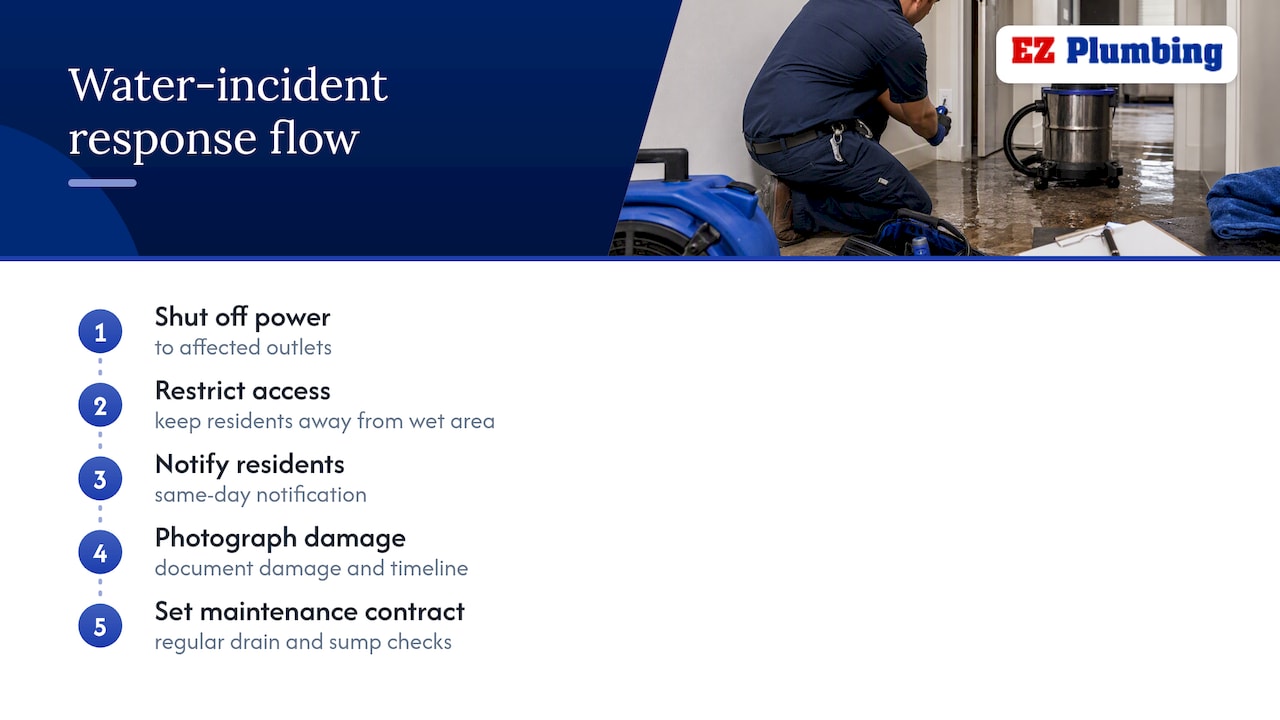
Tenant safety comes first: shut off power to affected outlets, restrict access to the wet area, and notify residents the same day. Photograph the damage and timeline immediately for insurance and liability purposes. For buildings with a history of seepage, a maintenance contract that includes regular drain and sump checks tends to cost less than repeat emergency calls.
How we can help right now
If water is actively coming up through your floor, we offer the diagnostic tools and licensed repair work to fix it and keep it from coming back. Our leak detection service uses camera and acoustic equipment to pinpoint slab leaks without unnecessary demolition, and our residential plumbing team handles everything from sump pump installation to full repiping.

A first visit typically includes:
- An on-site diagnostic to confirm whether the issue is plumbing, groundwater, or a drain.
- A written estimate before any work begins.
- Code-compliant repairs documented for your records or insurance claim.
If the water is still rising or you smell sewage, reach our emergency plumbing line for same-day dispatch across the greater Los Angeles area.
FAQ
Why is water seeping through my floor when it rains?
Rain saturates the soil around your foundation, raising hydrostatic pressure that pushes water through porous concrete or hairline cracks in the slab. This pattern shows up repeatedly after storms and nearly disappears during dry stretches, which distinguishes it from a plumbing leak.
Why is water coming into my basement from the outside wall?
Water entering along a basement wall usually points to grading problems, clogged gutters, or damaged exterior waterproofing that let groundwater reach the foundation. Forbes Home notes that poor grading and gutter failures are among the most common causes of this kind of seepage.
Is a water leak serious?
A water leak can range from a minor nuisance to a serious hazard, depending on the source and how long it’s been going on. Sewage contamination, structural cracks, or a leak that’s been active for more than 48 hours all raise the risk of mold, according to EPA guidance, and warrant a professional visit rather than a DIY fix.
How do you fix water seepage?
The right fix depends on the cause: a plumbing leak needs pipe repair or rerouting, while groundwater seepage typically needs a French drain or interior drainage channel paired with a sump pump. BobVila notes that blocked drain lines are a common culprit and often just need clearing and a camera inspection to confirm the fix worked.
Sources
- EPA — A Brief Guide to Mold, Moisture, and Your Home
- BobVila — Solved! Why Is Water Seeping Through My Basement Floor?