
Avoid Permit Rework for Earthquake Gas Shutoff Valve Installs in LA
An earthquake gas shutoff valve stops gas flow into your home automatically when strong shaking hits, cutting off the fuel source behind many post-quake fires. Installation is typically recommended for homes in seismic zones, especially where local code or insurers expect it, but the device has to be sized correctly, permitted, and installed by a licensed plumber to actually work.
TL;DR:
- Seismic gas shutoff valves react to ground motion equivalent to magnitude 5.1 to 5.4, requiring correct sizing and professional installation for safety.
- Permits, certified equipment, and proper mounting are essential to ensure the valve functions correctly and complies with local codes.
- After a valve trips, homeowners should immediately leave the house, avoid resetting it themselves, and contact their utility and a licensed plumber for inspection.
- The cost for installation typically ranges from $250 to $750, with larger or older systems and combined devices increasing expenses.
- Installing proper safety hardware can support insurance discounts but requires proof of compliant, licensed installation and inspection.
Table of Contents
- What Is an Earthquake Gas Shutoff Valve and How Does It Work?
- What Permits and Codes Apply to Installation?
- How Are These Valves Sized and Priced?
- What Should You Do Immediately After a Valve Trips?
- How Often Should You Inspect and Maintain the Valve?
- What Should You Ask Before Hiring an Installer?
- How Do Popular Valve Brands and Models Compare?
- Does Installing One Affect Your Home Insurance?
- How Does This Fit With Other Home Safety Systems?
- Ez-plumbing’s Practical View on Seismic Gas Valves
- Get Your Gas Line Inspected and Protected
- Where This Information Comes From
- Sources
What Is an Earthquake Gas Shutoff Valve and How Does It Work?
A seismic gas shutoff valve is a mechanical device installed on the gas line downstream of the meter. Inside, a ball or weighted mechanism sits balanced until motion disturbs it. Most listed seismic valves close at shaking equivalent to roughly magnitude 5.1 to 5.4, which stops gas from ever reaching your appliances or interior piping.
Excess flow valves work on a completely different trigger. Instead of sensing motion, an excess flow valve monitors the rate of gas moving through the line and closes when flow spikes past a safe threshold, the kind of surge you’d see if a pipe snapped during a quake, a landslide, or construction work. That distinction matters for property managers weighing both devices:
- Seismic valves react to ground motion itself, even if no pipe has broken yet.
- Excess flow valves react only after a rupture has already started leaking gas.
- Many homes in high-risk zones install both, downstream of the meter, for overlapping protection.
- Neither device replaces manual shutoff knowledge. Every household should still know where the main gas valve is.
Post-quake fires are a real driver behind this hardware: one in four fires after an earthquake trace back to a natural gas leak, which is why fire departments and insurers pay attention to whether a property has one of these valves at all.
What Permits and Codes Apply to Installation?
Installing a seismic or excess flow valve isn’t a weekend project, and it shouldn’t be treated as one. Improper sizing or installation can cause appliance malfunctions, low pressure at your water heater or furnace, or a valve that never resets cleanly. Here’s the general workflow homeowners in Los Angeles should expect:
- Pull a permit. Most municipalities require a permit for gas line modifications, and inspectors will check the work before it’s signed off.
- Hire a licensed plumber. Sizing, pipe threading, and bracket mounting all fall under licensed trade work, not DIY territory.
- Confirm certifications. Ask about UL listing, IAS or IAPMO approval, and Office of State Architect acceptance where applicable, since these matter for both code compliance and insurance recognition.
- Mount and brace properly. Municipal guidance, including Milpitas’ natural gas safety handout, spells out rigid mounting requirements so the valve doesn’t trip from a passing truck instead of an actual earthquake.
- Schedule final inspection. Local building departments vary widely, so confirm your jurisdiction’s specific workflow before work begins.
Utilities generally treat these valves as customer-owned equipment. They won’t install one for you, but they’ll often step in for safety checks once it trips.
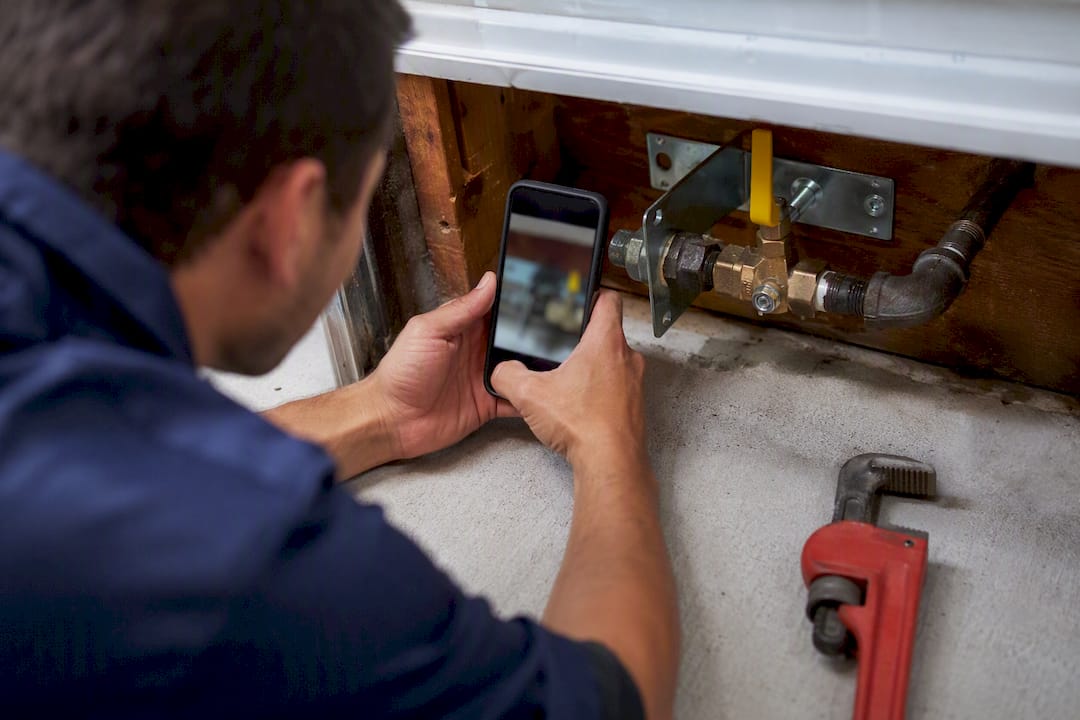
Pro Tip: Ask your plumber to photograph the mounting bracket and valve tag after installation. If an inspector or insurance adjuster ever asks for proof of a compliant install, you’ll have it on hand instead of scheduling another visit.
How Are These Valves Sized and Priced?
Gas systems run on different pressure classes, and mixing them up causes real problems. Residential lines commonly operate around 7 psig, while some commercial or larger residential systems run closer to 60 psig with an upstream regulator stepping pressure down before it reaches appliances. A valve rated for the wrong class either fails to seat correctly or restricts flow enough to starve your water heater or range.
Sizing is not a guess. Undersized valves cause low gas pressure and appliance performance problems down the line, which is exactly why a licensed plumber calculates total appliance load, present and future, before selecting a model.
Cost ranges vary by property, but here’s what typically factors in:
- Parts and labor together: usually $250 to $750 installed, depending on pipe access and bracket work.
- Older homes with harder-to-reach gas lines push toward the higher end.
- Multi-unit or commercial properties may need larger valves and additional labor.
- Adding both a seismic and excess flow valve costs more upfront but closes two different failure gaps at once.
What Should You Do Immediately After a Valve Trips?
A tripped valve means the system did its job. What you do next determines how quickly and safely you get gas restored.
- Check for a gas smell first. If you notice one, leave the house, avoid flipping any switches, and call your utility or 911 before doing anything else.
- Don’t reset the valve yourself. Utilities commonly discourage untrained homeowners from resetting valves until a safety inspection confirms there’s no leak.
- Call your gas utility. Providers like PG&E ask customers to contact them directly to coordinate an inspection before restoring service.
- Schedule a licensed plumber visit. Reset mechanics vary by model, some use a reset screw, others a magnetic tool, and a pro will confirm the line is intact first.
If you suspect an actual leak rather than a routine trip, our natural gas leak repair guide and our six-step guide on what to do after a gas leak walk through the exact sequence to follow.
How Often Should You Inspect and Maintain the Valve?
A seismic valve isn’t something you install and forget. Between professional visits, do a quick visual check every few months.
- Look at the mounting bracket for rust, looseness, or signs someone’s bumped it.
- Check for corrosion around fittings, especially in coastal or humid areas.
- Confirm nothing’s blocking access to the valve, since a pro will need clear space to service it.
- Note the installation date. Most manufacturers back these devices with multi-year warranties, and longevity claims are tied to proper mounting from day one.
Schedule professional maintenance every few years, and always request a reinspection after any earthquake strong enough to be felt, even if the valve didn’t trip. If a valve shows persistent corrosion or won’t reset properly after service, replacement is usually cheaper long term than repeated repair calls.
Pro Tip: Keep a simple log, even a note on your phone, of every inspection date and who performed it. Property managers especially benefit from this when insurers ask for maintenance history after a claim.
What Should You Ask Before Hiring an Installer?
Getting this right starts with the right questions, not the lowest bid. Before signing off on any installer, confirm they can answer these directly:
- Are you licensed to perform gas line work in this jurisdiction, and can you show proof?
- Have you installed this specific valve model or brand before?
- Will you pull the permit yourself, or is that on me?
- What warranty comes with the device, and does it cover labor if something fails early?
- Who’s responsible for coordinating with the utility to restore service after installation?
Beyond the conversation, run through this checklist before work begins:
- Confirmed permit and inspection plan with your municipality
- Correct sizing based on total appliance load
- Matching pressure class for your system (commonly 7 psig residential)
- Valid listing or certification (UL, IAS, IAPMO, or Office of State Architect where applicable)
- Rigid bracket mounting per local code
- Clear reset method explained in writing
- A plan for post-trip inspection before service restoration
Red flags worth walking away from: an installer who can’t name the certification body for the valve they’re selling, one who skips the permit “to save time,” or one who can’t explain how the reset process works on the specific model they’re installing.
How Do Popular Valve Brands and Models Compare?
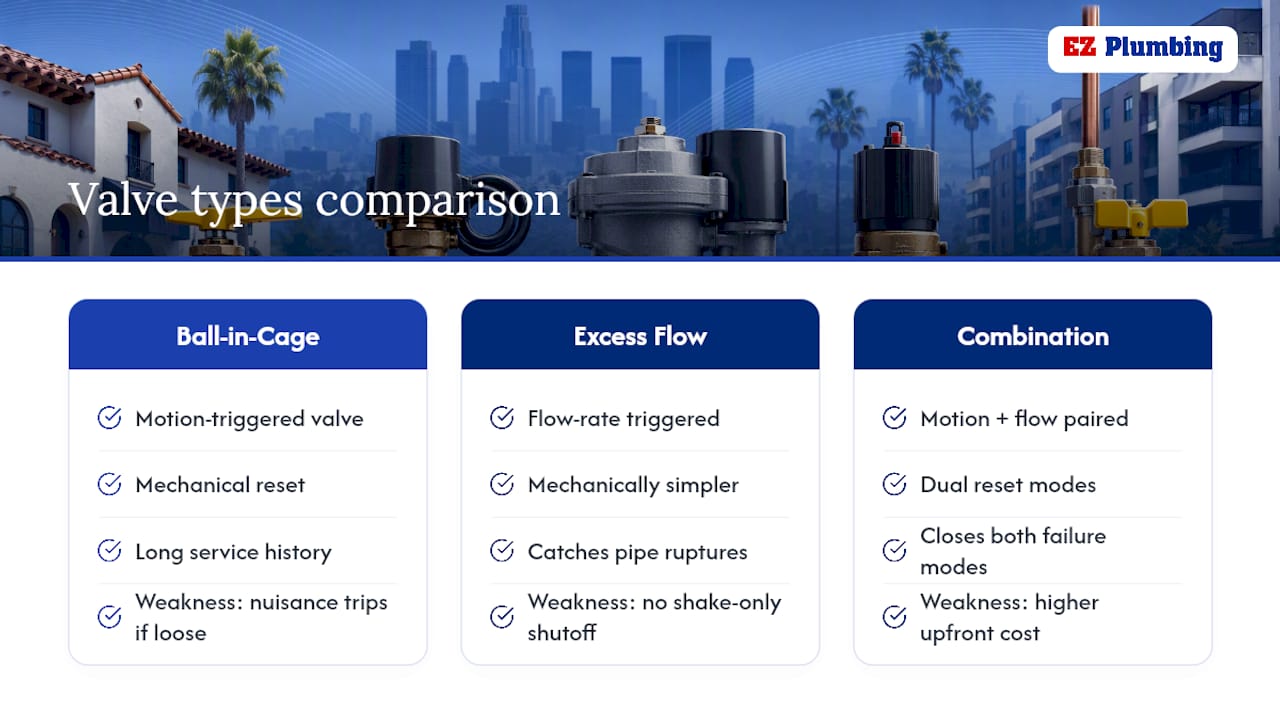
Most seismic valves on the market fall into a few practical categories rather than dozens of meaningfully different designs. Ball-in-cage seismic valves are the most common style in California retrofits, prized for straightforward mechanical resets and a long service history in high-seismicity regions. Their main drawback is sensitivity tuning: a poorly mounted unit can trip from heavy trucks or nearby construction, which is why bracket rigidity matters so much during installation.
Excess flow valve models tend to be smaller and simpler mechanically, since they respond to flow rate rather than motion. They’re a strong complement rather than a substitute, catching pipe ruptures that shaking alone wouldn’t trigger. The tradeoff is that they won’t stop gas flow during shaking if no rupture has occurred yet, so relying on one alone leaves a gap.
Combination systems that pair both valve types cost more upfront but close both failure modes. For older homes with aging gas lines, this combined approach is often worth the added cost given how much harder pipe replacement is after damage occurs.
Whatever model you’re considering, the certification matters more than the brand name. A UL-listed or IAPMO-recognized valve from a lesser-known manufacturer will typically outperform an uncertified valve from a bigger name, because the listing process tests for the exact failure scenarios these devices exist to prevent. Ask your plumber which certified models they’ve had the best long-term reliability with in your specific soil and seismic zone, since local conditions affect nuisance-trip rates more than brand reputation does.
Does Installing One Affect Your Home Insurance?
Insurers increasingly pay attention to seismic mitigation hardware, and a documented gas shutoff valve installation can factor into that conversation. Some carriers offer discounts or credits for homes with earthquake-specific safety devices, though the specifics vary significantly by insurer, state, and policy type, so you’ll need to confirm directly with your provider rather than assume a blanket discount applies.
What insurers consistently want to see is documentation: the permit, the certification listing, and proof of professional installation. A valve installed without a permit or by an unlicensed handyman may not count toward any discount at all, even if the hardware itself is sound. This is one more reason the permit step isn’t optional paperwork, it’s the difference between a valve that helps your insurance standing and one that doesn’t.
Beyond discounts, there’s a claims angle worth understanding. If a gas-related fire or explosion occurs and your home lacked basic seismic safety measures your policy assumed were in place, that gap can complicate a claim. Conversely, a documented, code-compliant installation supports your position that you took reasonable preventive steps, which matters if a claim is ever disputed.
Given that gas leaks are linked to roughly a quarter of post-earthquake fires, it’s not surprising insurers view this hardware as a meaningful risk-reduction measure. If you’re unsure whether your policy recognizes seismic valves, ask your agent directly and get the answer in writing before you budget for installation expecting a discount that may not materialize.
How Does This Fit With Other Home Safety Systems?
A gas shutoff valve works best as one piece of a broader safety setup, not a standalone solution. Smoke detectors and earthquake alarms address different risks on different timelines. A smoke detector responds after combustion has already started, while a seismic valve acts before gas ever reaches an ignition source. Together they cover both prevention and early detection.
Some property owners pair gas shutoff valves with broader disaster-preparedness planning, including backup power, water shutoff awareness, and structural bracing for water heaters and bookshelves. Preparedness resources like StokdUp’s approach to emergency readiness cover the kind of complementary planning, food, water, communication, that fits alongside hardware-based protections like a shutoff valve.
For multi-unit properties, integration gets more complex. A property manager might coordinate central gas shutoff awareness with building-wide fire alarm systems and tenant notification plans, so that a triggered valve in one unit doesn’t leave neighboring units confused about whether they’re affected. Whole-building earthquake alarms that alert all residents simultaneously pair naturally with this setup, since early warning gives people time to move away from gas appliances before shaking even starts.
None of these systems replace each other. A gas shutoff valve doesn’t detect fire, a smoke detector doesn’t stop a gas leak, and neither substitutes for knowing where your manual shutoff is located. The strongest setup layers all three: prevention hardware, detection hardware, and basic household knowledge of what to do when any of it activates.
Ez-plumbing’s Practical View on Seismic Gas Valves
The plumbing contractor is licensed and serves the greater Los Angeles area, and gas line safety work runs through the same code and permit process every time. We typically recommend seismic valve installation when a property sits in a higher seismic risk zone, when a client’s insurer asks about mitigation hardware, or when older gas lines are already due for evaluation.
The project flow stays consistent: inspection of the existing gas system, permit filing with the local building department, licensed installation with proper bracing, and a final inspection before the line goes back into full service. If you’re weighing whether your property needs this, a straightforward gas line inspection is usually the right starting point.
— EZ
Get Your Gas Line Inspected and Protected
The company handles the full process including gas line inspection, seismic valve installation, permit filing, and post-trip resets, so you won’t need to coordinate between an installer, your city, and your utility on your own. That matters because a valve installed without proper permitting or sizing can leave you with appliance pressure problems or a device that won’t pass inspection when it counts.

If your property is due for a broader plumbing safety check, we also handle related systems that often get inspected together, from water heater installation to gas line repair. A licensed specialist catches sizing and code issues before they become bigger problems, not after. Reach out to schedule a gas line inspection and get a clear answer on whether a seismic shutoff valve makes sense for your property.
Where This Information Comes From
Technical claims in this guide draw from a handful of sources worth checking directly if you want more detail. The Building America Solution Center covers valve mechanics and sizing standards. Milpitas’ municipal gas safety guidance illustrates how local code often handles mounting and permits. PG&E’s help center explains utility involvement after a trip, and USGS seismic hazard maps help homeowners gauge local risk. Always confirm current rules with your own building department, since requirements shift by city.
Sources
- Automatic Gas Shutoff Valves | Building America Solution Center (PNNL)
- Natural Gas Safety and Shut-off Valves — City of Milpitas
- What is an Earthquake shut off valve? — PG&E help
- Coverage citing Earthquake Country Alliance statistic on post-quake fires