
No Hot Water? Check These 3 Things Before You Call a Plumber
If your water runs cold, check the breaker first for electric heaters, the pilot light or gas valve for gas units, and the error code display for tankless systems. Most no hot water problems trace back to one of these three points and can be diagnosed in under 30 minutes. Stop immediately and call for help if you smell rotten eggs, see standing water near the tank, or the breaker trips more than once.
TL;DR:
- Most no hot water issues are caused by a tripped breaker, a failed pilot light, or a clogged filter, which can usually be diagnosed in under 30 minutes.
- Do not attempt repairs if you smell gas or see standing water near the tank, and always turn off power before removing panels on electric units.
- For electric heaters, resetting the breaker and pressing the high-limit switch resolve most problems; recurring trips indicate component failure needing professional testing.
- Gas units should be checked for a fully open gas valve and a properly lit pilot, with thermocouple replacement advised if the pilot fails to stay lit after multiple attempts.
- Tankless systems diagnose issues via error codes, sediment buildup, or flow restrictions, with most repairs achievable by homeowners within a half-hour if no gas odor or electrical trips persist.
Table of Contents
- Safety Checks to Run Before You Touch Anything
- How Do You Troubleshoot No Hot Water by Heater Type?
- What’s Actually Failing Inside the Tank?
- When Should You Stop and Call a Plumber?
- Simple Maintenance That Prevents the Next Breakdown
- What Do Plumbing Technicians Actually Check First?
- Same-Day Water Heater Repair When You Need It Fixed Now
- Manuals and Government Resources Worth Bookmarking
- Why Most No Hot Water Panic Is Unnecessary
- Sources
Safety Checks to Run Before You Touch Anything
Before you open a single panel, rule out the two conditions that turn a simple repair into an emergency.
A gas smell near your water heater means a leak, not a pilot light problem. Leave the house, do not flip any switches, and call your gas utility from outside. Never attempt to relight a pilot if you smell gas, even faintly.
For electric units, cut power at the breaker before removing any access panel, then confirm it’s dead with a non-contact voltage tester. If you don’t own one, treat the panel as live and wait for a licensed technician.
Some situations aren’t DIY territory at all:
- Units older than 10 to 12 years with visible rust or corrosion on the tank
- Heaters that have tripped a breaker or high-limit switch more than once in a week
- Any unit where the gas valve, flue, or venting looks damaged or improperly connected
Pro Tip: Keep a flashlight and your phone camera handy. If you do end up calling EZ Plumbing, a quick photo of the rating plate and any error codes speeds up the diagnosis before the technician even arrives.
How Do You Troubleshoot No Hot Water by Heater Type?
Your approach depends entirely on what powers your water heater. Working through the wrong checklist wastes time you don’t have on a cold morning.
Electric water heaters
- Locate your electrical panel and find the double-pole breaker labeled for the water heater.
- Switch it fully off, then back on. A tripped breaker is the single most common reason an electric water heater stops producing hot water, and resetting it resolves the issue in minutes.
- If the breaker holds, remove the upper access panel (power off, confirmed with a tester) and press the red high-limit reset button, often labeled ECO.
- If the ECO trips again within a day, stop. That’s a signal of a failing thermostat or element, not a fluke.
Success looks like warm water within 20 to 30 minutes of a tank refilling. If nothing changes, the elements or thermostats likely need testing with a multimeter, which is where most homeowners hand things off to a professional.
Gas water heaters
Check that the gas valve is fully open. Standing pilot lights go out for reasons ranging from a draft to a failing thermocouple, and an extinguished pilot is the most common cause of a sudden loss of hot water on tank-style gas units.
Relighting steps vary by manufacturer and appear directly on the unit’s label near the control valve. Follow them exactly, in order. If the pilot won’t stay lit after two or three attempts, the thermocouple has likely failed. That’s a $20 to $40 part, but replacing it means shutting off gas and disassembling the burner assembly, work best left to a licensed plumber.
Tankless water heaters
Tankless units are more diagnostic-friendly than tank heaters because they tell you what’s wrong. Start with the digital display. Error codes for ignition failure or blocked airflow are common and point you straight to the problem instead of leaving you guessing.
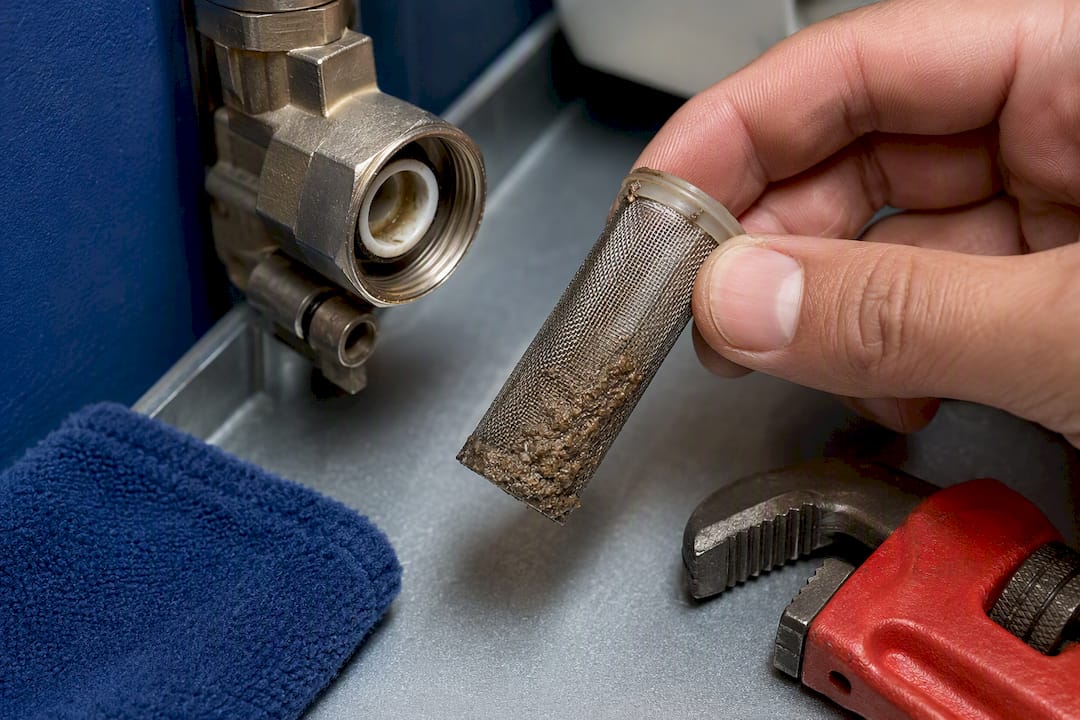
Next, check the inlet filter screen for sediment buildup and confirm no valve is partially closed. Tankless systems need a minimum flow rate to fire up, so a low-flow fixture or a clogged screen can mimic a total system failure even when the unit itself is fine.
According to one troubleshooting review, most homeowners who follow a prioritized checklist like this one can complete a full diagnosis in under 30 minutes, though persistent gas odor or repeated electrical trips call for immediate professional help rather than more DIY attempts.
What’s Actually Failing Inside the Tank?
Once you’ve ruled out the obvious switches and buttons, the cause is usually a specific component, and knowing which one helps you describe the problem accurately if you do call a plumber.
Electric tanks use two heating elements working in sequence: one near the top, one near the bottom. A failed upper element typically means no hot water at all, since it’s the first to heat incoming cold water. A failed lower element usually gives you a short burst of warm water that runs out fast, because the top element still works but there’s less total heating capacity.
Sediment is the quiet killer of tank efficiency. As mineral deposits settle at the bottom, they insulate the lower element from the water, cause rumbling or popping noises, and gradually shrink your usable hot water supply. Homes in hard-water areas see this faster, sometimes within a year of installation.
A cracked or missing dip tube produces a distinct symptom pattern: water that starts warm and turns cold within a minute or two, even though the tank itself is heating properly. This happens because the dip tube is supposed to push incoming cold water to the bottom of the tank; when it fails, cold water mixes with hot near the top, right where your outlet pipe draws from.
A few failure points are worth flagging separately, since they typically need a professional regardless of your comfort level with tools:
- Gas valve failures, which can affect both ignition and flow regulation
- Burner assembly corrosion or blockage from years of sediment and rust
- Thermocouple or igniter failures on gas units, which require gas line work to replace
Pro Tip: Run your hand along the bottom half of the tank. If it’s noticeably cooler than the top, or you hear a distinct popping sound during heating, sediment is likely your culprit before you even open a panel.
For a deeper walkthrough on element testing and reset procedures, EZ Plumbing’s water heater troubleshooting guide covers the multimeter steps most homeowners skip.
When Should You Stop and Call a Plumber?
Some symptoms aren’t worth troubleshooting further. Call immediately if you notice any of these:
- A gas smell, however faint, anywhere near the unit
- Water pooling at the base of the tank or dripping from fittings
- A breaker or ECO switch that trips more than once
- A unit older than 8 to 12 years showing any of the above
- Rust-colored water, hissing sounds, or visible tank bulging
When you call, have the make, model, and age of your heater ready, along with any error codes and what maintenance, if any, it’s had in the past year. That single conversation often cuts a technician’s diagnostic time in half.
Treat a gas smell or active leak as an emergency, call now. A repeatedly tripping breaker or ECO switch is high priority, same day. An aging unit with no acute symptoms can usually be booked within a few days.
Simple Maintenance That Prevents the Next Breakdown
Most no hot water calls are preventable with maintenance that takes less time than the actual repair.
Flush your tank heater once a year, twice if you’re in a hard-water region. Draining a few gallons through the bottom valve clears sediment before it shortens element life or causes the rumbling noises that signal a buildup problem.
Tankless owners should descale annually using a vinegar or manufacturer-approved solution flushed through the service valves, and clean the inlet filter screen every few months in areas with harder water.
- Set your thermostat to about 120°F to cut energy use and reduce scalding risk
- Test the temperature and pressure relief valve annually by lifting the lever briefly
- Consider an expansion tank if you notice the T&P valve releasing water periodically
Pro Tip: If you’ve replaced the same part twice in two years, that’s your unit telling you it’s cheaper to replace than repair. Check EZ Plumbing’s guide on replacement signs before sinking more money into an aging tank.
What Do Plumbing Technicians Actually Check First?
On a service call, a technician’s first moves mirror the same checklist you’d run yourself, just with better tools and more experience reading the results. That starts with verifying power or gas supply, then inspecting the burner or pilot assembly, and checking the temperature and pressure relief valve along with any visible corrosion on the tank shell.

Most calls resolve with a handful of common parts: thermocouples, heating elements, and thermostats make up the bulk of single-visit repairs, since technicians typically carry these on the truck rather than special-ordering them. A straightforward element or thermocouple swap usually takes 45 minutes to an hour once the diagnosis is confirmed. What surprises homeowners most is how often the actual fix is smaller than the problem felt at 6 a.m. with a cold shower waiting.
Same-Day Water Heater Repair When You Need It Fixed Now
Waiting days for hot water isn’t realistic when you’ve got a household running on a cold morning. EZ Plumbing handles repair, full replacement, and tankless conversions with technicians who show up carrying the common parts, thermocouples, elements, thermostats, needed to close out most calls in a single visit.
Every truck runs flat-rate pricing on standard repairs, so you know the cost before work starts, not after. If your unit is past the point of patching, our team walks you through water heater installation options including tankless conversions that eliminate the standing-pilot failures covered above. Licensed under C-36 #583868 and serving the greater Los Angeles area, EZ Plumbing shows up the same day for active no-hot-water calls. Ready to get it fixed? Book a repair or replacement and get a technician on the way.
Manuals and Government Resources Worth Bookmarking
For anything beyond a basic reset, go straight to primary sources instead of guessing.
- Check your unit’s manufacturer support page (like A.O. Smith’s troubleshooting portal) for exact pilot relighting steps specific to your model
- Use Rheem’s diagnostic resource for tankless error code definitions before assuming the worst
Manufacturer pages handle model-specific relighting and error codes. Government resources like Energy.gov are better for the bigger-picture settings and habits that keep your system running longer between failures.
Why Most No Hot Water Panic Is Unnecessary
The biggest misconception homeowners bring to a cold shower is that something expensive has broken. In our experience, that’s rarely true. A tripped breaker, an extinguished pilot, or a clogged tankless filter accounts for the overwhelming majority of calls we see, and none of those require a new water heater.
What actually costs homeowners money is delay. Ignoring a breaker that trips twice, or relighting a pilot that won’t hold flame three times in a row, turns a $30 part into a full component replacement because the underlying fault kept running unchecked. The checklist approach works precisely because it forces you to notice repetition, which is the real warning sign, not the first failure.
We’d also push back gently on the instinct to assume tankless systems are more fragile than tank heaters. They’re not. They’re more communicative. An error code is diagnostic information a standing pilot tank simply can’t give you, and homeowners who treat that code as useful data instead of an alarm tend to solve their own problems faster.
— EZ
Sources
- No hot water: electric water heater troubleshooting video | Sears PartsDirect
- No hot water — A.O. Smith / Lowes support
- Is your hot water not getting hot? Common causes & what to do about them — Rheem/HotWater
- Water heater no hot water — Complete troubleshooting guide — PlumbingToolsReview