
Water Hammer Causes: How to Identify and Stop Banging Pipes
Water hammer is hydraulic shock: a pressure surge triggered when moving water stops or reverses direction too fast. Most cases trace back to fast-closing valves, loose pipes, trapped air, or system pressure running above the recommended pressure ceiling. Start with the simple checks: listen for when the banging happens, isolate the fixture, and confirm your water pressure. If you see pipe movement, hear repeated bangs, or spot a new leak, stop troubleshooting and call a licensed plumber.
Key Takeaways
Water hammer results from sudden stops or reversals in flowing water, and most cases are resolved with sealed arrestors, secured piping, and pressure control below 80 psi.
| Point | Details |
|---|---|
| Identify the trigger first | Note which appliance or valve causes the bang before attempting any fix. |
| Check your pressure | Static pressure above recommended safe limits amplifies every transient in the system. |
| Choose arrestors over air chambers | Sealed piston arrestors hold their charge permanently, unlike old air chambers. |
| Know the danger signs | Visible pipe movement, repeated bangs, or new leaks mean it’s time to call a plumber. |
| Ez-plumbing handles diagnosis and repair | Licensed, insured service (C-36 #583868) covers arrestor installation, pressure regulation, and water heater maintenance. |
Table of Contents
- What Causes Water Hammer? The Basic Physics
- What Are the Most Common Water Hammer Causes?
- What Damage Can Water Hammer Cause?
- How Do You Find the Source of Water Hammer?
- How Do You Stop and Prevent Water Hammer?
- What Does a Professional Water Hammer Diagnosis Involve?
- Frequently Asked Questions
- Sources
What Causes Water Hammer? The Basic Physics
Water hammer happens when flowing water is forced to stop or reverse almost instantly, sending a pressure wave back through the pipe. Engineers call this a hydraulic transient, and the physics is straightforward: moving water carries momentum, and when that momentum has nowhere to go, it converts into a sharp pressure spike. The engineering relationship shows that pressure rises with flow velocity and pipe length, but drops when the valve closes more slowly, which is exactly why a slamming valve produces a bang and a slow one doesn’t. Quick triggers include a valve snapping shut, a pump cutting off, or a check valve slamming closed.
What Are the Most Common Water Hammer Causes?
Most water hammer pipe issues in homes trace back to a short list of repeat offenders. Work through this list in order. It’s ranked by how often Ez-plumbing sees each one in the field.
- Fast-closing appliance valves. Washing machines and dishwashers use solenoid valves that snap shut in a fraction of a second. Some are engineered to close more gently, in a fraction of a second, but older units often slam. Fix: install an arrestor at the appliance connection.
- Quick-closing shutoff valves. Ball valves and older gate valves that close abruptly send shock straight down the line. Fix: replace with slower-closing or quarter-turn valves rated for gradual closure.
- Check valve slam. A swing check valve can bang shut when flow reverses, especially in pumped systems. Fix: swap it for a silent or spring-loaded non-slam check valve.
- Pump stops. When a well pump or booster pump shuts off suddenly, the moving column of water has nowhere to go. Fix: install a surge arrestor near the pump discharge.
- Trapped or waterlogged air chambers. Older homes built with vertical air-filled pipe stubs lose their cushioning air over time. Fix: drain the system to temporarily restore the pocket, then plan for a mechanical arrestor.
- Loose or unsupported pipes. Pipes that shift with every pressure change knock against studs and joists. Fix: add padded pipe straps at regular intervals.
- High system pressure. Static pressure above recommended safe limits amplifies every transient in the system. Fix: measure pressure with a gauge and install a pressure-reducing valve if needed.
- Water heater sediment. Mineral buildup inside the tank can cause knocking sounds that mimic water hammer. Fix: flush the tank annually.
What Damage Can Water Hammer Cause?
Banging pipes aren’t just an annoyance. Repeated hydraulic shock loosens pipe anchors, stresses soldered and threaded joints, and, over months or years, can wear a pinhole leak straight through copper tubing. In severe cases, especially with long, unsupported runs, the pressure spike causes visible pipe whip that can rupture a fitting outright.
Watch for these signs that the problem has moved past cosmetic noise:
- Pipes visibly shaking or shifting when a valve closes
- Bangs that repeat every single time, not just occasionally
- New leaks or damp spots near joints
- A sudden, unexplained drop in water pressure
Pro Tip: A one-time thump when you first run the dishwasher after months of disuse is usually nothing. A bang that happens on every single cycle is the pattern that deserves attention.
How Do You Find the Source of Water Hammer?
Tracking down which fixture is causing the noise takes about half an hour and no special tools.
- Note when it happens. Does the bang follow the washing machine filling, the dishwasher shutting off, or a toilet finishing its fill cycle? That timing points straight to the culprit valve.
- Isolate fixtures one at a time. Shut off branch valves under sinks or behind appliances, then run water elsewhere to see if the noise disappears.
- Listen along the runs. A long screwdriver or piece of pipe pressed to your ear works like a mechanic’s stethoscope for finding where the vibration is loudest.
- Reproduce the noise deliberately. Run the suspected appliance again to confirm the pattern before you start any repair.
- Drain and reset the system. Turn off the main water valve, open every faucet in the house, and let it drain for 20 to 30 minutes. This can temporarily restore waterlogged air chambers in older homes.
If the noise persists after isolating fixtures and resetting air chambers, or if it seems to come from inside a wall you can’t access, that’s your cue to call in a licensed plumber rather than opening up drywall yourself.
How Do You Stop and Prevent Water Hammer?
Fixes fall into a rough hierarchy, from a Saturday-afternoon project to work that belongs to a licensed installer.
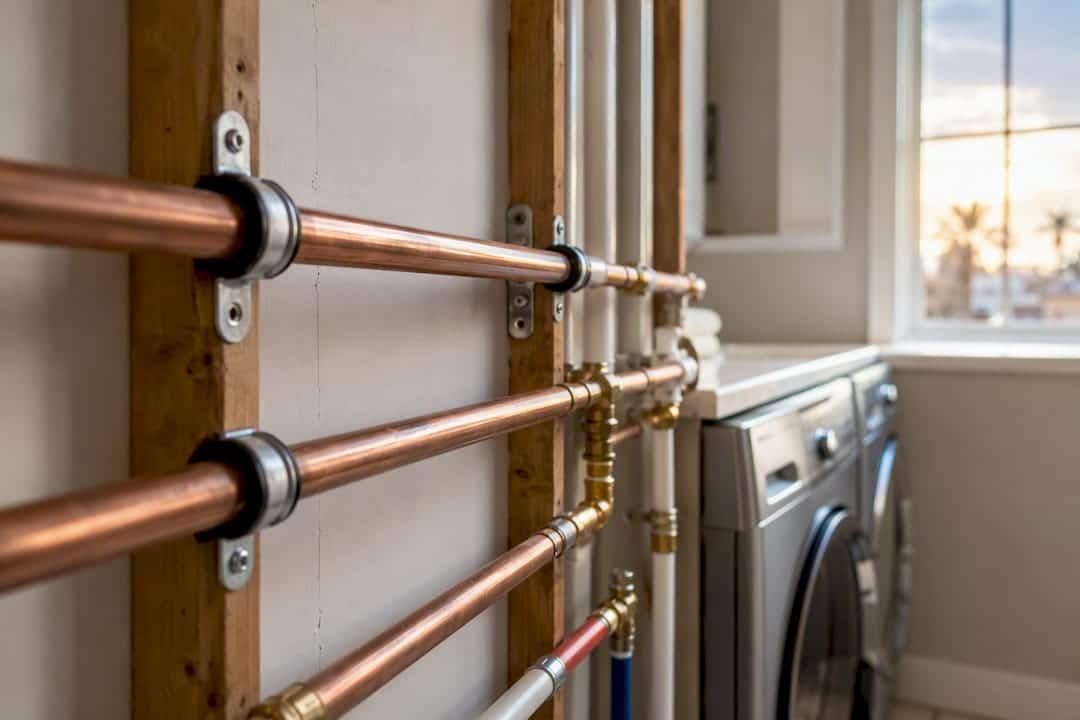
Start with the cheapest, lowest-risk step: secure loose pipes. Padded pipe straps at every few feet along exposed runs stop the rattling and knocking that comes from pipe movement alone, even before you touch water pressure or valves.
Next, look at your shutoff valves. Worn or fast-closing valves under sinks and at appliance connections are easy to swap for slower-closing replacements, and it’s a job most homeowners can handle with the water main off.
Water hammer arrestors are the step most people underestimate. These are sealed devices with an internal piston and a cushion of gas that absorb the shock wave before it travels through your pipes. Unlike old-fashioned air chambers, sealed piston arrestors don’t lose their charge over time, so they keep working without maintenance for years. Manufacturer guidance is consistent on placement: install them as close to the offending valve or appliance as possible, not at the far end of the branch line, since distance reduces how well they absorb the shock.
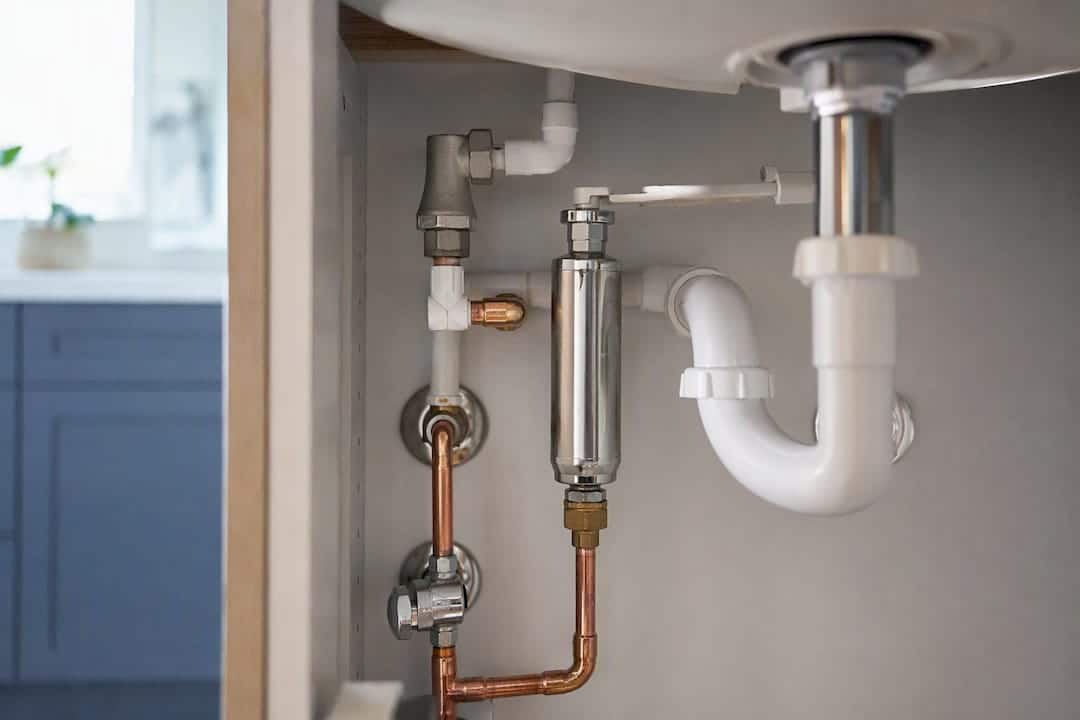
If your pressure gauge reads high, install or adjust a pressure-reducing valve. Keeping static pressure under recommended safe levels cuts down the force behind every transient in the system.
For pumped systems or main lines with check valve slam, a non-slam or silent check valve solves a problem that a standard swing check valve will keep causing indefinitely. And if knocking coincides with your water heater cycling, a tank flush to clear sediment often resolves it without touching a single valve.
- Secure loose pipes with padded straps
- Replace fast-closing or worn shutoff valves
- Install sealed piston arrestors near the source
- Add or adjust a pressure-reducing valve
- Swap swing checks for non-slam check valves
- Flush the water heater annually
Pro Tip: Place arrestors as close to the fixture as the manufacturer’s guide recommends, not just wherever access is easiest. Distance from the valve reduces how effectively they absorb the shock.
Always shut off the main water supply before working on any pipe, and know that installing pressurized surge devices correctly often requires licensed, code-compliant work.
What Does a Professional Water Hammer Diagnosis Involve?
When a plumber shows up for water hammer, the visit isn’t guesswork. It follows a set sequence:
- Pressure testing at multiple fixtures to check for a system-wide problem versus a single bad valve
- Isolating branch lines to narrow down the source
- Camera inspection if the noise suggests a hidden or inaccessible section of pipe
- Inspecting existing valves and arrestors for wear or incorrect type, since using the wrong check valve is one of the most common causes of recurring problems
- Measuring valve closing time and flow velocity to size the correct fix
Cost and timeline depend on a handful of variables:
- How accessible the affected pipe run is (behind drywall costs more than exposed basement piping)
- How many branches or fixtures are affected
- Whether the fix needs a simple arrestor or a full pressure-reducing valve install
- Whether repiping or new anchor points are required
- Local permit requirements for the work
- Emergency same-day service versus a scheduled appointment
Before hiring anyone, ask for proof of license, such as verified C-36 credentials, a written estimate, and a warranty covering both parts and labor.
A Working Plumber’s Take on Water Hammer
Most banging pipes get fixed without opening a single wall. In our experience, a properly sized arrestor and a few pipe straps solve the majority of calls we get for this. The cases that need more work almost always trace back to pressure that’s been running too high for years, not a mysterious hidden defect.
Get Your Water Hammer Diagnosed by a Licensed Plumber
Ez-plumbing gives Los Angeles homeowners and property managers something a YouTube tutorial can’t: a licensed diagnosis that catches the actual cause the first time, backed by a warranty on the parts and labor.

Every visit is performed under C-36 License #583868, fully insured, and built to meet LA municipal code, so an arrestor or pressure-reducing valve installed on your line is done right the first time. If the knocking coincides with your water heater cycling on, sediment buildup could be the real trigger, and our water heater installation and repair team can flush, service, or replace the unit as part of the same visit. Property managers and HOAs can request estimates across multiple units or buildings. Reach out to Ez-plumbing to schedule a diagnostic visit and get a written estimate before any work begins.
Frequently Asked Questions
What is the most common cause of water hammer in homes?
Fast-closing appliance valves, particularly washing machine and dishwasher solenoid valves, cause the majority of residential water hammer cases, followed closely by loose or unsupported pipes.
Can high water pressure cause water hammer?
Yes. Static pressure above roughly 80 psi amplifies every pressure transient in your system, turning a minor valve closure into a loud bang. A pressure-reducing valve brings it back into a safe range.
Is water hammer dangerous, or just annoying?
It can be both. Occasional, mild banging is usually just noise, but repeated hydraulic shock loosens pipe joints and anchors over time, and severe cases can cause pinhole leaks or ruptures.
Will draining my pipes fix water hammer permanently?
Draining the system for 20 to 30 minutes can temporarily restore a waterlogged air chamber, but it’s not a permanent solution. A sealed piston arrestor holds its charge indefinitely and doesn’t need repeated resets.
When should I call a plumber instead of fixing it myself?
Call a licensed plumber if you see visible pipe movement, hear repeated loud bangs on every cycle, notice a new leak, or if the noise persists after you’ve isolated fixtures and checked your pressure yourself.
Sources
- Water Hammer FAQ
- Water Hammer
- Water hammer arrestors engineering guide (Zurn)
- Preventing water hammer and cavitation in industrial piping systems: an engineer’s guide to fluid dynamics and valve management
- Water hammer in home plumbing: causes and solutions