
The Role of Plumbing in Flood Prevention for Homeowners
Plumbing is the primary defense system that controls water flow, directs runoff, and prevents sewage from backing up into your home during heavy rain or flooding events. The role of plumbing in flood prevention goes well beyond pipes and drains. It includes backwater valves, sump pumps, properly graded foundations, and stormwater management infrastructure working together as a system. When any one component fails, the entire property is at risk. This article explains what that system looks like, how it works, and what you need to do to keep it functioning.
What are the critical plumbing components involved in flood prevention?
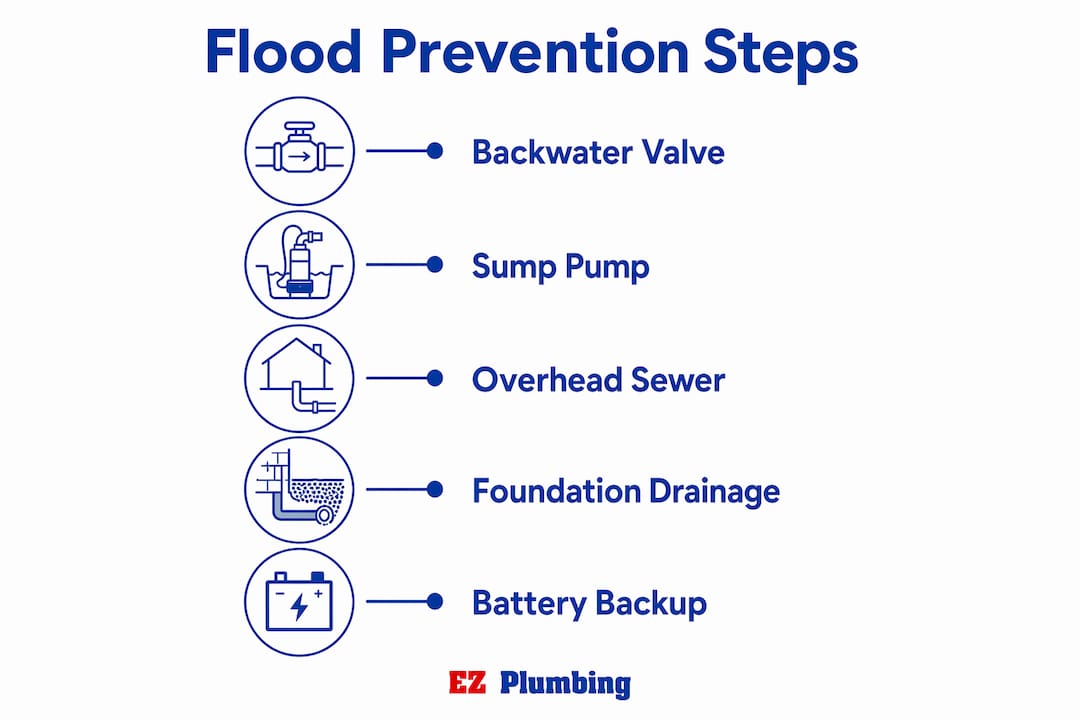
A complete residential flood protection system requires four core elements: a backwater valve on the sewer lateral, a sump pump with battery backup, an overhead sewer conversion for below-grade fixtures, and properly graded foundation drainage. Each component addresses a different flood pathway, and skipping any one of them leaves a gap in your protection.
Backwater valves are one-way check valves installed on your sewer lateral. When municipal sewer lines overflow during heavy rain, sewage travels backward through the path of least resistance. Without a backwater valve, that path leads directly into your basement floor drain or lower-level toilet. The valve closes automatically when reverse flow is detected, blocking the backup before it enters your home.
Sump pumps remove groundwater that accumulates beneath your foundation under hydrostatic pressure. During prolonged rain, the soil around your home becomes saturated and water pushes against your foundation walls and floor. A sump pump collects that water in a pit and discharges it away from the structure. Battery backup units keep the pump running during power outages, which frequently coincide with the worst storms.
Overhead sewer conversions protect below-grade fixtures like basement bathrooms and laundry drains. In a standard gravity-fed system, those fixtures sit below the municipal sewer line, making them the first point of sewage backflow. An overhead conversion reroutes those drain lines above the sewer main elevation, eliminating the backflow risk entirely.
Graded foundation drainage directs surface water away from the structure before it ever reaches your foundation. The ground around your home should slope away at a minimum grade to prevent pooling near the foundation walls.
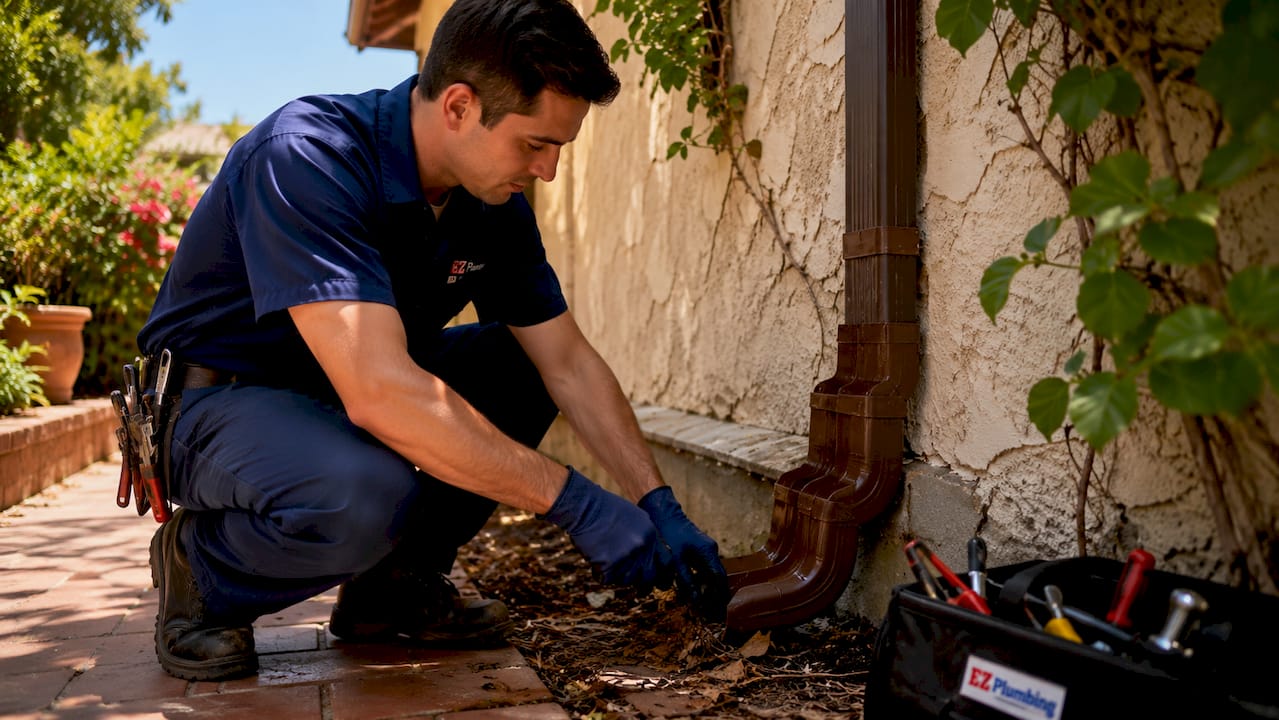
Pro Tip: Always install a battery backup on your sump pump. Power outages and severe storms arrive together, and a sump pump without backup power is useless precisely when you need it most.
How does drainage system design reduce flood risk?
Effective drainage systems are built around two engineering principles: managing the rate at which water enters the soil and maintaining enough flow velocity inside pipes to prevent blockages. Both principles directly reduce flood risk in residential properties.
Modern drainage standards specify a drainage coefficient of 3/8 to 1/2 inch per day to manage runoff and protect buildings from hydrostatic pressure and soil saturation. That figure represents the volume of water a drainage system must remove daily to keep soil conditions stable. When a system falls below that threshold, water backs up, soil saturates, and hydrostatic pressure builds against your foundation.
Inside pipes, self-cleansing velocity is the minimum flow speed needed to keep solids suspended and moving through the system. Pipes installed at incorrect slopes, typically outside the 1:40 to 1:100 range, allow sediment to settle and accumulate. That sediment narrows the pipe bore over time, reduces capacity, and eventually causes blockages that contribute directly to localized flooding.
Inspection chambers and vent pipes serve a less obvious but equally important function. Inspection chambers provide access points for clearing blockages before they become emergencies. Vent pipes maintain atmospheric pressure in the drain system, preventing the vacuum effect that slows flow and causes trap siphoning.
Combined sewer systems, which carry both rainwater and sewage in a single pipe, create a specific flood risk. During heavy rain, the combined volume overwhelms the pipe capacity and forces sewage backward into homes. Non-return valves and overhead sewer conversions are mandatory upgrades for any property connected to a combined sewer system.
| Design Parameter | Standard Target | Flood Risk if Missed |
|---|---|---|
| Drainage coefficient | 3/8–1/2 inch per day | Soil saturation, hydrostatic pressure |
| Pipe slope (drain lines) | 1:40 to 1:100 | Sediment buildup, blockages |
| Foundation grade | Slopes away from structure | Surface water pooling at foundation |
| Sewer lateral type | Separate storm and sanitary | Sewage backflow during rain events |
What maintenance practices keep flood prevention systems effective?
Maintenance is where most flood prevention systems fail. The hardware may be installed correctly, but without scheduled upkeep, backwater valves seize, sump pumps burn out, and drain lines fill with debris. A plumbing maintenance checklist helps homeowners track these tasks before problems develop.
The four most critical maintenance tasks are:
-
Hydro-jet drain lines annually. Pre-season jetting clears grease, root intrusion, and sediment from drain lines before heavy rain arrives. Professional plumbing services focused on flood prevention often maintain a 60-minute emergency response standard for hydraulic failures, but prevention is always faster and cheaper than emergency response.
-
Test your sump pump every six months. Pour water into the sump pit and confirm the float activates the pump. Test the battery backup separately by disconnecting the main power. Replace the battery every two to three years regardless of apparent condition.
-
Inspect and exercise your backwater valve annually. The valve flap must move freely and seal completely. Debris caught in the valve seat prevents it from closing, which defeats its entire purpose.
-
Clear inspection chambers before storm season. Blocked chambers prevent access during emergencies and indicate partial blockages already forming in the line.
Homeowners are responsible for lateral sewer line maintenance, not the municipality. That line runs from your home to the municipal connection at the street. Root intrusion, pipe collapse, and grease buildup on that lateral are your responsibility to address. Neglecting it means sewage backups during floods are also your problem to remediate.
Pro Tip: Schedule a camera inspection of your sewer lateral every three to five years. Tree roots from clay sewer laterals in older Los Angeles neighborhoods can infiltrate pipe joints silently, and you will not know until a flood event forces the issue.
How to apply flood mitigation techniques in flood-prone properties
Applying flood mitigation plumbing techniques starts with a property assessment. You need to know your flood zone designation, the age and material of your sewer lateral, whether your home connects to a combined or separate sewer system, and the current condition of your foundation drainage.
The installation sequence matters. Prioritize the backwater valve first, then upgrade the sump pump with battery backup, then address overhead sewer conversion for any below-grade fixtures, and finally install interior drain tile if groundwater intrusion remains a problem. Attempting these out of order wastes money and can create new problems.
One critical mistake to avoid: never install a backwater valve on a cracked, root-infested, or partially collapsed lateral line. When the valve engages during a flood event, it creates a sealed obstruction against a damaged pipe. The result is immediate and severe sewage backup. Always complete a camera inspection before valve installation.
Stormwater regulations increasingly require controlling post-development runoff to match pre-development discharge rates. Detention basins and permeable paving materials are the primary tools for meeting that standard. For residential properties, this translates to rain gardens, permeable driveways, and properly sized downspout extensions that discharge water at least six feet from the foundation.
Raising water heaters and critical plumbing fixtures above the base flood elevation is a straightforward but frequently overlooked measure. A water heater sitting on a basement floor in a flood-prone property is a liability. Mounting it on a platform or relocating it to an elevated mechanical room eliminates one of the most common flood damage claims. Ez-plumbing handles water heater installation with flood risk positioning as part of the assessment.
After any flood event, plumbing systems require comprehensive inspection and disinfection. Floodwater carries contaminants that enter potable supply lines through faulty backflow devices or damaged pipe joints. Skipping post-flood inspection is a health risk, not just a property risk. A cross-connection control assessment after flooding confirms your potable supply is not compromised.
Key Takeaways
Effective flood prevention depends on a complete plumbing system, not a single device, with backwater valves, sump pumps, proper drainage design, and consistent maintenance all working together.
| Point | Details |
|---|---|
| Install all four core components | Backwater valve, sump pump with battery backup, overhead sewer conversion, and graded drainage work as a system. |
| Inspect before installing | Camera-inspect your sewer lateral before adding a backwater valve to avoid creating a sealed obstruction. |
| Maintain drainage pipe slopes | Slopes between 1:40 and 1:100 maintain self-cleansing velocity and prevent sediment blockages. |
| Own your lateral line | Homeowners are responsible for sewer lateral upkeep; neglect causes sewage backups during flood events. |
| Inspect after every flood | Floodwater contaminates plumbing systems; post-event inspection and disinfection protect your family’s health. |
What I’ve learned from years of flood prevention calls in Los Angeles
The calls we get after a major rain event follow a predictable pattern. A homeowner installed a backwater valve two years ago and never had it serviced. Or they have a sump pump but no battery backup, and the power went out at 2:00 AM. Or they assumed the city was responsible for the lateral line and never touched it.
The honest truth is that most flood damage I see is preventable. Not because the homeowner was careless, but because nobody told them what their system actually requires. A backwater valve is not a set-it-and-forget-it device. Neither is a sump pump. These are mechanical components that need annual attention.
The other thing I see constantly in older Los Angeles neighborhoods is clay sewer laterals with root intrusion that has been building for a decade. The homeowner has no idea. Then a heavy rain event hits, the backwater valve engages against a partially blocked pipe, and the result is a sewage backup that costs far more to remediate than the camera inspection would have cost to prevent.
My recommendation is simple: treat your flood prevention plumbing the same way you treat your HVAC system. Schedule it. Document it. Do not wait for a failure to tell you something needs attention. If you are not sure where to start, a sewer line inspection is the right first step for most Los Angeles properties.
— EZ
Ez-plumbing flood prevention services for Los Angeles homeowners
Protecting your property from flood damage starts with a plumbing system that is properly installed, inspected, and maintained. Ez-plumbing provides licensed flood prevention services across the greater Los Angeles area, including backwater valve installation, sump pump service, sewer camera inspection, and drain cleaning to keep your lines clear before storm season.
When a plumbing failure happens during a storm, response time matters. Ez-plumbing’s emergency plumbing service is available 24 hours a day for hydraulic failures, sewage backups, and flood-related plumbing emergencies across Los Angeles. For sewer line repair and leak detection, Ez-plumbing holds C-36 License #583868 and operates fully insured and code-compliant with LA municipal requirements. Call to schedule a flood risk assessment before the next rain season arrives.
FAQ
What is the role of plumbing in flood prevention?
Plumbing controls and redirects water flow away from your property through backwater valves, sump pumps, drain lines, and graded foundation drainage. When these components work together correctly, they prevent sewage backflow, groundwater intrusion, and surface water damage.
How does a backwater valve prevent flooding?
A backwater valve installs on your sewer lateral and closes automatically when sewage attempts to flow backward into your home. It is the single most effective device for preventing sewage backup during municipal sewer overflows.
Who is responsible for maintaining the sewer lateral?
Homeowners are responsible for the sewer lateral from the home to the municipal connection at the street. Neglecting that line causes sewage backups during flood events, and the remediation cost falls entirely on the property owner.
How often should I inspect my sump pump?
Test your sump pump every six months by pouring water into the pit and confirming the float activates the pump. Test the battery backup separately, and replace the battery every two to three years.
Can I install a backwater valve myself?
Backwater valve installation requires a camera inspection of the sewer lateral first to confirm the pipe is intact. Installing a valve on a cracked or root-infested lateral creates a sealed obstruction that causes immediate sewage backup under flood conditions. A licensed plumber should perform both the inspection and the installation.