
Sewer Camera Inspection: What Every Homeowner Should Know
A sewer camera inspection is a non-invasive diagnostic method where a waterproof, high-definition camera is inserted directly into your sewer pipes to visually assess their interior condition. The industry standard term is pipeline video inspection, and it gives plumbers a clear, real-time view of what is happening inside your pipes without digging up your yard. A standard residential inspection takes 30–90 minutes and requires no concrete removal or excavation. For homeowners and property managers in Los Angeles, where aging clay sewer laterals and aggressive tree root systems are common, this diagnostic tool is one of the most practical investments in property maintenance you can make.
What is sewer camera inspection and how does it work?
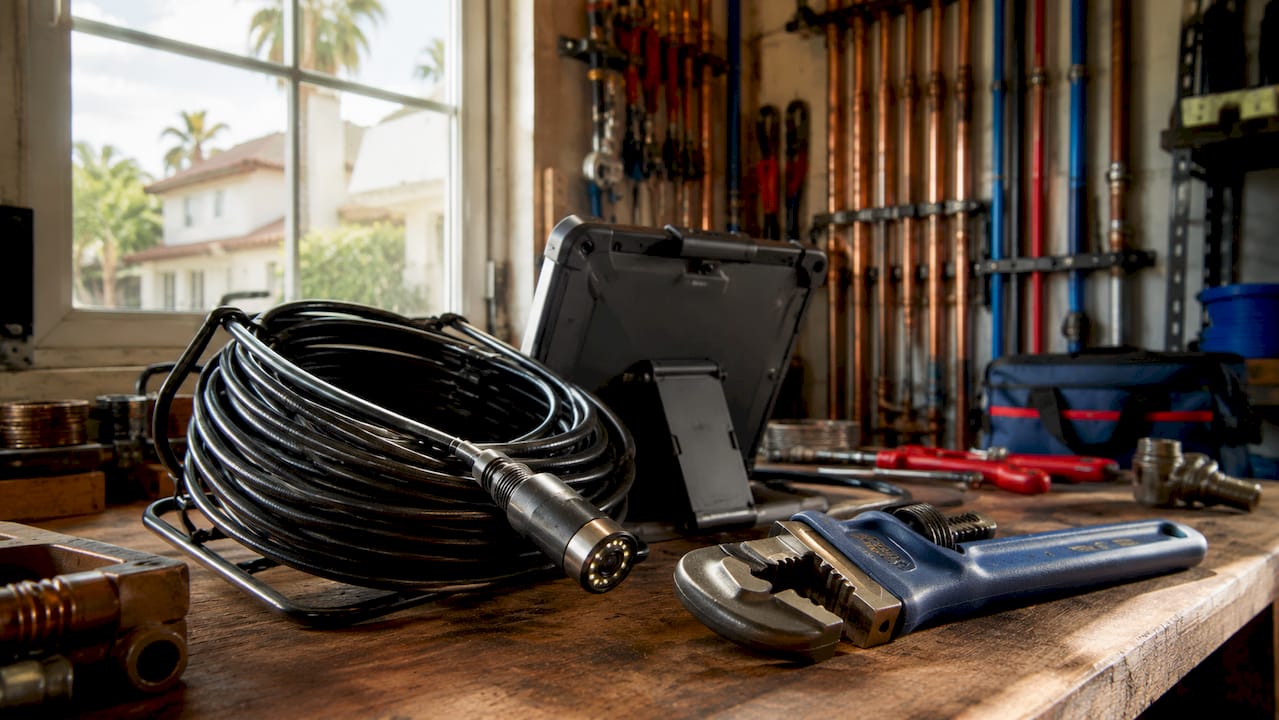
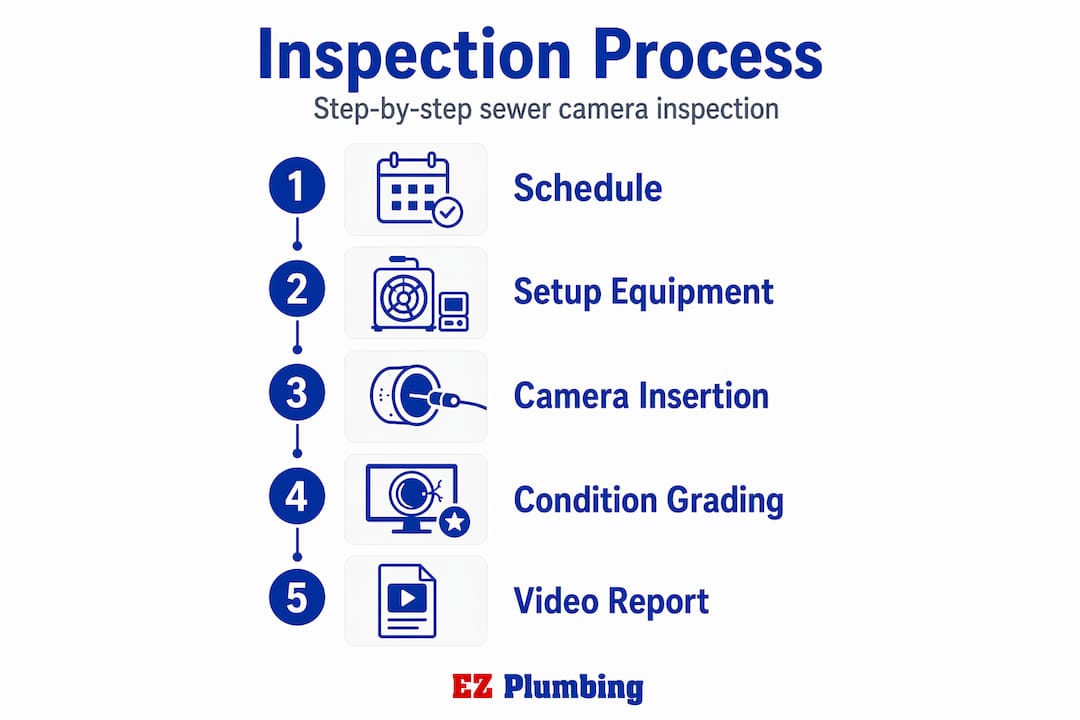
The sewer camera inspection process follows a clear sequence that any homeowner can understand. A licensed technician feeds a push-rod camera into your sewer line through an existing access point, typically a cleanout fitting or a removed toilet. The camera transmits a live video feed to a monitor, letting the technician see exactly what is happening inside the pipe in real time.
The equipment varies by pipe size. Push-rod cameras handle smaller residential lines, while crawler units navigate larger mains. Both types use integrated LEDs for lighting and, in advanced setups, lasers for pipe measurement. Attached to the camera head is a sonde, a small radio transmitter that broadcasts the camera’s underground location to a surface locator. This lets the technician mark the exact depth and position of any problem found, eliminating guesswork about where to dig.
Condition grading follows the NASSCO coding standard, which assigns consistent numerical codes to pipe defects. This matters because it replaces subjective opinions with a standardized assessment that any qualified plumber can read and act on. Without NASSCO coding, two technicians might describe the same crack very differently.
Pro Tip: Ask your technician whether they use NASSCO codes for pipe grading. If they do not, their condition report is based on personal judgment rather than an industry standard, which makes comparing quotes or planning repairs much harder.
The inspection ends with a recorded, timestamped video report that becomes part of your property record. This footage is not just a formality. It supports real estate transactions, insurance claims, and confirms that repair work was completed correctly.
What problems can a sewer camera detect, and what are its limits?
A sewer camera inspection identifies a wide range of pipe defects that would otherwise stay hidden until they cause a failure. Common findings include:
- Root intrusion from nearby trees or shrubs growing into pipe joints
- Cracks, fractures, and full pipe breaks from ground movement or age
- Misaligned or offset joints where pipe sections have shifted
- Grease buildup and debris blockages restricting flow
- Galvanized corrosion in older metal pipes
- Pipe bellies, where a sagging section traps waste and causes recurring backups
- Collapsed pipe sections that block flow entirely
Each of these problems requires a different repair approach. Camera footage informs the decision between hydro-jetting, pipe lining, spot repair, or full replacement. Without visual confirmation, a plumber is guessing, and guessing costs you money.
The camera does have real limits. Sewer cameras cannot see through standing water or detect leaks that occur outside the pipe wall. If your pipe holds water from a blockage, the camera cannot assess the submerged section. Groundwater intrusion from outside the pipe is also invisible to the camera. When a leak is suspected but not visible, hydrostatic pressure testing is the recommended complementary method.
Pro Tip: If your technician finds standing water in the line during inspection, request a follow-up after the blockage is cleared. A partial view of a pipe is not a complete diagnosis.
The camera is a diagnostic tool, not a repair solution. Understanding that distinction prevents a common homeowner mistake: assuming that because the camera found the problem, the problem is solved. The footage provides proof needed to justify and plan the right repair. Acting on that proof is the next step.
What are the cost and practical benefits of sewer camera inspection?
The financial case for sewer camera inspection is straightforward. Targeted repairs guided by camera footage reduce labor costs by up to 70% compared to traditional diagnostic methods that require excavating to find the problem. That savings comes from knowing exactly where to dig and what to fix before any ground is broken.
The practical benefits extend well beyond cost:
- Early detection catches cracks and root intrusion before they escalate into sewage backups or pipe collapse.
- Environmental protection prevents undetected cracks from leaking thousands of gallons of sewage into surrounding soil.
- Fewer repeat service calls result from accurate diagnosis on the first visit rather than trial-and-error repairs.
- Property transaction support gives buyers and sellers documented evidence of sewer condition, which can directly affect sale price or repair negotiations.
- Insurance documentation provides timestamped footage that supports claims for damage caused by pipe failure.
Routine inspections extend pipe lifespan by catching deterioration early and enabling planned maintenance rather than emergency response. The cost difference between a scheduled repair and an emergency excavation is significant. Proactive inspection converts unpredictable emergency spending into a maintenance line item you can plan for.
The sewer line inspection process in Los Angeles carries additional value because many properties in the area have original clay or cast-iron laterals that are decades old. These materials are prone to root intrusion and joint separation. Knowing the condition of your lateral before a problem forces your hand gives you real options.
When should you schedule a sewer camera inspection?
Certain conditions make a sewer camera inspection the right call. Scheduling one at the right time prevents small problems from becoming expensive emergencies.
- Recurring drain backups. If your drains back up more than once without a clear cause, the problem is likely structural, not just a surface clog.
- Sewage odors inside or outside the home. Persistent odors suggest a crack, break, or failed joint allowing gas to escape.
- Ground subsidence or sunken yard areas. A sinking patch of lawn near your sewer line often signals a collapsed or leaking pipe underneath.
- Pre-purchase or pre-sale property evaluation. A professional sewer camera service before closing protects both buyers and sellers from hidden repair costs.
- After significant landscaping changes. New trees or major root disturbance near your sewer line warrants a check within six to twelve months.
- Routine maintenance every 2–3 years. Properties with mature trees, older pipes, or a history of drain issues benefit from regular scheduled inspections rather than waiting for symptoms.
Experts recommend camera inspection for any of these triggers because the cost of the inspection is a fraction of the cost of the repairs it prevents. A homeowner who waits for a full backup before calling a plumber typically faces emergency labor rates, potential property damage, and a repair scope that could have been managed at a lower cost with earlier detection.
Key takeaways
Sewer camera inspection is the most cost-effective diagnostic method available for identifying pipe defects, with targeted repairs reducing labor costs by up to 70% compared to traditional excavation-based approaches.
| Point | Details |
|---|---|
| Non-invasive diagnostic tool | A waterproof camera inspects pipe interiors in 30–90 minutes with no digging required. |
| NASSCO coding ensures accuracy | Standardized condition grading replaces subjective assessments and supports repair planning. |
| Camera has real limits | Standing water and external leaks are invisible to the camera; hydrostatic testing fills the gap. |
| Early inspection saves money | Proactive scheduling converts emergency repair costs into planned, predictable maintenance. |
| Footage is a property asset | Timestamped video reports support real estate transactions, insurance claims, and repair verification. |
What I’ve learned from years of sewer camera work in Los Angeles
The most common mistake I see homeowners make is treating the camera report as the finish line. They watch the footage, hear the technician describe a root intrusion or a belly in the line, and feel like the problem is handled. The inspection is the starting point, not the resolution.
The second thing I have learned is that footage without skilled interpretation is nearly useless. Accurate diagnosis requires expertise. A minor stain on a pipe wall looks alarming on camera but may require no immediate action. A hairline crack in a clay lateral looks subtle but can be the beginning of a full collapse within a season. Knowing the difference is what separates a qualified technician from someone who just operates the equipment.
My strong recommendation for any homeowner or property manager is to ask for the recorded footage and the written NASSCO-coded report, not just a verbal summary. That documentation protects you. It gives you a second opinion option, supports any future insurance claim, and confirms that repairs were done correctly. Integrating a sewer line maintenance plan into your regular property upkeep is the single most effective way to avoid the kind of emergency that disrupts your life and drains your budget.
— EZ
Ez-plumbing sewer camera inspection services for Los Angeles homeowners
Ez-plumbing provides professional sewer camera inspections for residential and commercial properties throughout the greater Los Angeles area, operating under C-36 License #583868. Every inspection includes a recorded video report with NASSCO-coded condition grading, giving you documentation you can actually use.
When the inspection identifies a problem, Ez-plumbing’s sewer line repair services cover everything from spot repairs to full lateral replacement, with no unnecessary upselling. If the camera finds grease buildup or a partial blockage, Ez-plumbing’s drain cleaning services resolve the issue directly. Contact Ez-plumbing to schedule an inspection and get a clear picture of your sewer line’s condition before a small problem becomes a costly emergency.
FAQ
What is a sewer camera inspection used for?
A sewer camera inspection is used to visually diagnose the interior condition of sewer pipes, identifying defects like root intrusion, cracks, blockages, and pipe collapse without excavation.
How long does a sewer camera inspection take?
A standard residential sewer camera inspection takes 30–90 minutes and does not require any digging or removal of concrete.
Can a sewer camera detect all types of pipe leaks?
No. Sewer cameras cannot detect leaks outside the pipe wall or assess pipe sections submerged in standing water. Hydrostatic pressure testing is recommended when external leaks are suspected.
How often should homeowners schedule a sewer camera inspection?
Most homeowners benefit from a sewer camera inspection every 2–3 years, or sooner if they notice recurring backups, sewage odors, or ground subsidence near the sewer line.
Does a sewer camera inspection fix the problem it finds?
No. The camera is a diagnostic tool, not a repair solution. It identifies and locates the problem so the right repair method can be selected and applied.