
What Is Hydro Jetting? a Homeowner’s Guide
Most homeowners reach for a plunger or call for a drain snake when a clog strikes. But what is hydro jetting, and why do licensed plumbers increasingly recommend it for stubborn or recurring drain problems? Hydro jetting is a high-pressure water cleaning method that doesn’t just punch through a blockage — it scrubs the interior walls of your pipes clean. If you’ve been dealing with slow drains, persistent sewer odors, or clogs that keep coming back, this guide will walk you through how the process works, how it compares to traditional methods, and when it’s the right call for your property.
Table of Contents
- Key takeaways
- What is hydro jetting and how does the process work
- Hydro jetting vs. drain cleaning with a snake
- Benefits of hydro jetting beyond unclogging drains
- Practical preparation before and after hydro jetting
- My perspective on hydro jetting as a maintenance tool
- Ez-plumbing hydro jetting services for Los Angeles properties
- FAQ
Key takeaways
| Point | Details |
|---|---|
| High-pressure cleaning method | Hydro jetting uses water at 1,500 to 4,000 PSI to scour pipe walls, not just clear blockages. |
| Camera inspection comes first | A professional must assess pipe condition before jetting to avoid damaging older or fragile pipes. |
| More thorough than snaking | Snaking removes clogs mechanically; hydro jetting removes grease, scale, and roots from the full pipe wall. |
| Preventative maintenance value | Regular hydro jetting reduces the frequency of future clogs and extends the life of your plumbing system. |
| Documentation matters | Before-and-after camera footage verifies full cleanup and protects you from undetected pipe damage. |
What is hydro jetting and how does the process work
Hydro jetting is a professional drain and sewer cleaning method that uses a high-pressure stream of water to clear blockages and clean the interior walls of your pipes. Unlike a drain snake, which physically breaks up or pulls out debris, hydro jetting blasts away grease, mineral scale, sludge, and even tree root intrusions, leaving pipe walls noticeably cleaner after a single service.
The equipment consists of a water tank, a high-pressure pump, and a flexible hose fitted with a specialized nozzle. That nozzle directs water jets forward and backward simultaneously, which propels the hose through the pipe while scouring the walls in every direction. Hydro jetters operate through 4-inch cleanouts to clear lateral pipes up to 150 feet at pressures between 1,500 and 4,000 PSI, depending on the severity of the buildup and the pipe material.
Here is how a typical hydro jetting service unfolds:
- Camera inspection. A technician runs a sewer camera through the line to assess pipe condition, locate the blockage, and confirm there are no cracks or collapses that would make high-pressure water unsafe.
- Cleanout access. The plumber locates your property’s cleanout access point, which is a capped pipe fitting that provides direct entry to the drain line without pipe disassembly.
- Hose insertion. The jetter hose is fed into the cleanout and guided toward the blockage or buildup area.
- Nozzle operation. The pump is activated, sending water through the nozzle at full pressure. The typical hydro jetting procedure includes operating the nozzle in a controlled pass along the pipe’s interior walls until the line is fully clear.
- Post-jetting camera check. A second camera pass confirms the line is clean and free of damage.
Pro Tip: If your property doesn’t have an accessible cleanout, installing one before scheduling hydro jetting is often necessary. A compliant cleanout installation prevents the need for invasive pipe access and makes future maintenance far easier.
Hydro jetting vs. drain cleaning with a snake
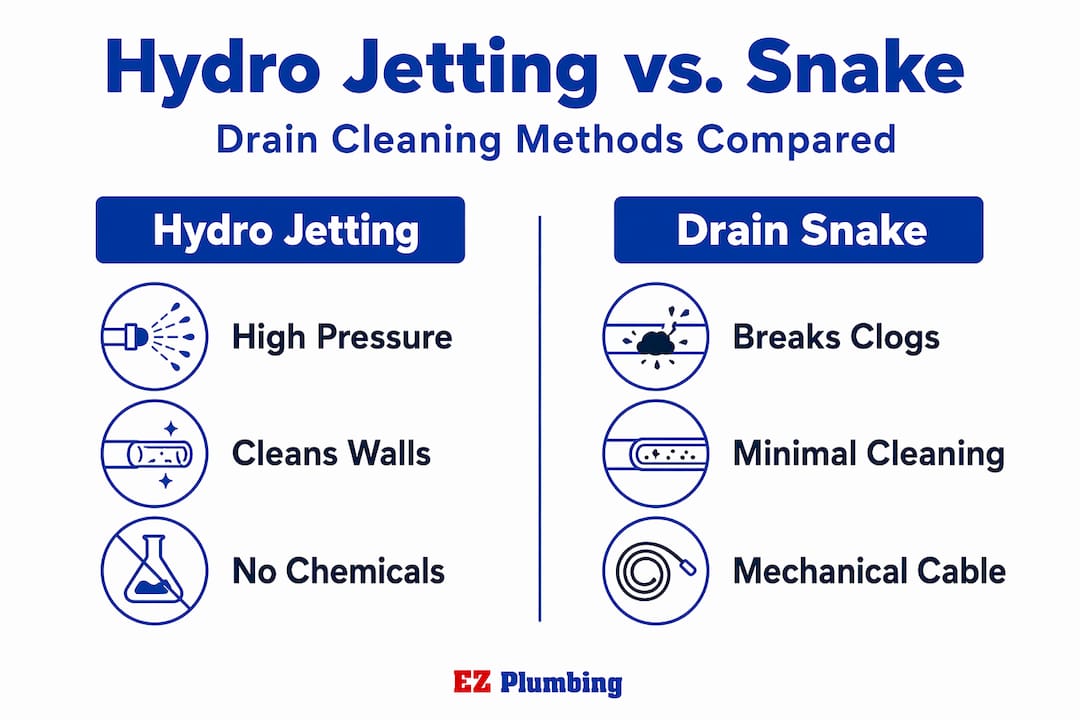
Understanding the difference between hydro jetting and traditional snaking helps you choose the right method for your situation. Both tools clear drains, but they work in fundamentally different ways and produce very different results.
A drain snake, also called an auger, is a long flexible cable that a plumber feeds into the pipe until it reaches the clog. The cable either breaks the obstruction apart or hooks into it so it can be pulled out. Snaking is fast, affordable, and effective for isolated blockages like a wad of hair in a bathroom drain or a small food buildup near a kitchen trap. You can read more about how this method works in Ez-plumbing’s drain snaking guide.
Hydro jetting, by contrast, doesn’t just address the clog. It addresses the condition of the pipe itself. The high-pressure water scours grease layers, mineral deposits, and biofilm off the pipe walls from cleanout to connection point. Choosing hydro jetting over snaking comes down to the nature of the clog and the desired outcome. If the goal is simply clearing a fresh blockage, a snake may be all you need. If the goal is restoring full pipe flow and preventing the next three clogs, hydro jetting is typically the better investment.
| Factor | Drain snaking | Hydro jetting |
|---|---|---|
| Method | Mechanical cable | High-pressure water |
| Best for | Isolated, localized clogs | Grease buildup, root intrusion, recurring clogs |
| Pipe wall cleaning | No | Yes |
| Requires camera inspection | Not always | Always recommended |
| Cost | Lower upfront | Higher upfront, lower long-term |
| Suitable for old/fragile pipes | Generally yes | Requires assessment |
There are situations where hydro jetting is clearly the stronger choice:
- Grease accumulation in kitchen drain lines, especially in older properties where years of cooking residue have narrowed the pipe bore
- Recurring clogs that come back within weeks of a snake treatment, signaling that the root cause is buildup rather than a single obstruction
- Tree root intrusion in clay sewer laterals, which are common in older Los Angeles neighborhoods
- Pre-sale or pre-lease property inspections where you want to verify clean, fully functional drain lines
Hydro jetting may risk damage to older or fragile pipes, which is why professional assessment before any jetting service is non-negotiable. Pipes with advanced galvanized corrosion, existing cracks, or significantly deteriorated joints may not tolerate the pressure.
Pro Tip: If a plumber offers hydro jetting without first running a camera, treat that as a red flag. Skipping the inspection step is how pipe damage happens.
Benefits of hydro jetting beyond unclogging drains
The most obvious benefit of hydro jetting is a clear drain. But the value extends well beyond that single outcome, which is why property managers in particular are making it a scheduled part of their maintenance programs rather than a last resort.
Hydro jetting removes what snaking leaves behind. After a snake clears a clog, the pipe walls may still be coated with grease, scale, or organic matter. That residue is what causes the next clog to form faster. Hydro jetting strips those walls clean, restoring closer-to-original flow capacity in the line.
Hydro jetting is environmentally friendly because it uses only high-pressure water without any chemical additives. That makes it a sound choice for homeowners who prefer to avoid pouring drain chemicals into their plumbing systems and municipal sewer lines.
The method is also uniquely effective against tough buildups. Pressure jets scour away encrustation, grease layers, and root intrusions that mechanical methods simply cannot reach. In older Los Angeles homes with clay sewer laterals, tree roots from ficus and sycamore trees can infiltrate pipe joints over years. Hydro jetting clears those intrusions at pressures that a cable auger cannot replicate.
From a long-term cost perspective, the numbers support regular jetting as well. Regular hydro jetting maintenance reduces the frequency of future clogs and extends the lifespan of your plumbing system, making it more cost-effective over time than repeated reactive repairs. A property manager overseeing a 20-unit apartment building in the San Fernando Valley, for example, will spend far less annually on proactive jetting than on emergency drain calls at nights and weekends.
For a broader look at how to protect your drain lines year-round, Ez-plumbing’s drain maintenance guide for LA homeowners covers seasonal considerations and pipe-specific advice.
Practical preparation before and after hydro jetting
Knowing what to expect from a hydro jetting service helps you prepare properly and get the most from it. Here is what the process looks like from a homeowner or property manager’s perspective.
- Schedule a camera inspection first. Before any water pressure touches your pipes, a licensed plumber should run a camera through the affected line. This confirms the pipe material, locates any cracks or deteriorated sections, and gives the technician a clear picture of what they’re dealing with.
- Confirm cleanout access. Cleanout placement and size are critical operational factors that affect which pipes can be serviced effectively. If your property lacks an accessible cleanout or has one that’s undersized, your plumber may recommend installing a compliant fitting before proceeding.
- Understand pipe suitability. Pipe material, age, and condition govern hydro jetting suitability. Properties with cast iron pipes showing advanced corrosion, or with PVC lines that have loose fittings, may require a modified approach or a different cleaning method altogether.
- Request documentation. Ask your plumber to provide before-and-after camera footage. Camera documentation verifies removal of buildup and the absence of pipe damage, and it gives you a baseline record for future maintenance decisions.
- Plan for a maintenance schedule. For most residential properties in Los Angeles, a hydro jetting service every 18 to 24 months is a reasonable preventative interval. High-use properties or those with mature trees near sewer lines may benefit from annual service.
Pro Tip: Keep a copy of your post-jetting camera report with your property records. If you sell the property or bring in a new property manager, that documentation demonstrates a maintained plumbing system and can simplify due diligence.
My perspective on hydro jetting as a maintenance tool
In my experience working on residential and commercial plumbing across greater Los Angeles, the biggest mistake I see homeowners make is treating hydro jetting as a last resort. They call after the drain has backed up three times, after the snake has been out twice, and after the slow drain has finally become a stopped drain. By that point, what could have been a straightforward maintenance service sometimes involves additional pipe repair.
What I’ve found is that homeowners who schedule hydro jetting proactively, rather than reactively, almost always spend less money over a five-year period than those who don’t. The pipe wall cleaning aspect is where the real value lives. A drain snake is a short-term fix. Hydro jetting is a reset.
I also want to be direct about the pipe suitability question. Some plumbers will jet anything. That’s not the right approach. In older LA neighborhoods with clay laterals or galvanized supply lines, a camera inspection isn’t optional. It’s the step that tells you whether jetting is appropriate or whether a different solution is needed. Skipping it to save $75 is not worth the risk of a pipe failure.
My take is this: if you own a home or manage a property in Los Angeles, hydro jetting belongs in your regular maintenance rotation, not your emergency repair budget.
— EZ
Ez-plumbing hydro jetting services for Los Angeles properties
Ez-plumbing provides professional hydro jetting services for residential and commercial properties throughout greater Los Angeles, including the San Fernando Valley, the Westside, and surrounding communities. Our technicians use professional-grade jetting equipment and always perform a camera inspection before and after service, so you know exactly what was cleared and that your pipes are in good condition afterward.
If you’ve been dealing with recurring clogs, slow drains, or sewer line odors, our drain cleaning services are designed to address the root cause rather than mask the symptom. Ez-plumbing is fully licensed (C-36 License #583868), insured, and code-compliant with Los Angeles municipal requirements. Call us to schedule an evaluation or to learn more about setting up a preventative maintenance plan for your property.
FAQ
What is hydro jetting used for?
Hydro jetting is used to clear clogged drains and clean the interior walls of pipes using high-pressure water. It is particularly effective against grease buildup, mineral deposits, and tree root intrusions that mechanical methods cannot fully remove.
How much does hydro jetting cost?
Hydro jetting costs vary based on pipe length, access, and the severity of buildup, but it generally runs higher than a standard snake service. Over time, the preventative benefits make it more cost-effective than repeated emergency drain calls.
Is hydro jetting safe for all pipes?
Not always. Hydro jetting may risk damage to older or fragile pipes, so a professional camera inspection is required before service to assess pipe material and condition. Pipes with existing cracks, advanced corrosion, or deteriorated joints may need a different approach.
How often should hydro jetting be done?
For most residential properties, a hydro jetting service every 18 to 24 months works well as preventative maintenance. Properties near mature trees or with heavy usage may benefit from annual service to prevent root intrusion and buildup.
What is the difference between hydro jetting and drain snaking?
Snaking mechanically breaks or removes a localized clog, while hydro jetting scours the full interior surface of the pipe with high-pressure water. Hydro jetting produces a more thorough clean and is better suited for recurring clogs and heavy buildup situations.