
What is emergency plumbing? A guide for LA homeowners
A plumbing failure at 2 a.m. in a Los Angeles home does not come with a warning. One moment everything is normal, and the next, water is spreading across your kitchen floor or sewage is backing up through your bathroom drain. Understanding what is emergency plumbing, and knowing exactly what to do in those first critical minutes, is the difference between a manageable repair bill and thousands of dollars in structural and health-related damage. This guide gives Los Angeles homeowners and property managers a clear, practical framework for recognizing, responding to, and recovering from plumbing emergencies.
Table of Contents
- Understanding emergency plumbing: what qualifies as an emergency?
- Health risks and damage from ignoring emergency plumbing problems
- How to respond immediately in a plumbing emergency
- Common causes of emergency plumbing incidents in Los Angeles homes
- Professional emergency plumbing services and when to call them
- Why many homeowners misunderstand emergency plumbing and costly delays
- Get expert emergency plumbing and restoration services in Los Angeles
- Frequently asked questions
Key Takeaways
| Point | Details |
|---|---|
| Emergency plumbing defined | Emergency plumbing involves urgent situations like sewage backups or burst pipes requiring immediate action to prevent damage. |
| Health and damage risks | Raw sewage and water leaks can lead to serious health hazards and mold growth within 24 to 48 hours. |
| Immediate homeowner actions | Shutting off the main water valve quickly and calling professionals promptly reduces damage and costs. |
| Common causes to watch | Tree roots, grease clogs, old pipes, and heavy rain commonly cause emergencies in Los Angeles homes. |
| Professional help importance | Restoration specialists handle biohazard cleanup, while licensed plumbers repair plumbing issues to fully resolve emergencies. |
Understanding emergency plumbing: what qualifies as an emergency?
Not every plumbing problem is an emergency. A dripping faucet or a slow bathroom sink drain can wait for a scheduled appointment. But certain plumbing failures demand immediate action because they actively threaten your health, your property, or both. Emergency plumbing refers to situations where a licensed plumber must respond within hours, not days, to prevent compounding damage.
The clearest examples of plumbing emergencies include:
- Raw sewage backing up through floor drains, toilets, or tubs
- A burst pipe releasing water inside walls or under slabs
- A completely stopped main sewer line affecting every fixture in the house
- Water pooling near your electrical panel or subpanel
- A failed water heater flooding a utility closet or garage
- Gurgling toilets combined with multiple slow drains throughout the home
- A gas smell near your water heater or any plumbing fixture connected to gas lines
A single slow drain in one sink is almost never an emergency. But when multiple drains in your home start backing up simultaneously, that points to a main line blockage or a municipal sewer overflow pushing waste back into your property. Raw sewage entering your living space is a same-day emergency with compounding health risks that worsen by the hour.
For a deeper look at handling plumbing emergencies in Los Angeles, including what to say when you call a professional, that resource covers the full sequence in detail.
Health risks and damage from ignoring emergency plumbing problems
Now that you know what emergencies look like, it is crucial to understand why acting fast protects your health and your home. The consequences of waiting even a few hours are not just inconvenient. They are genuinely dangerous.
Sewage water is classified as Category 3 water, meaning it contains the highest level of biological contamination. No surface it touches can simply be dried and reused without professional sanitization.
Raw sewage contains pathogens including E. coli and Salmonella, and mold can begin forming within 24 to 48 hours of water exposure. In Los Angeles, where many older homes have limited subfloor ventilation and concrete slab foundations that trap moisture, mold growth accelerates faster than homeowners typically expect.
Structural damage compounds quickly. Water that sits under flooring or inside wall cavities warps wood framing, destroys drywall, and corrodes metal fasteners. A leak that runs undetected for 48 hours in a slab-foundation home can require full floor tile removal, subfloor drying equipment, and potentially mold remediation that costs more than the original plumbing repair.
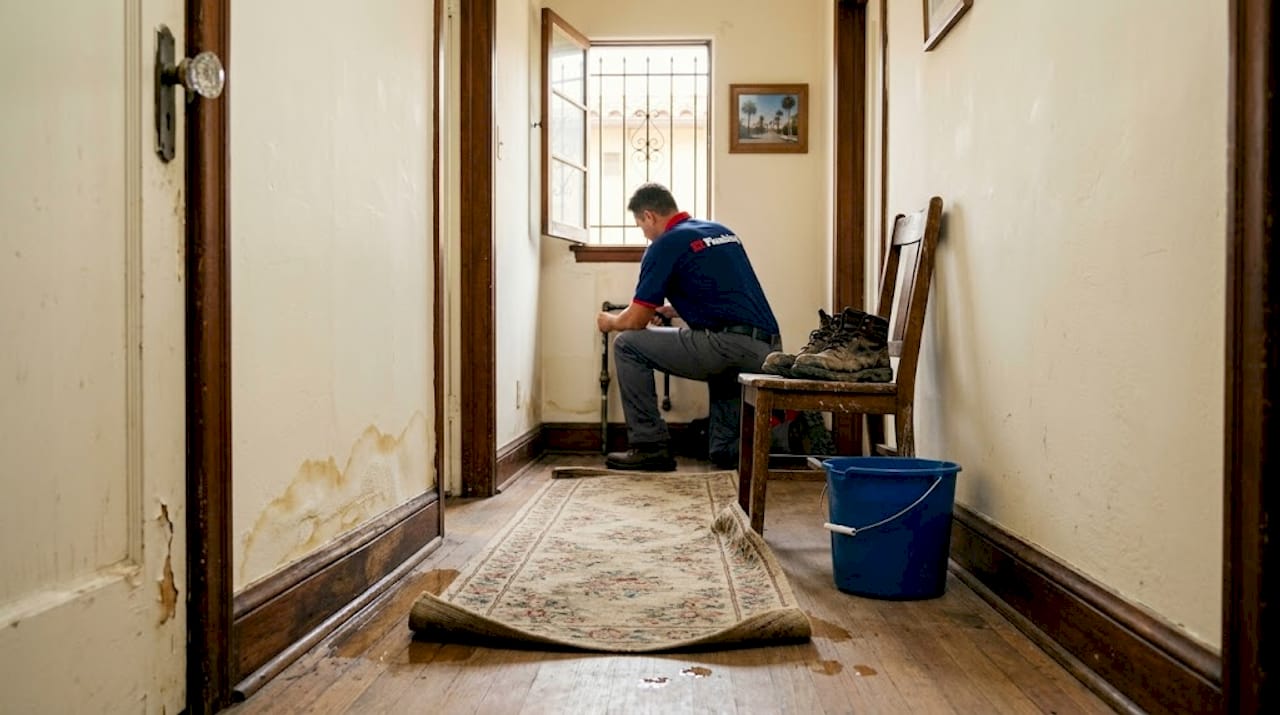
Biohazard exposure is not limited to visible sewage. When wastewater backs up into a bathroom or laundry room, microscopic contaminants become airborne. Young children, elderly residents, and anyone with a compromised immune system face real illness risk within days of exposure. For practical plumbing guidance specific to LA homes, knowing the seasonal patterns that increase backup risk in Southern California is worth reviewing before you need it.
How to respond immediately in a plumbing emergency
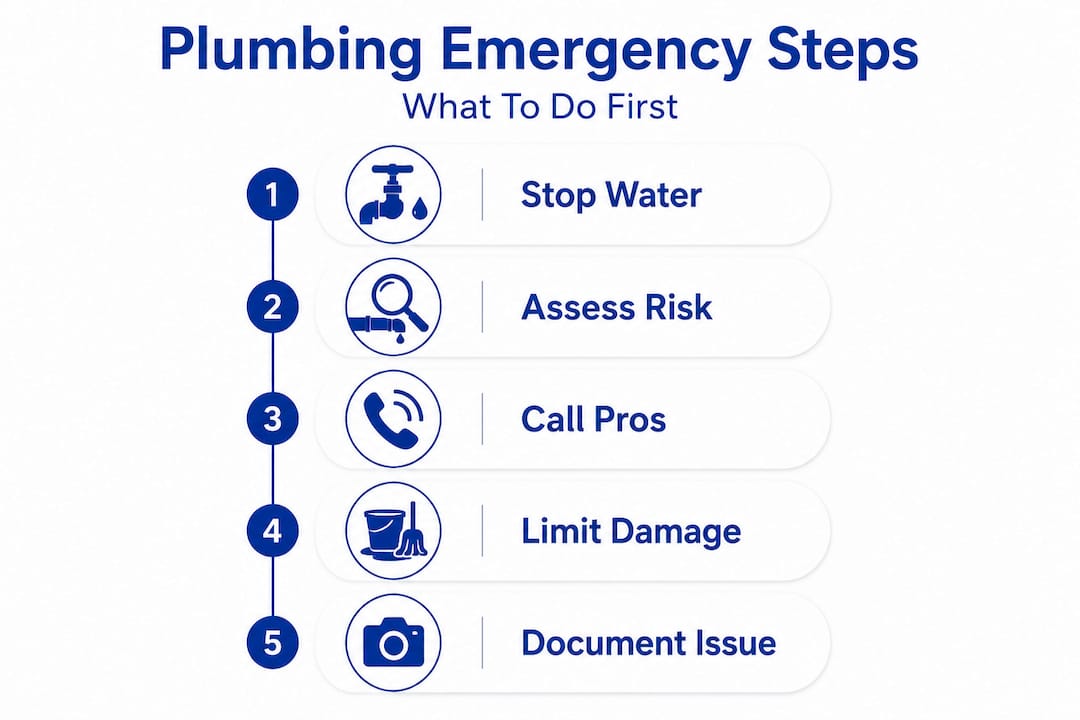
With awareness of the risks established, here are the specific steps you must take as soon as you discover a plumbing emergency. Speed matters, but so does the sequence.
- Locate and shut off the main water valve. In most Los Angeles homes, this is near the front of the property, either inside a utility closet, in the garage, or in a ground-level access box near the street. Shut off the main water valve within 30 seconds to 5 minutes of discovering the problem to minimize damage.
- If the valve is seized or inaccessible, use a curb key. A curb key (also called a meter key) turns the shutoff at the street-level water meter. Do not force a corroded shutoff valve or you risk snapping the stem and losing shutoff ability entirely. Your local utility can also shut off the curb stop.
- Open the lowest faucet in the house. After shutting off the supply, open a hose bib at the lowest point of your home to drain residual pressure from the lines. Then open upper-floor faucets to release remaining water.
- For sewage backups, call a water damage restoration company first. This is a step most homeowners get wrong. The restoration company handles biohazard extraction and drying before the plumber repairs the line. Calling the plumber first while sewage sits in your home extends your contamination exposure unnecessarily.
- Call your licensed plumber. Once the water is off or the restoration team is on the way, reach a plumber experienced in burst pipe repair and main line failures to diagnose and fix the source.
- Contact your insurance provider. Document everything with photos and video before any cleanup begins. Most homeowner policies cover sudden and accidental water damage, but documentation is what supports your claim.
- Avoid using any water fixtures until the plumber confirms the system is cleared and safe.
Pro Tip: Before any emergency happens, locate your main shutoff valve and test it. If it takes more than one full rotation to move or feels stiff, have a plumber service it. A seized valve during a burst pipe situation is one of the most avoidable reasons water damage escalates. You can also review how to prevent plumbing emergencies in LA homes as part of your regular maintenance routine.
Common causes of emergency plumbing incidents in Los Angeles homes
Knowing what causes emergencies helps you anticipate problems and respond more confidently when they occur. Los Angeles has specific plumbing conditions that make certain failures more common here than in other parts of the country.
- Tree root intrusion. LA neighborhoods are lined with mature fig, ficus, and jacaranda trees, all of which are aggressive root growers. Roots infiltrate clay sewer laterals and older cast iron lines through hairline cracks, then expand until the pipe collapses. Camera inspection is often the only way to catch this before a full backup occurs.
- Grease and wipes accumulation. Cooking grease poured down kitchen drains solidifies inside pipes. Combined with “flushable” wipes that do not break down in sewer systems, these materials cause blockages that escalate into main line backups over months.
- Municipal sewer overload during heavy rain. When Los Angeles receives significant rainfall after a dry season, the municipal sewer system can become pressurized, pushing wastewater backward into residential lateral lines. Homes in low-lying areas of the San Fernando Valley or near older infrastructure are particularly vulnerable.
- Aging plumbing infrastructure. Many homes built before 1980 still have galvanized steel pipes, which corrode from the inside out. Galvanized corrosion narrows the pipe bore over decades, increasing pressure and creating leak points that fail suddenly rather than gradually.
- Hydrostatic pressure under slabs. Unusually wet winters can raise groundwater levels beneath concrete slab foundations, stressing underground supply lines and causing slab leaks that show up as warm spots on floors or unexplained increases in water bills.
Common causes of sewage backups include tree roots, aging pipes, grease clogs, wipes, and municipal sewer overload during heavy rain, all of which are directly relevant to Los Angeles plumbing conditions.
| Cause | Warning signs | Prevention |
|---|---|---|
| Tree root intrusion | Gurgling drains, slow flush | Annual camera inspection |
| Grease and wipe buildup | Kitchen drain slowdown, odor | Hydro-jetting every 1 to 2 years |
| Municipal sewer overload | Backups after heavy rain | Backflow prevention valve |
| Galvanized pipe corrosion | Low pressure, rusty water | Repiping assessment |
| Slab leak | Warm floors, high water bills | Leak detection service |
A consistent drain cleaning schedule for your LA home is the single most effective prevention tool for grease and root-related emergencies. For more serious structural issues, sewer line repair is often needed to address root intrusion or collapsed pipe segments.
Professional emergency plumbing services and when to call them
Once you understand when plumbing emergencies happen, here is how professionals step in to resolve them safely and effectively. The role of plumbers in emergencies is specific, and knowing the division of responsibilities helps you coordinate the right response.
- Water damage restoration companies are the first call in any sewage backup or major interior flooding event. They bring extraction pumps, industrial dryers, and biohazard-rated cleaning agents. Their job is to make the space safe and dry before any plumbing repair begins.
- Licensed plumbers diagnose the source of the failure, whether that is a blocked main line, a burst fitting, a failed wax ring, or a corroded lateral, and complete the physical repair. In sewage backups, call a restoration company first, then the plumber, to handle biohazard cleanup before addressing the source.
- 24 hour plumbing services are essential because pipe failures do not follow business hours. When evaluating an emergency plumber, confirm they hold a current C-36 license in California, carry general liability insurance, and can provide a written estimate before beginning work.
For non-sewage emergencies like a burst supply line or a failed water heater valve, a licensed plumber is your first call. 24 hour plumbing services mean you are not waiting until Monday morning with water sitting on your floor. The cost of emergency plumbing in Los Angeles typically runs higher than standard service calls, often carrying after-hours premiums, but that cost is always lower than the mold remediation and structural repair bill that follows a delayed response.
Our emergency plumbing services page covers response times and what to expect when you call, and our leak repair services address both visible and hidden leaks that can escalate quickly without professional attention.
Why many homeowners misunderstand emergency plumbing and costly delays
Here is what years of working in Los Angeles homes has shown us: the most expensive plumbing disasters are rarely caused by the failure itself. They are caused by what happens in the hour after the failure.
The single most frequent mistake homeowners make is calling a plumber first during a sewage backup, before a restoration company has been contacted. This sequencing error increases both health risk and total repair costs, because contaminated water continues spreading while the plumber works, meaning the remediation scope grows by the hour.
The second major misconception is that shutting off water can wait a few minutes. It cannot. Every minute a supply-side failure runs unchecked, water is traveling into wall cavities, under flooring, and potentially toward electrical circuits. We have seen homes where a 15-minute delay in shutting off the main valve turned a $400 repair into a $12,000 remediation project.
There is also a persistent belief among homeowners that mold takes weeks to develop. It does not. In a Southern California summer, where indoor temperatures in an unoccupied room can exceed 80 degrees Fahrenheit, mold colonies begin forming in as little as 24 hours in saturated building materials. By the time you see it, you are already dealing with a health issue and a remediation project, not just a plumbing repair.
The homeowners who come through plumbing emergencies with the least damage and the lowest total cost share one thing in common: they knew their shutoff valve location, they understood the correct call sequence, and they did not hesitate. Building confidence in your plumbing emergency response before something goes wrong is the most practical investment you can make as a property owner in Los Angeles.
Get expert emergency plumbing and restoration services in Los Angeles
When a plumbing emergency hits your Los Angeles property, having a trusted, licensed team on call changes everything. EZ Plumbing (C-36 License #583868) provides 24/7 emergency plumbing services tailored to the specific infrastructure and conditions found across Los Angeles homes and commercial properties.
We offer professional drain cleaning using hydro-jetting technology to clear grease, root intrusion, and debris before they escalate into full backups. Our leak detection services use electronic and acoustic equipment to locate hidden slab leaks and supply line failures without unnecessary wall or floor demolition. Whether you are dealing with an active emergency or want to address aging infrastructure before it fails, our team responds quickly, works cleanly, and communicates clearly at every step. Call EZ Plumbing to protect your home and your peace of mind with a licensed local team that knows Los Angeles plumbing inside and out.
Frequently asked questions
What counts as a plumbing emergency that requires immediate action?
Active leaks, sewage backups in living spaces, water near electrical panels, or burst pipes all qualify as plumbing emergencies requiring immediate action. Any of these situations warrants an emergency call to a licensed plumber or restoration company.
How quickly should I shut off my main water valve during a plumbing emergency?
You should aim to shut off the main water valve within 30 seconds to 5 minutes of discovering the problem to limit water damage and reduce the risk of mold growth.
Who should I call first in case of a sewage backup emergency?
Call a restoration company first in a sewage backup to handle biohazard cleanup, then contact a licensed plumber to repair the plumbing source, and finally notify your insurance company with documentation in hand.
Can I fix a sewage backup myself?
No. Sewage cleanup requires professional equipment and biohazard-rated sanitization that goes well beyond what any homeowner can safely accomplish, and attempting it without proper protection puts your health at serious risk.